Biting into culture
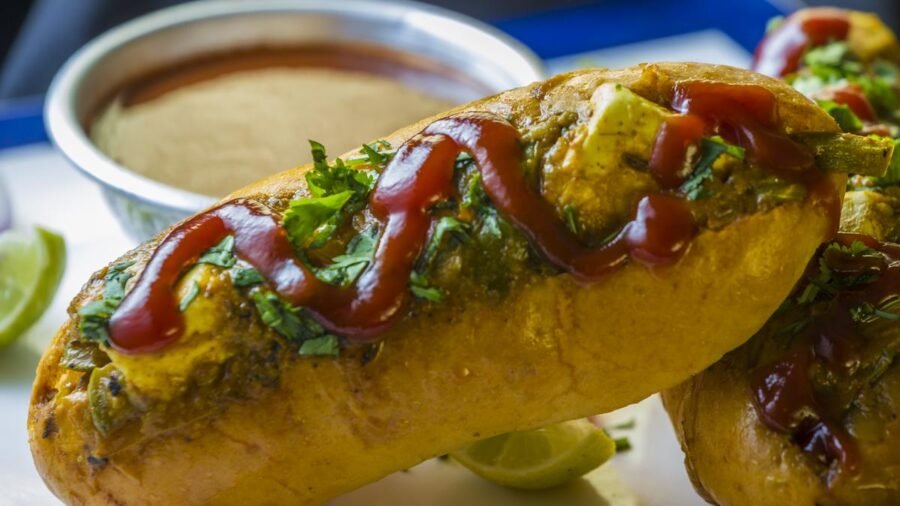
One of the interesting ways to understand the intricate web woven by culture is to approach the subject through food humans consume and what they refuse to eat, what they eat, how and in what combination and so on. Such questions provide volumes of data about the beliefs and identity of the people. Food is never just food, it is woven into traditions and social relationships. There is so much variety in it which gets extremely exciting and intricate because food has to be processed, spiced, flavoured, cooked and served in a certain order. Each of these steps have become so elaborate and refined that human beings can eat anything but there is a big restriction imposed by culture — taboos, preferences and so on.
The first meal of the day is different from what is consumed mid-day and the last meal of the day. Food consumed on festivals and holidays is different. Food offered to guests depending on their status is different from what is served to the members of the family. Quality of food easily reflects the mood of the people. Mourning food is different from the food consumed on occasions of rejoicings.
Different streams
Each one of these steps is not so straightforward. Each step is preceded or followed by a set of well-defined rules and procedures and is generally associated with the rituals relevant to the people. There are also so much regional differences as well. In India, there is another important variable on account of caste. Food also becomes an identity marker. The riddle of culture cannot be easily explained, though there have been many brave attempts to do it. Of course, it can be described, but the more you get into it more baffled you become and realise that the web of culture is not as fragile as the word “web” indicates.
Way back in 1970s, I was invited by a university in the U.S. as a Visiting Professor to teach two courses on India. One, I chose was rural society in India, which for me would not have required any major preparation. For the other, I wanted to choose a subject which would allow me to learn about the American culture. I wanted to select a topic which would allow the students to talk freely. I kept on debating and discussing about it with my scholar friends and then finally I decided to talk about the anthropology of food. My rationale was that food is a topic on which people give their opinions and preferences very easily. But that was not the subject of my specialisation, though I was generally interested in it. I decided to take the challenge and began my preparation earnestly. Honestly speaking, many times I suffered with post-decision dissonance. Anyway, since I had taken the decision which was also communicated to the authorities of the university, there was no question of going back on it. There was another major reason for self-doubt and that was that basically I have been a researcher and never had any major teaching assignment. That was going to be my first major teaching assignment and that too in an overseas setting with which I was not familiar with. It was going to be my first exposure to the western society.
It was the second course which posed some serious issues. To begin with, the students generally could not understand the basic objective of the course and hence very few students offered it but as we progressed the course became very popular and many students audited it. I wanted students to prepare dissertations on their food. But their response was very feeble. They would say that there was not much to write about their food — breakfast in the morning, some sandwiches for lunch, and some food in the night. I could not convince them it was not as simple as they were saying, there was much more to it. I thought that as usual, the students were reluctant to put their head down and write. As we moved forward, I realised that it was mostly I who was talking. I was indeed working very hard to cope with pressure of taking four classes per week. My spare time was spent mostly in library or preparing notes for the next class. I had hardly any time for my family.
Hot property
My dream that I would be hearing a lot from them was disappearing like thin clouds. But then one day, though I had not planned for it, I got my chance and I clasped it fully. It was a routine lecture describing food habits of the rural people in India. While giving the lecture, I said that some communities have preferences for some foods. For example, Americans are very much fond of eating dogs. Soon after I completed the sentence, there was complete silence as if the entire class has frozen, shell-shocked. To break the silence, I further said that not only that “you like to eat dogs but it also has to be ‘hot’”. Soon there was a sort of relief on the young faces, followed by a burst of laughter and almost in a chorus, they asserted that the dogs were their pet, they love them and so on, and in no uncertain terms, they made it clear to me that I made a big mistake. That was the moment that I seized the initiative. First, I sincerely apologised for hurting their sentiments and then I told them that I had come to America for the first time but wherever I go, I see huge and prominent advertisements for “hot dogs”.
Even before I completed the sentence, there was a kind of sarcastic laughter on my terrible ignorance and immediately some of them aggressively tried to educate me that the filling in the sandwich was not the meat of dogs but of chicken. I appealed to them to calm down. I told them that I was a Hindu and do not eat cows. And, therefore, if anybody sells sandwiches saying it was “hot cows”, I would not even look at it and there was no question that I would eat it. Cows, for us, are sacred animals. Therefore, now I pose a serious question to you. Dogs are pet animals for you which I understand fully but then give me one valid reason why do you call such a popular food item “hot dogs”. There was a kind of uneasy silence in the class. They were looking askance at each other. I suggested that they may consult their elders, friends and library and come forward with a reasonable explanation. That was the starting point. Thereafter, in my class, we had more such exciting questions and many students audited for the course. I was getting overwhelmed. They began to write dissertations on their food, the way they were named, festival foods, there were several dissertations on different aspects of the “Thanksgiving” dinner, when turkey is relished, and the folklore associated with it.
A student prepared a dissertation on hierarchy of food in America and his finding was that most of the high-ranking foods are of foreign origin. In the process, I began to learn a lot about American society and students got sensitised to culture and its grip on people in general. At the end of my term, the Chair of the Department wrote a complimentary letter appreciating my effort to make the subject popular among the students, thereby adding to the status of the department. Though the initial question with which it all began lingered on, but in the course of discussion, it was discovered that there was some exhibition of European goods in New York where a food stall was selling German frankfurters which had become very popular.
A cartoonist made a work showing Frankfurters as Dachshund dogs and slowly the imagination caught on and Frankfurters in America became “hot dogs”. That is, in fact, a partial explanation and does not answer the contradiction in it. Culture produces many such intricate riddles. We began to pursue them which created so much interest on culture.
pramodkumarmisra@gmail.com

From Agatti to Leh: 5 of India’s most scenic airports
By Sohail Khan · 29 Aug
Yardsticks for progress
By Sohail Khan · 29 Aug
A bird for a friend
By Sohail Khan · 29 Aug
Leave a Reply