Bengaluru space start-up unveils AI-powered optical sensor network for monitoring objects in Low Earth Orbit
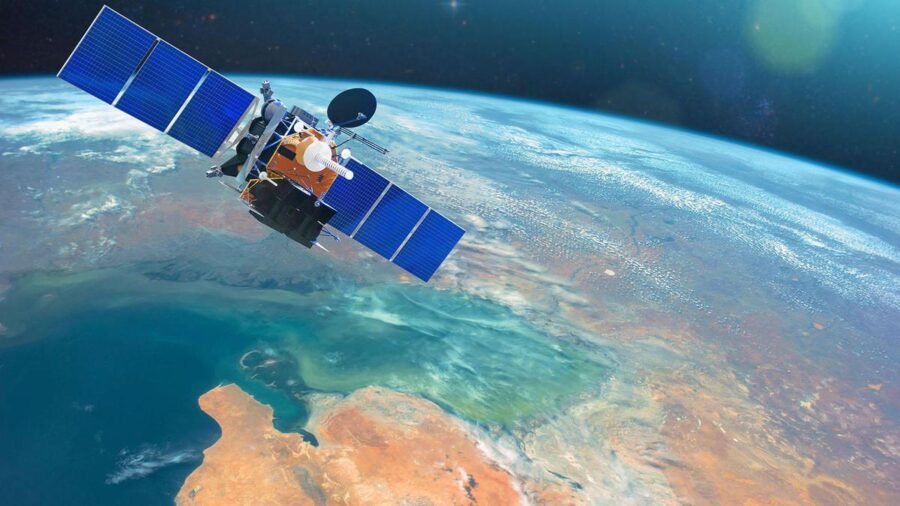
MOSAIC, an AI-powered, distributed optical sensor network that provides continuous, real-time custody of objects in Low Earth Orbit (LEO) was unveiled on Tuesday, by Bengaluru-based space domain awareness and defence intelligence company Digantara.
The company said this would reduce India’s reliance on foreign commercial providers for time-critical orbital tracking.
According to the company, the initial deployment comprises five nodes operating as a single coordinated surveillance network.
“Each node is a self-contained electro-optical sensor system, an Optical Head Unit for precision sky imaging, paired with an Electronics Head Unit for onboard processing, timing, communications, and autonomy, running independently on solar power with battery backup, engineered to survive in the summers of the Thar desert and in the winters of the Himalayas,” Digantara said.
It added that the MOSAIC’s hardware architecture strikes a balance between sensitivity and a large field of view, enabling it to catch faint Resident Space Objects (RSOs) across the wide swathes of sky.
The detection runs on an AI/ML-based technique that identifies stars and RSOs, including the faintest targets, followed by a Lost-in-Space attitude estimation approach that determines the RSO position with no prior information or cueing.
This will also be extended to alternative navigation use cases, primarily celestial navigation in GPS denied environments.
The company also cited the use of ISRO assets and commercial imagery from a U.S. firm during Operation Sindoor and how a domestically built platform like MOSAIC reduces India’s reliance on foreign players.
“During Operation Sindoor, India’s strikes on nine terror camps were backed by both domestic assets (ISRO’s Cartosat and RISAT satellites) and widely reported to have included commercial imagery from Maxar Technologies, a U.S. firm, used for target validation and post-strike damage assessment. The combination of domestic and commercial data enabled repeatable, layered imaging that proved critical to high-value target validation. It also underscored a broader reality about how India’s national security decisions still depend, in part, on data India does not own. The Digantara’s MOSAIC is what owning it looks like,” the company said.

Congress will return to power with 117 seats, says CM
By Sohail Khan · 18 Aug
Maoist leader acquitted in 2008 Laxmanananda Saraswati murder case, due to lack of evidence
By Sohail Khan · 18 Aug
Man gets 120-year jail term for abusing minor stepdaughters
By Sohail Khan · 18 Aug
Leave a Reply