Actor Madhoo Shah on being replaced in a film without being told: ‘I was deeply hurt’
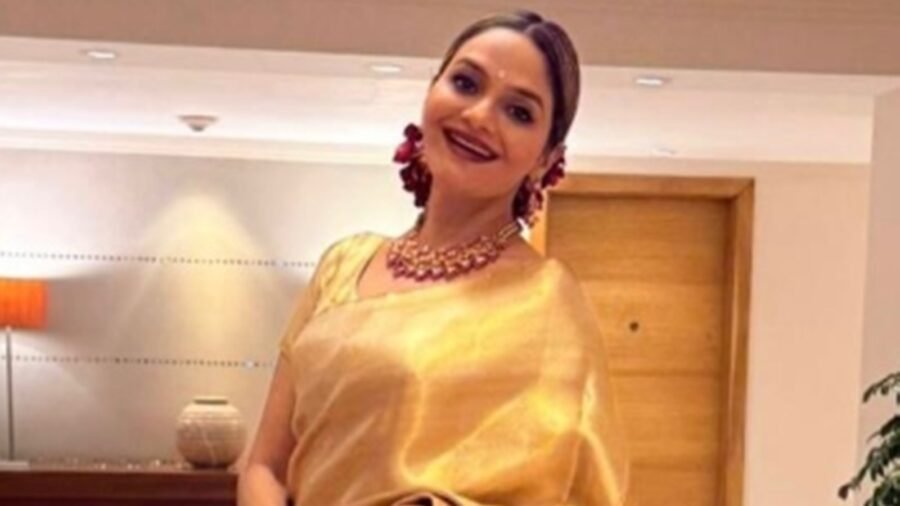
Roja actor Madhoo Shah opened up about being rejected from a film and how it left her very hurt. “I was replaced in an Aasif Sheikh film. I wasn’t even told about it. We read it in a magazine. I was deeply hurt. I was a very shy girl. I wasn’t that confident. My father was a producer, but I was not able to convey to him that I wanted to be an actor. My classmates in college thought…how can I be an actor? I could see it in their expression…because I was so shy. I was so underconfident. There were complexes. There were insecurities. And when I got rejected, I had to say that I didn’t get the film. The anger, the hurt. Then I graduated. My father was happy. Otherwise, I would not have completed it,” she said on the Meri Saheli Magazine podcast recently.
Weighing in, Delnna Rrajesh, a psychotherapist, said that there are two important conversations here. “One is about learning to survive rejection without allowing it to define our worth. The other, which we discuss far less, is about how compassionately we reject another human being,” she told indianexpress.com.
Story continues below this ad
Adding that it is important to say ‘no’ at times, the expert continued, “A candidate may not be right for a job. A relationship may need to end. A student’s work may not meet the required standard. An actor may not suit a role. Compassion does not require us to dilute the truth or continue something that isn’t working. But truth and kindness are not opposites. There is a difference between rejecting a choice and humiliating a person. Mindfulness asks us to create a small pause before delivering a difficult decision.”
That pause can change an experience enormously. “This matters because rejection frequently lands on wounds we cannot see. The employee sitting across from us may already be questioning their competence. The teenager we criticise may already feel inadequate. The partner we are leaving may be carrying an old abandonment wound. We are not responsible for healing every wound another person carries, but we can certainly try not to deepen it unnecessarily,” she described.
Compassion is not pity, said Delnna, instead describing it as “awareness translated into behaviour”. “It is recognising that there is another human being on the receiving end of our decision,” she added.
 Here’s what you need to consider
We cannot protect children from every rejection, nor should we. “But when they are not selected for the team, don’t immediately dismiss their hurt with “it doesn’t matter”. It matters to them. “Sit with the disappointment. Help them separate the outcome from their worth. Then, when they are ready, ask what they can learn and what they would like to do next,” shared Delnna.
Story continues below this ad
Perhaps this is what compassionate living ultimately asks of us: when we have power, use it gently; when we are hurting, speak to ourselves gently. “Life will inevitably give us moments when we are the person saying no and others when we are the person hearing it. We cannot remove rejection from human life,” said Delnna.
View this post on Instagram
A post shared by Meri Saheli Podcast (@merisaheli.podcast)
But we can become more mindful of how we deliver it, more compassionate in how we receive it, and more careful about the meaning we attach to it. “Because sometimes we cannot change the decision. But we can always choose the humanity with which it is delivered,” expressed Delnna.

Fatty liver: 6 popular hacks rated from -10 to 8 by a gastroenterologist
By Sohail Khan · 23 Sep
350 hours for Rashmika Mandanna, 500 for Shakira: The making of two showstopping looks
By Sohail Khan · 23 Sep
I have voted for three decades. Why is my SIR incomplete?
By Sohail Khan · 23 Sep