Why Mumbai airport is cutting 265 weekly international flights, and what’s next
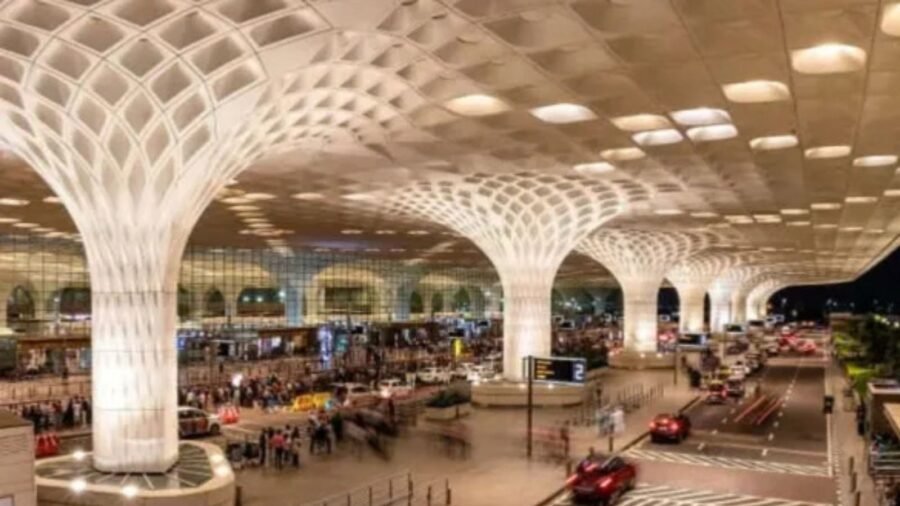
Mumbai’s Chhatrapati Shivaji Maharaj International Airport is set to temporarily cut nearly 265 weekly international flights from October 25 as it accommodates additional domestic traffic at Terminal 2 (T2) following the planned closure of Terminal 1 (T1) for redevelopment.
Recently, Adani Group-owned Mumbai International Airport Ltd (MIAL) informed nearly 46 airlines that international departure slots at T2 would be reduced by about 33 per cent. Of the 770 weekly international departure slots currently available at T2, 265 will be temporarily discontinued.
IndiGo is set to lose 74 weekly international flights, followed by Air India (33), Akasa Air (11), Air India Express (7) and SpiceJet (5). Foreign carriers Emirates and Etihad Airways will face a reduction of 10 weekly departures.
Story continues below.
Subscribe to see fewer ads.
Airlines have been given an October 6 deadline to identify the slots they are willing to surrender. If they fail to do so, MIAL will determine the slots to be withdrawn based on operational capacity and other considerations, according to sources.
Why is international flight capacity being cut?
The reduction in international capacity is intended to create space for domestic operations that will be shifted from the Santacruz-based T1, which is due for demolition and reconstruction.
However, T1 will not be shut down all at once. The redevelopment plan is limited to the northern section of Terminal 1B, which handles around 5 million passengers annually. The transition will be phased, with one-third of flights moving initially, another third later, and the full shift expected by January 2027.
Besides the temporary redistribution of domestic passenger traffic of 5 million to the Navi Mumbai International Airport (NMIA), the remaining two-thirds or 10 million passengers will continue to fly out from T1. Currently, T1 operates nearly 950 flights daily.
Story continues below this ad
Earlier this month, airport authorities asked airlines operating from T1 to either shift operations to NMIA or temporarily suspend services from October 25. MIAL said the redevelopment was deferred because alternative operating facilities were not available. The airport operator has also assured airlines that their historic slot rights will be restored once the new terminal becomes operational.
The new T1 is expected to be commissioned in 2029-30.
What was the response?
The plan has faced resistance from several airline operators.
Last month, the International Air Transport Association (IATA) wrote to the Civil Aviation Ministry opposing what the “forced” relocation of operations to NMIA. The global airlines body argued that any transfer should be voluntary and based by airlines’ commercial and operational requirements.
Story continues below this ad
It also raised concerns about NMIA’s readiness in ground handling, aircraft maintenance approvals, catering, cargo facilities, crew accommodation and connectivity. IATA sought a transparent capacity assessment, advance consultation with airlines and clarity on the treatment of existing airport slots during the transition.
Similar concerns have been raised by international logistics carrier Challenge Group, which announced a temporary suspension of its Mumbai operations, citing the inability of the present NMIA operating setup to provide the reliability and certainty required for its cargo operations. Air France-KLM has also opposed splitting its long-haul operations between the two airports, citing operational constraints.
What’s next?
The immediate focus is on the October 6 deadline for airlines to identify international slots they are willing to discontinue. If they fail to do so, MIAL will allocate the slots based on operational and capacity considerations, as per sources. The transition is expected to affect passenger traffic through changes in flight frequencies, schedules and departure airports, with some passengers potentially facing longer journeys to NMIA.
With the October 25 deadline approaching, the deadlock between MIAL and airlines over the transition has not eased. While the airport citing redevelopment requirements and airlines seeking flexibility and greater consultation, the standoff could increasingly disrupt airline schedules and passenger traffic in the coming months.


‘First Decide Assessee’s Objections, Then Reopen Completed Tax Assessment’: Bombay HC
By Sohail Khan · 3 Oct

Leave a Reply