Uttarakhand’s SIR final roll is out — but the voter enrolment exercise isn’t over yet
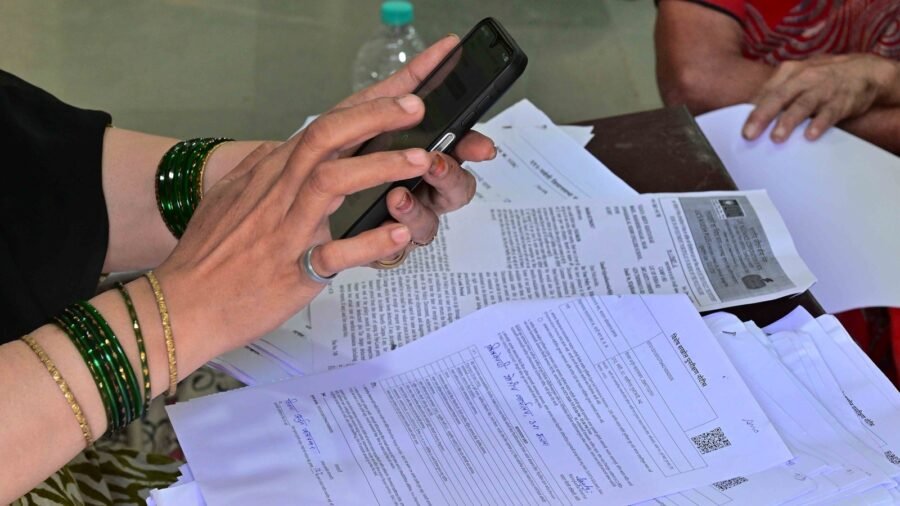
The CEO office has also clarified that the declaration form used with Form 6 — the form to enrol voters on the list — during the SIR phase was specific to that exercise. During the non-SIR period, the forms prescribed under the Registration of Electors Rules, 1960, will be used.
Story continues below.
Subscribe to see fewer ads.
What the exercise will entail
The details of the post-SIR exercise are contained in a presentation prepared by the Chief Electoral Officer, Uttarakhand, for Saturday’s meeting with recognised political parties. Based on the Election Commission’s latest directions of September 29 and October 1, it says BLOs will prepare a list of electors who were present in the pre-SIR roll but do not figure in the current roll. They will then conduct house-to-house visits to ascertain the voters’ present status and, where eligible, facilitate their enrolment through Form 6.
The exercise will not be restricted to those whose names disappeared during SIR. During their house visits, BLOs will also facilitate Form 6 for left-out voters as well as first-time and young eligible voters. They have been asked to try to cover at least 20-25 identified electors every week so that the exercise can be completed in about a month.
The move comes as Uttarakhand on Saturday published its final electoral roll with 71,58,949 electors, after a claims-and-objections process that saw 1,29,872 new voters added and 1,04,708 names deleted according to the rules, the Chief Electoral Officer’s office said.
The state had 79,60,762 electors when the SIR began on June 8. The draft electoral roll published on July 14 contained 71,33,785 electors. The final roll, therefore, represents an increase of 25,164 over the draft, but remains about 8.02 lakh below the electorate at the beginning of the SIR.
Story continues below this ad
The final roll contains 37,37,701 men, 34,21,036 women and 212 third-gender electors. It includes 72,656 voters in the 18-19 age group and 1,22,892 voters above the age of 80. The state has 12,543 polling stations.
The post-SIR exercise will also involve recognised political parties. The CEO’s presentation says BLOs will share the list of identified electors with recognised political parties, while the lists, Form 6 applications and field-verification reports will be submitted to the Electoral Registration Officer. At the end of the exercise, EROs will share booth-wise lists with political-party representatives, providing another opportunity for eligible left-out voters to be enrolled.
The Election Commission has also directed the state to conduct targeted outreach among vulnerable groups. The CEO’s presentation says adequate help desks and special camps will be organised, as required, for people living in night shelters, workers, poor and homeless people. It also calls for a special campaign to enrol left-out and young or first-time eligible voters in states and Union Territories where SIR has been completed.
The October 3 action plan says district-level special camps and help desks are being planned by Electoral Registration Officers in accordance with the ECI’s September 29 and October 1 directions.
Story continues below this ad
Why the exercise
The fresh exercise follows the large reduction in the electorate recorded during the SIR. The CEO’s presentation shows that 8,26,977 electors were classified as “uncollectable (ASDD)”, accounting for 10.39 per cent of the electorate before the draft roll. Dehradun recorded the highest number of such electors at 1,86,008, followed by Udham Singh Nagar at 1,77,673 and Haridwar at 1,30,203.
earlier reported that 1,30,382 Form-7 applications seeking deletion of names had been filed during the claims-and-objections period. Four districts — Udham Singh Nagar, Haridwar, Dehradun and Nainital — accounted for more than 85 per cent of these applications, with 43,878, 29,369, 19,402 and 18,301 applications respectively.
The CEO’s data released Saturday shows that the claims-and-objections period subsequently resulted in 1,46,511 Form-6 applications, of which 1,29,872 were accepted and 16,639 rejected. The presentation also records 1,93,890 Form-7-related cases, including 97,186 cases marked “ineligible for final” and 89,182 rejected.
A Form-7 application is a request for deletion; the final roll reflects the outcome after the claims-and-objections and verification process. The CEO’s statement puts the number of voters ultimately deleted at 1,04,708.
Story continues below this ad
The final roll was published 18 days after the original September 15 deadline. According to the SIR schedule, the period for filing claims and objections ran from July 14 to August 13, while the disposal period was subsequently extended to September 28. The final publication date was revised from September 15 to October 3 following the Election Commission’s September 7 directions.

Former Kerala police chief resigns as councillor months after mayor snub
By Sohail Khan · 3 Oct
Chhattisgarh tiger reserve finds 2,500 trees girdled. Satellite images show scale
By Sohail Khan · 3 Oct

Leave a Reply