The unscripted combat sport called Indian traffic
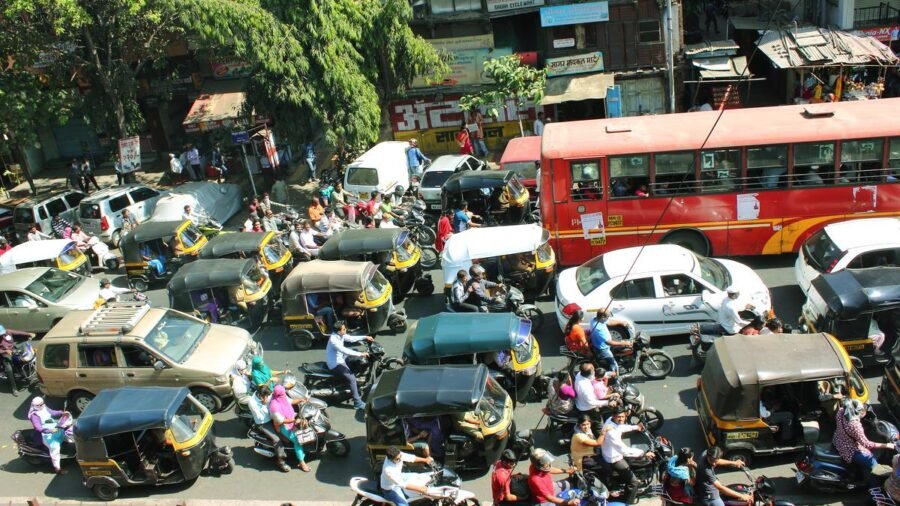
On a recent trip to Europe, we saw, in almost all the cities we had visited, drivers stopping mid-traffic to let pedestrians cross. This is in stark contrast to what we see in India. Here, navigating the roads is a real challenge for the pedestrians. The second you get behind the wheel, your driving licence loses its legal weight and effectively becomes a waiver — a gentle reminder that the universe has absolved itself of all liability the moment you pull into traffic.
First, let us talk about traffic sense — or rather, its complete and glorious absence. In India, lane markings are less rule than rumour, treated not as boundaries but as artistic suggestions from a civil engineer who was clearly dreaming of a better country.
Straddling the exact centre of two lanes is standard technique, guaranteeing that nobody behind you can overtake, no matter which side they choose to risk their life on.
Then there is the sacred ritual of continuous honking. Elsewhere in the world, a horn is reserved for genuine emergencies. In India, it is an acoustic extension of the driver’s soul, deployed to express joy, rage, existential dread, or simply to announce, “I exist, therefore I honk.” Drivers honk at red lights, honk in traffic jams going nowhere, and honk at stationary trees and park benches — in case the trees decide to wander into the road. The noise is relentless enough that visitors to Bengaluru regularly complain; one Japanese tourist fled straight back to his hotel, unable to take it any longer.
Designated targets
If you are a pedestrian trying to cross the street, may the odds be ever in your favour. Zebra crossings function less as safe zones and more as designated targets. Slowing down for a pedestrian is viewed by fellow motorists as a sign of deep moral weakness. In fact, whenever we try to cross the roads, the oncoming vehicles increase their speed to prevent you from crossing the road. The pedestrian, well drilled in this ritual, responds with a panicked sprint graceful enough to qualify for the Olympics.
Red traffic lights present another fascinating psychological study. Officially, a red light means “stop”. Unofficially, it means “stop, unless there is no traffic constable in sight”.
An empty intersection at a red light is taken as a personal insult to an Indian driver’s sense of efficiency. Standing still with no cross-traffic in sight is considered an unpardonable waste of fuel and momentum. Red lights, in practice, function as polite suggestions rather than instructions.
Ultimately, surviving a daily commute in India calls for a rare blend of supernatural reflexes, total fearlessness, and unwavering faith in divine intervention. You do not simply drive to your destination — you survive a trial by fire and arrive faintly astonished that all four wheels made the journey with you.
A friend of mine who works in Dubai was once refused a driving licence there. He protested that he had been driving in India for over 30 years. The inspector’s reply was withering: “Sir, you have been moving cars. You have not been driving.” He may have had a point.
India still has no law imposing serious fines for needless honking, and we all know how driving licences get handed out here. It is high time stringent tests were introduced before anyone is let loose behind a wheel.
ksvenkat48@gmail.com
When Gandhi fed curds to Lord Mountbatten
By Sohail Khan · 4 Oct
Talking to men: A much needed conversation
By Sohail Khan · 4 Oct

Leave a Reply