Age-old synergy, vibrant rhythms
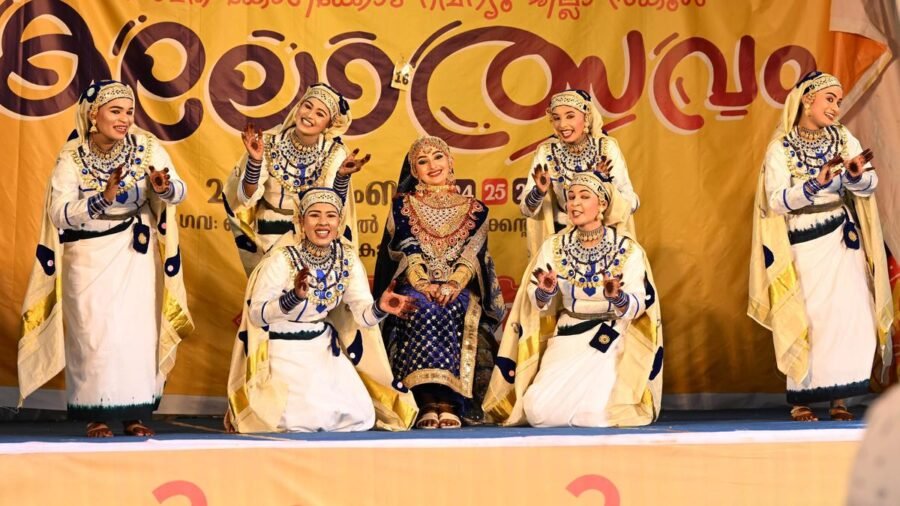
The first time I watched Oppana, a folk dance of the Malabar region of Kerala, I was simply left captivated. What is most fascinating about this group dance by women is its history.
It is believed to have started as a form of entertainment by the women of the Mappila community. Origin of Mappilas, or Muslims settled in northern Kerala, goes back to medieval times, when there was a flourishing trade relationship between the Arab world and Kerala, based on spice trade.
Due to various factors such as weather, political turmoil or travel constraints, Arab traders were at times forced to stay back for short periods in the coastal areas of Malabar. Over generations, their association with the local population gave rise to the Mappila community.
As Islam took root in Malabar and the community integrated elements of Arab culture into its own practices, unique art forms such as Oppana sprang up, and that is perhaps one of the most beautiful expressions of that cultural meeting. The rhythmic clapping, gentle movements, vibrant attire, and music makes Oppana one of the most vibrant and expressive folk dance forms of Malabar, carrying traces of this long cultural journey. It is believed that the word Oppana signifies singing and rhythmic clapping.
Adaptation and transformation
Oppana slowly underwent a process of adaptation and transformation, incorporating new musical styles, choreographic techniques, and thematic motifs. The dance form absorbed influences from indigenous traditions such as Thiruvathirakkali, performed by Hindu women, resulting in a unique fusion of Arab and Malayali aesthetics.
It was during a school art festival in Kannur district of Kerala that I got a chance to see young girls perform Oppana on the stage. The festival is Asia’s largest school arts festival and is a much-awaited competitive annual event organised by the Kerala government to preserve and promote growth of various art forms including classical dances, music, drama, painting, and tribal art forms. Many Malayalam film stars such as Manju Warrier and Kavya Madhavan are products of this festival.
Oppana is traditionally associated with weddings, and is fun-based aimed at teasing the young bride. It was simply a delight to watch a beautifully dressed bride adorned in gorgeous gold ornaments sitting on a high-seat peedam wearing mylanchi, or henna, on her palms, ankles, and feet. Other performing women were dressed in traditional Kerala Muslim attire and they formed a circle around the bride, clapping their hands in a simple rhythmic movement.
It started slowly with the bride’s friends walking in with her, singing lines of a prayer song named Bismiyum Hamdum. It soon caught pace and moved onto fast rhythmical steps.
Brightly coloured attire worn by performers included a long-sleeved blouse known as jubba with a scarf called thattam paired with a flowing skirt called a kaachimundu, enhancing its visual appeal.
Oppana songs are called Mappilappaattu (songs of Mappila) revolving around themes of love, romance, and devotion.
Sung in an interactive format, they evoke a range of emotions, from longing and passion to jubilation and ecstasy. Each Mappilappaattu has a unique rhythmic style, which is called Ishal, akin to Hindustani music’s tal and raga. Ishal carries a strong influence of folk songs of Kerala and Arabian musical traditions. Mappilappaattus are generally written in Arabimalayalam, which is the unique community language of Mappilas, meaning writing oral Malayalam by using Arabic and modified Arabic letters. Arabimalayalam has borrowed the words from many languages such as Malayalam, Arabic, Tamil, Persian, and Tulu.
Therefore, Mappilappaattu has Tamil, Persian, and Arabic words. Songs are often accompanied by musical instruments such as harmonium, ganjira, tabla, and elathaalam (cymbals).
Resilient cultural expression
Despite the vicissitudes of history, Oppana persisted as a resilient and enduring form of cultural expression, maintaining its relevance and vitality within Kerala’s cultural landscape.
In contemporary times, Oppana continues to thrive as a vibrant expression of Kerala’s cultural heritage, transcending geographical boundaries and captivating audiences worldwide.
Oppana has now found new avenues for expression in cultural events, festivals, and competitions, continuing to inspire and delight audiences with its beauty, grace, and emotional resonance.
pooja.kashyap78@gmail.com

Cycle of life
By Sohail Khan · 3 Oct
Why sunsets feel so calming
By Sohail Khan · 3 Oct
Postcards from Mira and Shahid Kapoor’s Italian getaway: ‘La Dolce Vita’ essentials
By Sohail Khan · 3 Oct
Leave a Reply