Tariffs, sanctions becoming policy instruments, sometimes weaponised: P K Mishra
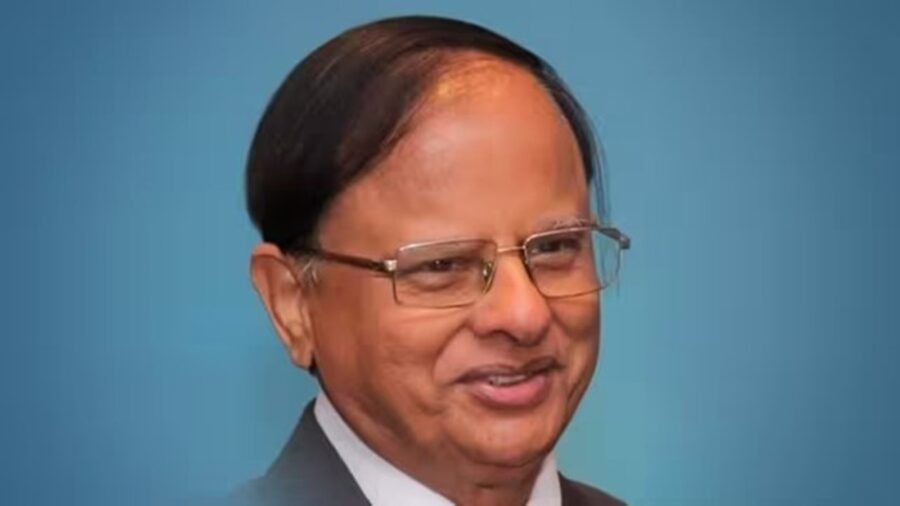
The Principal Secretary to the Prime Minister, P K Mishra, on Saturday said tariffs, export controls and other restrictions are increasingly being used not only for conventional commercial objectives but also for strategic purposes, and these “instruments of economic policy are sometimes even weaponised”.
He said the future will belong to those who can be “steady without being closed, careful without being fearful, and ambitious without being naïve”, and India intends to be such a country.
Speaking at a session on ‘A World Priced for Risk’ during the 5th Kautilya Economic Conclave, Mishra said, “We are increasingly confronted, not merely with risk, but also with uncertainty… The events of this decade have brought this distinction into sharp focus. We have seen a pandemic disrupting production and mobility across the world, wars disrupting energy and food markets. Shipping routes and geographical chokepoints become sources of economic vulnerability. Export restrictions, sanctions and tariffs become instruments of economic policy, even sometimes they are weaponised. Critical minerals, technologies and even financial infrastructure require a new strategic significance…”
Discussing risks associated with energy availability, Mishra said, “For decades the principal question for an energy importing country or energy importing economy was often price of energy. Today, there is another question — will the energy be available or can it reach us?”
Story continues below.
Subscribe to see fewer ads.
“A disruption in a major shipping route can affect the price of crude oil thousands of kilometres away. Geography has, therefore, become an economic variable…The economic logic of globalisation was built around specialisation — produce where costs are lowest and move the goods efficiently across borders. The logic remains relevant and even powerful, but the experience of the pandemic, geopolitical conflict and more recent disruptions have highlighted another consideration: the cost of interruption. A supply chain that is efficient in normal times may be fragile if the single-node supplier or geography becomes unavailable,” he said.
“We are seeing similar development in critical minerals. Lithium, cobalt, rare earths and other minerals are essential to batteries, electronics, renewable energy and advanced manufacturing, but their extraction, processing and refining are highly concentrated geographically. Geography, we thought technology has made it irrelevant, but it has returned to the centre of the table, and it is not only oil, the minerals of energy transition are held in very few hands. For nearly all of them, a single country does most of the refining. So, the clean energy future, which was meant to free us from oil dependence, risks creating new ones,” Mishra said.
“The result is a world in which economic policy and geographical considerations are becoming more closely intertwined. The question before policymakers is therefore not whether globalisation has ended. It has not. The question is how we preserve the gains from openness, while making economies less vulnerable to concentrated and unpredicted shocks.”
On India’s response to global supply chain shocks in the wake of disruptions around the Strait of Hormuz, Mishra said, “India is a major energy importer and any prolonged disruption to an important maritime route can affect the economy adversely. India’s response has combined several layers of protection.”
Story continues below this ad
“We have maintained substantial stocks, increased domestic production and ensured that alternative supply routes and suppliers are available. For example, the number of countries from which we import crude oil has increased from 27 to 43, which is very large,” he said.
He said India has also responded through greater diversification of our external economic relationships.
“An open economy will always depend on other economies. The objective is not to eliminate that dependence, but to avoid excessive concentration. India’s recent trade policy illustrates this approach. India now has a broader network of trade agreements, including agreements with the UAE, Australia, AIFTA [ASEAN–India Free Trade Area] and more recently, the United Kingdom, Oman, New Zealand and the European Union. There is one more form of resilience that is perhaps less visible, and that is macroeconomic resilience,” he said.
“I believe the world that is coming will belong to those who can be steady without being closed, careful without being fearful and ambitious without being naïve. India intends to be such a country. I hope that together we can help build such a world.”
‘Baseless’: India rejects Pakistan’s claim over Ferozepur border incident, summons envoy
By Sohail Khan · 3 Oct
Leave a Reply