Narendra Modi’s 25 years have been about building the nation
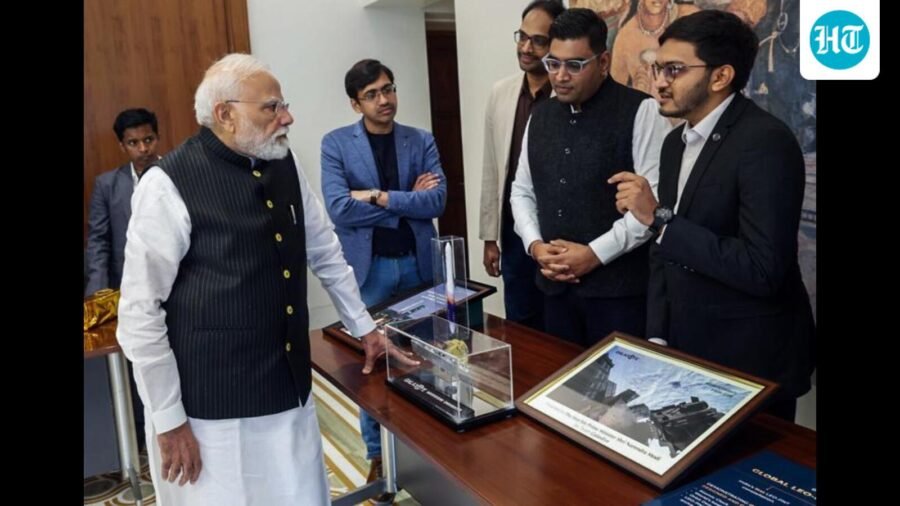
PM Modi’s life in government has been characterised by relentless hard work, boundless patriotism, and an unwavering faith in the youth
Published on: Oct 3, 2026, 19:15:47 IST
Prefer HTon Google
Share via
Copy link
Formation and change of governments is a natural process in a democracy, and exercise of power is a given. But when a leader transforms that power into an instrument of “discipline and service,” then they do not merely create history; but change the course of history itself. Prime Minister (PM) Narendra Modi’s journey that began when he took oath as Gujarat chief minister (CM) on October 7, 2001, continues to this day, and has been far more than a political career. It has been an uninterrupted 25-year-long national service, devoted to India. This uninterrupted service of more than 9,000 days, without fatigue, stands as a remarkable record of public service, lived in the spirit of “rashtraay swaha, rashtraay idam na mama” (“I offer myself to the nation; nothing is mine”).
The most striking feature of this silver-jubilee period is that PM Modi placed the country’s greatest source of energy — its “youth power” — at the centre of governance. From rebuilding Gujarat, to the roadmap for a “developed India” by 2047, Modi has regarded the country’s youth not merely as voters or beneficiaries, but as co-creators of India’s future. At a time when completing even five years in government is considered a major achievement, completing 25 years as a constitutional office-holder in a vast and diverse democracy like India is, in itself, evidence of the enduring trust that the people have placed in him.
Narendra Modi’s personality embodies an ideal deeply rooted in Indian thought: When it comes to matters of national interest and security, his decisions are as firm as a “thunderbolt,” while his heart remains as sensitive as a flower toward the person standing at the last rung of the societal ladder. The greatest feature of his work has been his exceptional ability to turn challenges into opportunities. A remarkable vision for turning challenges into opportunities. Whether it was transforming Gujarat into a modern industrial powerhouse from the rubble of the devastating 2001 Bhuj earthquake, or, after 2014, bringing India out of policy paralysis and despair and establishing it as one of the world’s leading economic and strategic powers. The greatest example of his policy foresight was seen during the difficult and bleak period of the Covid-19 pandemic. While the entire world was gripped by fear during the slowdown caused by the global pandemic, Modi turned the “disaster into an opportunity”, calling upon the country’s youth and instilling in them a renewed spirit of entrepreneurship. During that period, India’s youth made history through their talent and innovation, building a record number of new startups and “unicorns”, and compelling the world to recognise the strength and potential of India’s young generation.
As the “pradhan sevak”, he has never regarded office as a matter of prestige, but rather as a demanding test of his responsibility. The mantra of “reform, perform and transform” that he brought into governance broke the shackles of a centuries-old colonial mindset, and generated a new wave of national self-confidence.
When he took charge of Gujarat in October 2001, the state was grappling with serious crises. Yet, Modi laid the foundation for forward-looking and institutional changes, instead of relying on short-term populist promises. He understood very well that the progress of any society depends on the skills and education of its younger generation. As CM, the experiments he undertook for young people have today become models for the entire country. Modi moved beyond traditional universities and focused on specialised and modern fields. He established innovative institutions such as the Forensic Sciences University (now the National Forensic Sciences University, NFSU), Raksha Shakti University (now Rashtriya Raksha University, RRU), the Petroleum University (PDPU), and Children’s University. These institutions provided young people with specialised expertise suited to the demands of the 21st century. Through “shala praveshotsav” and “gunotsav,” he worked to minimise dropout rates, enabling children from rural and disadvantaged backgrounds to dream of higher education and a better future.
The Vibrant Gujarat Global Summit, launched in 2003, was not merely a platform for large industries. It also became a means of opening new doors to employment and entrepreneurship for Gujarat’s youth at the global level. He taught young people that they should not become merely job seekers, but should connect with the industrial ecosystem and become job creators themselves. Linking sports with the holistic development of youth, he launched the Khel Mahakumbh in Gujarat in 2010. This platform identified sporting talent in villages and rural areas and gave these young athletes the confidence and support to perform on national and international stages.
When PM Modi assumed office as the country’s pradhan sewak in 2014, he expanded Gujarat’s successful youth-centric model to a much larger national scale. Addressing the country’s young people from the ramparts of the Red Fort, he said, “This is the time to recognise the potential of the country’s youth.” In the years since, the country has witnessed how the government’s approach toward young people has undergone a fundamental transformation under his leadership.
Before 2014, India had barely a few hundred startups, and the country was largely viewed only as a service provider. In 2016, Modi launched Startup India and Stand-Up India, encouraging the country’s young talent to take risks and pursue entrepreneurship. Today, India has become the world’s third-largest startup ecosystem, with more than 247,000 recognised startups and over 130 unicorns. Startups emerging from tier-2 and tier-3 cities are making their presence felt across the world. The MUDRA yojana has helped crores of young people, particularly first-generation entrepreneurs from rural and disadvantaged communities, stand on their own feet by providing collateral-free loans. Through the Startup and Stand-Up movements, he laid the foundation for transforming young people from “job seekers” into “job creators.”
The National Education Policy 2020, introduced after a wait of three decades, is a living testament to Modi’s far-sighted thinking. It sought to free young people from a rote-learning system and give them greater opportunities to think, innovate, and pursue technical and higher education in their mother tongue. Provisions such as a multiple-entry-and-exit system, the integration of skill development into the curriculum, and measures to promote research have brought the education of young people closer to international standards.
Affordable internet, the expansion of optical fibre, and the UPI revolution have placed even the most ordinary Indian youth on a footing to compete globally. Today, young people from remote Ladakh to Kanyakumari are coding on their smartphones, showcasing their creativity on YouTube and other digital platforms, and selling local products in global markets through e-commerce.
Modi has completely overturned the old Hindi adage, “Padhoge likhoge toh banoge nawab, kheloge koodoge toh hoge kharaab.” Through ambitious programmes such as Khelo India and Target Olympic Podium Scheme (TOPS), talented athletes from small towns and tribal regions have received world-class coaching, financial assistance, and modern resources. The historic medals won by India’s young athletes at the Olympics, Paralympics and Asian Games are a reflection of this far-reaching vision.
Modi opened up the space and defence sectors, which had remained closed for decades, to the private sector and young startups. Today, young Indian scientists and private space startups are sending their own rockets and satellites into space. Behind the historic success of Chandrayaan-3 stood a team of young scientists, many in the 30–35 age group, working with determination and dedication. They offered the world a glimpse of the confidence of a new India.
PM Modi often refers to the country’s youth as the “Amrit Generation.” Understanding the advantage of the demographic dividend Bharat currently has, he believes that the responsibility for making India a fully developed, self-reliant nation and vishwabandhu (“friend of the world”) by 2047 rests on the shoulders of this generation. The Mera Yuva Bharat platform (MY Bharat) for young people has become a historic digital mass campaign, connecting crores of young Indians with constructive nation-building activities, social responsibility and leadership development.
During these 25 uninterrupted years, Narendra Modi has returned one particularly important thing to the Indian public, and especially to its youth: “self-confidence.” Today, India’s youth are no longer victims of an inferiority complex. They stand tall on the world stage with their own language, culture and intellectual capabilities.
Completing 25 years in the corridors of power is not merely a milestone of time. It is proof that when intentions are clear, policies are well-defined, and loyalty is devoted solely to the nation, it is possible to earn the unwavering trust of the people. The foundation of administrative efficiency and youth empowerment that Modi laid as CM of Gujarat has now grown into a mighty banyan tree in his role as PM of the country.
The life of this “nation-builder,” characterised by relentless hard work, boundless patriotism and an unwavering faith in the limitless power of youth, will forever remain a beacon for generations to come. This 25-year-long journey of dedication and perseverance strengthens the belief that, under Modi’s capable leadership, India’s youth will not only turn their dreams into reality through their limitless energy, but will also undoubtedly make the 21st century “India’s century.”
Aditya Trivedi is regional general secretary, BJP Kanpur-Bundelkhand Region. The views expressed are personal
(This is a digital exclusive)
Get Current Updates on India News, Elections 2024, Lok sabha election 2024 voting live , Karnataka election 2024 live in Bengaluru , Election 2024 Date along with Latest News and Top Headlines from India and around the world.
See Less

Cancer warrior Manisha Koirala on rebuilding fitness: ‘It’s always a team effort’
By Sohail Khan · 3 Oct
These 6 kitchen staples can help boost iron—but how you eat them matters
By Sohail Khan · 3 Oct

Leave a Reply