How Cornell rape case throws a harsh spotlight on fraternities — and their pattern of violence

Story continues below.
Subscribe to see fewer ads.
The incident also shone a harsh light on a ubiquitous aspect of college life in the US — fraternities, which are male student organisations built around shared social, academic or professional interests.
Many have voiced anger over the autonomy and freedoms enjoyed by fraternities (also called frats) across the country, relative to their status as a student-led group.
In fact, the mayor of Ithaca, where Cornell is situated, has called for a moratorium on fraternity life (also called Greek life because frats are named after Greek letters), with the Chi Phi fraternity’s Cornell chapter shut down pending investigation.
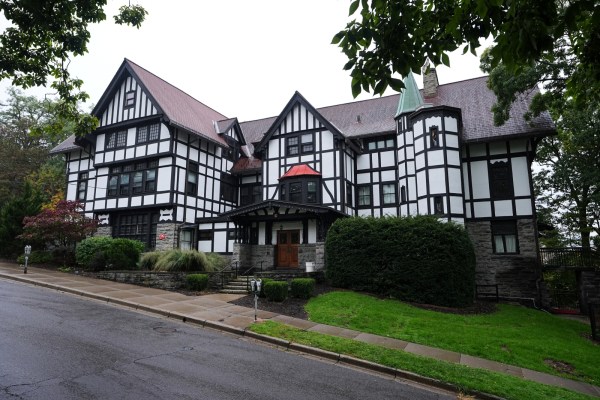 The Chi Phi fraternity house at Cornell University.
Around a million students are estimated to be currently part of such organisations across the US, according to Fraternity Advisor, a website that documents US college fraternities.
Story continues below this ad
Why are fraternities, or for that matter sororities (their female equivalent), so common in the US? Why do they attract so many students? Why are they always named after Greek letters (such as Chi Phi)? And, what exactly do they do? Here’s a primer on their evolution and significance.
How fraternities evolved
Until the late 1700s, student-led groups in the US were dominated by literary societies.
Nicholas L Syrett, author of the book A History of White College Fraternities, told : “Almost everyone who wanted to be in one (literary society) was able to join.”
Indeed, at some schools “students were basically required to join one of two societies. In that sense, they weren’t exclusive at all”.
Story continues below this ad
In 1776, however, a fraternity called Phi Beta Kappa at the College of William and Mary in Virginia came up as an alternative.
Fraternities, unlike literary societies, were a solution for engaging in discussion and were, from the very beginning “by definition exclusive”, said Syrett, who is Gender Studies Chair at the University of Madison-Wisconsin.
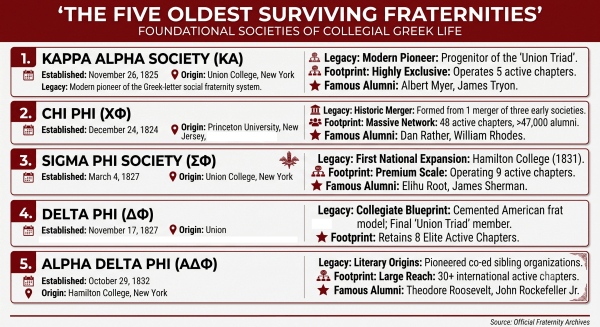 The five oldest surviving fraternities in the US.
As fraternities expanded into the 19th century, they solidified to serve a specific social function. “One of the reasons was also to separate out the wealthier or secular students from the poorer students studying for the ministry”, said Syrett.
Some universities, like Harvard, “banned traditional fraternities” (1850s) or limited the presence of “Greek life” on campus. “In some instances, these groups re-emerged anyway,” and groups like the finals clubs that Harvard houses “are not all that different from fraternities in that they are generally more open to wealthier students,” according to Syrett.
Story continues below this ad
The biggest difference between fraternities and other social student groups like clubs at Harvard and Princeton is that they are not “single-sex” and that made them “less likely to be sites of sexual assault” said Syrett.
The Greek lettering which fraternities organise themselves by today was derived from the position the study of the Classics represented in Western education. The system today encompasses fraternities, sororities, Black fraternities and multi-cultural organisations. Many fraternities are today included in the US’s National Register of Historic Places.
Who was allowed to participate?
For much of their existence, Greek letter organisations had membership restrictions that could encompass elements from race and class to gender and political ideology. The fraternal mindset of brotherhood was contingent on who qualified as community.
In fact, the development of Alpha Phi Alpha, the first Black Greek-letter organisation, is an illustrative example. In 1906, seven Black students founded the fraternity as a way for minorities to confront racial prejudice.
Story continues below this ad
Over time, it developed into a national fraternity and in 1930, the National Pan-Hellenic Council (NPHC) was formed by representatives of Black letter organisations.
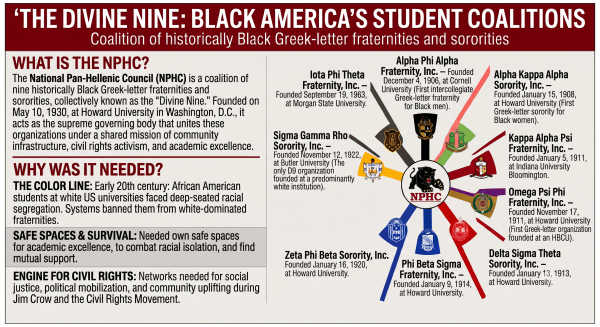 Fraternities for Black students.
Fraternities were also gender-segregated and ‘sororities’, as they were known for women, developed later during the expansion of women’s higher education. The underlying structure remained the same.
Today, “it is illegal today for race, religion or ethnicity to be a part of the pledging process”, said Syrett. Should such an incident come to light, “universities at which they are housed run the risk of losing their federal funds”.
What do fraternities actually do?
Fraternities, today, are not simply local clubs indulging in the odd bit of partying as many might believe.
Story continues below this ad
Over time, they have become institutions functioning similar to corporate entities.
A national organisation oversees local campus chapters which consist of undergraduate members. The national board and chapter houses also benefit from their respective alumni networks built over time.
The national boards of these organisations, interestingly, are rarely run by students themselves and are generally “supported in part by the dues that the members pay”, Syrett said.
Alumni protests over fraternity crackdowns are not “unprecedented” and the national organisations also have “lobbyists in Congress who work to limit how much they can be regulated”, he said.
Why the Cornell case has gained such traction
Story continues below this ad
The Cornell 7 case reflects a wider pattern of fraternity behaviour and misconduct.
In 2007, researcher John Foubert concluded that fraternity men were three times more likely to commit sexual assault than non-participants. Excessive alcohol ingestion is another component which fraternity life is closely linked with.
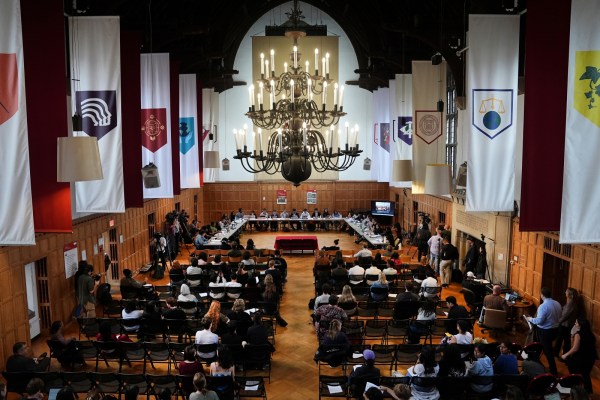 A public hearing on sexual assault on campus at Cornell University on October 1.
The Harvard School of Public Health College Alcohol Study reported that four out of five (80%) fraternity and sorority members engage in binge drinking, which is double the rate of the general college student population.
These fraternities are also infamous for their hazing practices, which are essentially humiliating initiation rituals for new students hoping to “pledge” themselves to the frat.
Story continues below this ad
According to a database maintained by journalist and hazing researcher Hank Nuwer, there has been at least one university hazing death in the US every single year between 1959 and 2021.
“Exlcusivity today is just practiced using less quantifiable terms like charisma, popularity and social class”, Syrett said.
Why do fraternities have disproportionate freedoms?
In the Cornell rape case, no criminal action was taken against the alleged perpetrators. The university had claimed that it had submitted all the details of the case to the Ithaca Police Department — a claim refuted by the police.
But as detailed above, such violent occurrences — hazing, assault, sexual crimes — are all too common in frat houses. So why is action uncommon?
The true source of a fraternity’s power on campus — and the primary hurdle for university administrators trying to police them — is real estate. “Most fraternity houses are owned by alumni corporations that then rent out space to individual members to live in them,” Syrett explained. “This means the universities do not officially control the property.”
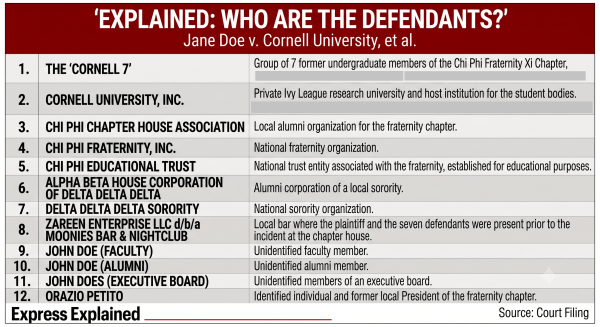 The many defendants named in the Cornell lawsuit.
While a university can govern the process of Greek life — such as setting university-wide rules on joining and eligibility — they have very little authority over the physical spaces themselves. The houses are legally classified as private property and “for day-to-day matters, they are in charge of what happens in the houses”, Syrett said.
Yet, there was no reason for the university to not take sterner action, say students, who have now called upon Cornell to take action against alleged rape culture. Student organisers are calling for Cornell to expel and revoke the degrees of the alleged perpetrators of the rape, rewrite policies around sexual assault punishments, initiate an external investigation of the university and mandate prevention training for campus police, said a BBC report.
The Cornell suit includes not just the alleged rapists but also the university, faculty and alumni. This indicates that the systems around fraternities have also been asked to account for their inability to regulate these groups.

Cancer warrior Manisha Koirala on rebuilding fitness: ‘It’s always a team effort’
By Sohail Khan · 3 Oct
Narendra Modi’s 25 years have been about building the nation
By Sohail Khan · 3 Oct
These 6 kitchen staples can help boost iron—but how you eat them matters
By Sohail Khan · 3 Oct
Leave a Reply