How to finance rural prosperity
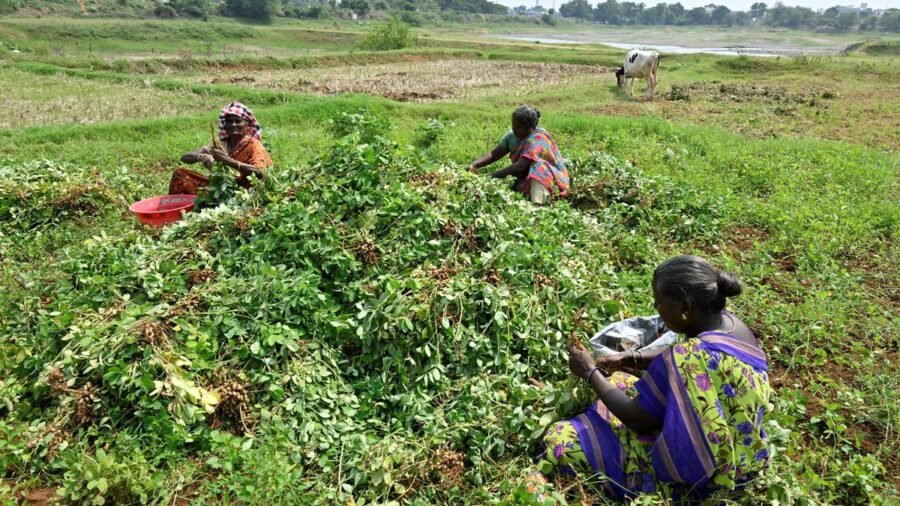
India’s agricultural transformation is one of the greatest achievements of independent India. Over the past six decades, the nation has emerged as one of the world’s largest producers of cereals, milk, fruits, vegetables and fisheries products. This progress was driven by visionary public policy, scientific innovation, irrigation, institutional credit and the enterprise of millions of Indian farmers.
While India’s first agricultural transformation delivered food security, the next must deliver rural prosperity by enabling rural India to capture a larger share of the value created after harvest. Every agricultural commodity passes through a value chain from production to aggregation, storage, logistics, processing, branding and markets. It is along this chain that enterprises emerge, employment expands and prosperity grows. Financing this change requires moving past production credit towards financing the entire agricultural value chain.
Dairy, poultry and fisheries operate through continuous procurement and marketing cycles, generating predictable cash flows, lower inventory risks and regular working-capital turnover. However, seasonal commodities operate under a very different financial reality. Processors need to procure most of their annual raw material requirement within a short harvest window and finance inventory for the remainder of the year. A company investing ₹500 crore in a modern processing facility may require ₹700–₹800 crore simply to procure, store and carry seasonal inventory. Without appropriately structured working capital, even efficient enterprises struggle to remain commercially viable. While the sugar sector is also seasonal, its growth demonstrates how inventory finance and warehouse-backed lending can overcome seasonal constraints. The difference in sector growth lies not in production potential but in the way the chain is financed.
Need for new mechanisms
For more than five decades, successive reforms including bank nationalisation, rural banks, cooperative institutions and the Kisan credit card expanded production credit. India has successfully built robust institutions for financing agricultural production when national food security was the priority. It must now build robust mechanisms for financing every commercially viable activity that creates value between the farm and the final consumer.
Encouragingly, elements of such a financing ecosystem are already emerging. Banks have introduced products such as warehouse receipt financing, receivables financing, and financing for food processing and agricultural infrastructure, while agri-focused non-banking financial companies have pioneered innovative value-chain models. However, these remain isolated initiatives rather than components of a comprehensive agricultural value chain financing architecture.
The opportunity is substantial. Based on the difference between the GVA (Gross Value Added) of agriculture and allied sectors (₹48.8 lakh crore) and the institutional credit flow (₹20 lakh crore) during 2023-24, indicative estimates suggest that the financing opportunity across India’s agricultural value chains could exceed ₹14 lakh crore.
While only about 10–12% of agricultural produce is processed in India, the corresponding level is estimated at around 35–45% across East, South and Southeast Asia and often exceeds 60% in many developed economies. In these economies, agricultural transformation is supported by financing systems aligned with commodity-specific value chains rather than production alone.
A comprehensive agricultural value chain financing framework should provide a diverse portfolio of financial instruments, including product finance, receivables finance, warehouse receipt finance, risk mitigation solutions and credit enhancement mechanisms. These instruments can finance the flow of goods, services and capital across the value chain, with financing decisions increasingly based on commodity-specific value chains and cash-flow analysis rather than conventional collateral alone. This will enable capital to reach farmers, input suppliers, aggregators, warehouse operators, processors, logistics providers, exporters and retailers, thereby unlocking private investment, creating rural jobs, improving farmer incomes, and accelerating rural industrialisation.
Building a solid agricultural value chain finance architecture can become one of the most consequential reforms for achieving the vision of Viksit Bharat 2047.
Sanjay Agarwal is Former Secretary, Department of Agriculture & Farmers Welfare, Government of India

Good foundation: on India’s strong industrial growth performance
By Sohail Khan · 1 Oct
Bitter pills: on Court’s intervention, drug pricing
By Sohail Khan · 1 Oct
Household debt, financing today against tomorrow
By Sohail Khan · 1 Oct
Leave a Reply