For the love of languages
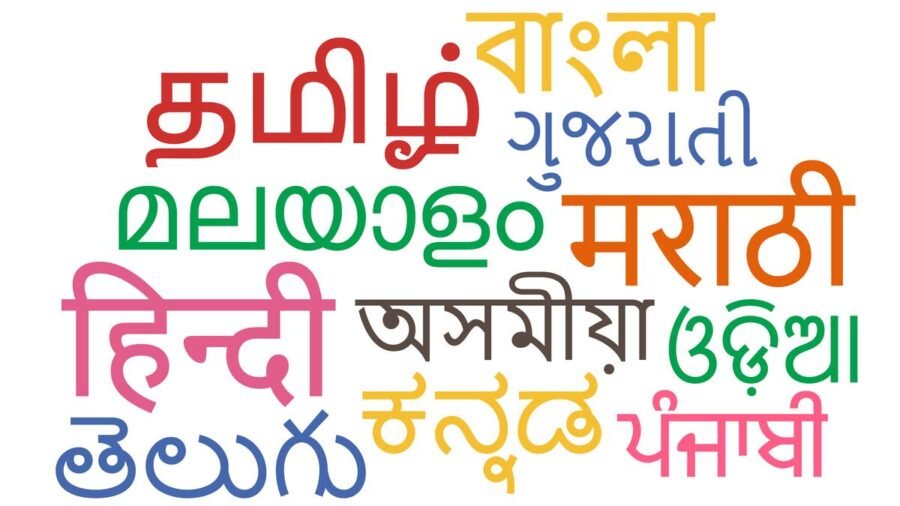
The Oxford English Dictionary defines “language” as the system of communication used by a particular country, people, community, etc., conveyed through speech, writing and gesture.
A few autorickshaw drivers in Delhi, Jaipur, and Bengaluru recently amazed tourists with their fluent French, Spanish, Italian, Russian, and so on. One appreciates and applauds them for caring to make tourists welcome in the country.
A few months ago, I met a senior banker who speaks six languages — English, Hindi, Konkani, Malayalam, Tamil, and Kannada. He modestly said he always tries to learn the language of the State he is posted in. In his last posting, he wanted to learn to speak Kannada. He told his co-workers that they must speak only in Kannada with him. It worked. My colleagues and I admiringly compared him to former Prime Minister P.V. Narasimha Rao, who is said to have been fluent in 14 languages.
On the other hand, a year ago, we saw the case of the manager of a bank branch in Bengaluru who insisted on speaking in Hindi and not in the local language, disappointing the customers.
Bankers are usually posted across the country, from Kashmir to Kanyakumari. That gives them a chance to learn the local language and cultural nuances. While in Bengal, I learnt to speak Bengali and read a little as I needed to decipher the Bengali writing on cheques and withdrawal slips. ATMs were yet to make an appearance then. My colleagues laughed good-naturedly at my mistakes but eventually I learnt to converse well in Bengali. When I came to Telangana, though I spoke Telugu, I had to learn to read. Reading the names of destinations on buses, signboards, and vernacular newspapers helped me learn faster than I would otherwise have.
IAS officers are expected to learn the local language of the State they are posted to. While posted in Maharashtra, my sister learnt to speak, read, and write Marathi, and passed an examination.
When my generation was in school in the 1970s, we studied three languages. Most parents with transferable jobs chose Sanskrit as the third language, as they felt there would be continuity. When my sister transferred from a school in Bihar to one in Bengal, she had to learn Bengali also, and it opened the world of Bengali music to her.
My father spoke Bengali, English, Hindi, and Telugu; so does my mother. They were taught Telugu, and some English and Hindi in school, but spoke Telugu and a little English, before they came to Bihar. They learnt to understand and speak Hindi and Bengali, as they wanted to be a part of their community and workplace, and also honed their English language skills.
In the 2000s, the theory was that children must not be confused by exposing them to several languages, and family members who had relocated to the U.S., decided not to teach their children their mother tongue. The theory has now changed, with psychologists holding that exposure to more than one language in childhood makes for stronger problem-solving skills and deeper cultural connections.
I see many advantages in learning several languages or at least learning the local language of the place where one is working. It builds a better rapport with colleagues, customers, friends, and others. It enables one to understand the cultural nuances, and explore the world of local arts, music, and films. It also means that we do not need to depend on translators. Every language has certain beautiful expressions which cannot be translated perfectly, which makes learning many languages more uplifting. India is a rich crucible of diverse languages, customs, unique cultures, and geographies. One must partake in the diversity with a sense of pride and belonging.
“Learning another language is not only learning different words for the same things, but learning another way to think about things,” Flora Lewis, an American journalist, had said.
lakshmi.r.srinivas@gmail.com

When Gandhi fed curds to Lord Mountbatten
By Sohail Khan · 4 Oct
Talking to men: A much needed conversation
By Sohail Khan · 4 Oct

Leave a Reply