Can FD rates increase if RBI raises repo rate?
Synopsis
Many financial analysts expect the Reserve Bank of India to increase the repo rate by 25 basis points. This forecast is driven by persistent inflation, soaring crude oil prices, and a depreciating rupee. Should the RBI implement this hike, it could lead to higher fixed deposit returns for investors. Meanwhile, public sector banks continue to offer lower rates, struggling against fierce competition from government securities and small savings schemes.
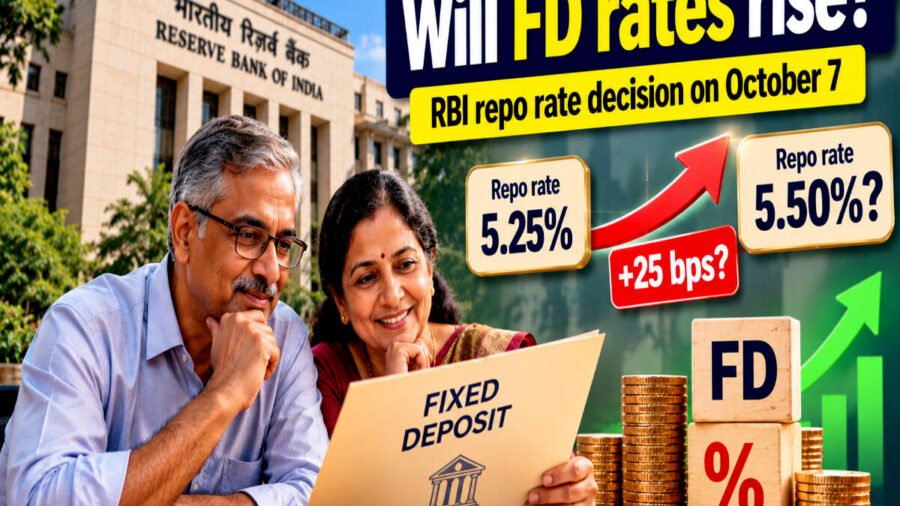
Many experts believe the Reserve Bank of India (RBI) could increase the repo rate by 25 bps from 5.25% to 5.50% in the Monetary Policy Committee (MPC) meeting concluding on Wednesday (October 7, 2026). They suggest that factors such as high inflation, rising crude prices, a weak rupee, supply disruptions due to geopolitical tensions and a Fed rate hike may lead to an increase in the repo rate this time.
If the RBI goes for a policy rate hike on Wednesday, it may be beneficial for fixed deposit (FD) investors, who may see the beginning of the return of a rising interest-rate scenario.
Given higher inflation, there is a good possibility of a rate hike by the RBI. If that happens, FD investors may expect fixed deposit rates to rise in the near future. But the big question is whether the RBI would raise the rate for the first time since December 2022.
| Bank | Rate |
| Public sector banks | |
| Bank of Baroda | 6.60% |
| Bank of India | 6.60% |
| Canara Bank | 6.60% |
| Punjab National Bank | 6.60% |
| State Bank of India | 6.45% |
| Private banks | |
| Yes Bank | 7% |
| Kotak Bank | 6.65% |
| Axis Bank | 6.50% |
| HDFC Bank | 6.45% |
| ICICI Bank | 6.30% |
| Small finance banks | |
| Utkarsh Small Finance Bank | 8.10% |
| Suryoday Small Finance Bank | 7.80% |
| ESAF Small Finance Bank | 7.75% |
| Jana Small Finance Bank | 7.30% |
| AU Small Finance Bank | 7.10% |
| Rates as advertised on respective banks' websites on Oct 2, 2026; Deposits under Rs.1Cr for 1-2 years; Compiled by BankBazaar.com |
Impact of inflation and RBI policy rate hike on FDs
A mix of scenarios like high inflation, rising crude prices, a weak rupee and unstable geopolitical events is creating a situation where the RBI may go for a rate hike. If it happens, banks may start increasing FD rates.
Also Read: Has government increased SSY, PPF, NSC, other small savings schemes' interest rates for October-December 2026 quarter?
Retail inflation, measured by the Consumer Price Index, rose to 4.84% in August 2026. It’s been on the rise since October 2025 and, given the global and domestic factors, it is expected to rise further in the near future. Though inflation has crossed the RBI’s target of 4%, it is far from its upper tolerance limit of 6%, a point from which the RBI may take remedial actions such as increasing the rate. When the RBI does so, banks may also increase FD rates.
Credit-growth ratio
As per an RBI update on October 2, 2026, bank deposits were Rs 27.62 lakh crore against credit of Rs 22.33 lakh crore. Based on these two figures, the credit-deposit ratio stood at 80.83%. The credit-deposit ratio as of July 31 was 81.96%. Sustained high credit growth creates pressure on banks to garner more FDs. Even though the ratio has improved, it is still above 80%, where the gap between deposits and credit is still wide. When the gap is wide, banks may increase FD rates to attract more deposits, so that they can support future lending.
High G-Sec yield and small savings scheme rates
FDs get stiff competition from Government Securities bond yields and small savings scheme interest rates. As per the RBI wesbite, as of October 4, 2026, the 1-year term deposit rate is 6-6.75%, the 3-year G-Sec yield is 6.79%, the 5-year is 6.93%, while the 10-year yield is 7.20%. These rates keep fluctuating slightly, but at present, they are higher than many public sector bank FD rates.
Many small savings schemes, on the other hand, are offering interest rates of more than 6.7%, with the Senior Citizen Savings Scheme and Sukanya Samriddhi Account offering as high as 8.2% each. The government didn’t change the interest rates in its quarterly review last month.
Such high rates of G-Secs and small savings schemes are producing tough competition for FDs. So, banks may increase FD rates to attract customers.
Small savings scheme interest rates
| Instruments | Rate of Interest w.e.f 01.10.2026 to 31.12.2026 | Compounding Frequency |
| Post Office Savings Account | 4.00% | Annually |
| 1 Year Time Deposit | 6.9% (Annual Interest ₹708 for ₹10,000/-) | Quarterly |
| 2 Year Time Deposit | 7.0% (Annual Interest ₹719 for ₹10,000/-) | Quarterly |
| 3 Year Time Deposit | 7.1% (Annual Interest ₹729 for ₹10,000/-) | Quarterly |
| 5 Year Time Deposit | 7.5% (Annual Interest ₹771 for ₹10,000/-) | Quarterly |
| 5 Year Recurring Deposit Scheme | 6.70% | Quarterly |
| Senior Citizen Savings Scheme | 8.2% (Quarterly Interest ₹205 for ₹10,000/-) | Quarterly and Paid |
| Monthly Income Account | 7.4% (Monthly Interest ₹62 for ₹10,000/-) | Monthly and paid |
| National Savings Certificate (VIII Issue) | 7.7% (Maturity Value ₹14,490 for ₹10,000/-) | Annually |
| Public Provident Fund Scheme | 7.10% | Annually |
Source: India Post
Can RBI increase repo rate?
Many experts believe that the RBI may go for a 25-bps rate hike given a lot of factors suggesting so. But there is also a possibility that the RBI may retain the current rate.
(Join our ETWealth WhatsApp channel for all the latest updates)
Add 

(Catch all the Personal Finance News, Breaking News, Budget 2025 Events and Latest News Updates on The .)
…more

US EIA lifts Brent forecast to $98 as Iran war tightens global supplies
By Sohail Khan · 6 Oct
Panel rejects child images on syrups
By Sohail Khan · 6 Oct

Leave a Reply