Baby orangutans face longer quarantine at Odisha zoo
Story continues below.
Subscribe to see fewer ads.
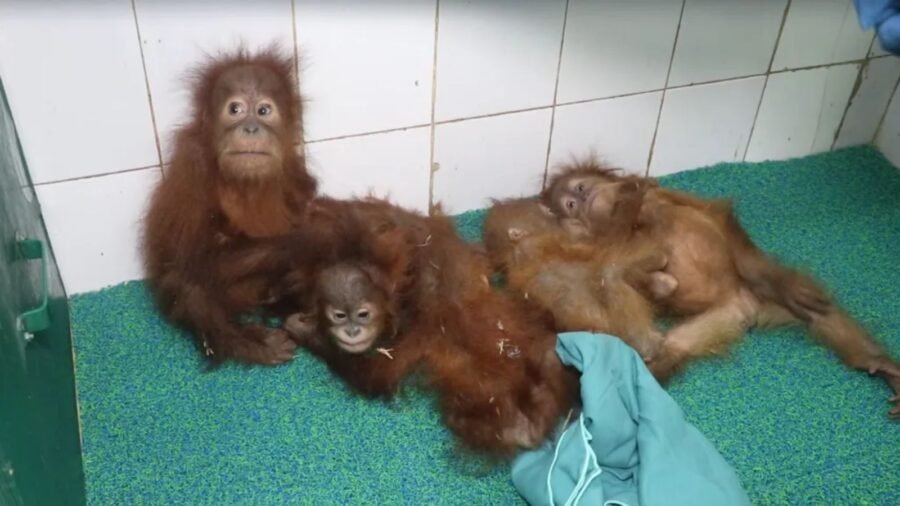
“The orangutans will be quarantined in the hand-rearing centre (HRC) area only, where they are currently kept. We have open enclosures at the side of HRC, having a larger area and open skies, where the apes will be moved during the day to acclimatise with the environment after the advice of the technical committee,” Deputy Zoo Director Pradeep Mirase told .
While a mandatory quarantine period of 30 days is standard for animals imported into Indian zoos, it is generally extended to 90 days in multiple phases for highly protected or high-risk species. Orangutans are listed under Appendix I of the Convention on International Trade in Endangered Species (CITES), which imposes the highest level of protection on species threatened with extinction and restricts their international trade.
Orangutans are native to the rainforests of Indonesia and Malaysia, across Borneo and Sumatra, and are “critically endangered” according to the International Union for Conservation of Nature (IUCN) Red List.
The decision to quarantine the orangutans comes as authorities continue to investigate where the apes, first spotted in the forests of Odisha on September 8, came from.
Story continues below this ad
“The rescued orangutans are infants; their place of origin remains unknown, and their health history is also unclear. We don’t know if they have any underlying diseases. In view of the CZA advisory, it was decided to quarantine the apes for 90 days,” said the zoo deputy director.
Even after completion of the quarantine period, there will be no public viewing of the rescued orangutans at Nandankanan until a final decision is taken by the state government and other statutory bodies.
According to zoo officials, the priority is to ensure the infants receive the best possible healthcare and management during their stay at Nandankanan. While the state government has formed a five-member technical committee comprising experts to oversee the health, welfare and management of the baby orangutans, zoo authorities monitor their health conditions daily.
“There is a gradual increase in the weight of each baby. The orangutan babies are apparently healthy and have a normal appetite, while their behaviour and activity levels are gradually improving. Their faecal consistency is also normal,” said a statement issued by the zoo on September 26.
Story continues below this ad
While three of the five baby orangutans were found to be anaemic — one severely — officials said the haemoglobin levels in two of the three apes are gradually improving. No decision has been taken yet on conducting their DNA tests to determine their species and geographical origin.
The five baby orangutans were rescued from a forest in the state’s Balasore district on September 8, raising concerns of smuggling.
Meanwhile, the high-level probe into how the apes reached Odisha’s forests has remained slow, with sources saying there is still no breakthrough. The Wildlife Crime Control Bureau (WCCB) was also roped in to investigate potential smuggling in the case.

IAF needs 36-40 jets annually; Pakistan’s fifth-gen jet plan worrying: Air Chief
By Sohail Khan · 3 Oct
Hardened narco-trafficking kingpin Navpreet Singh deported from Turkey: Amit Shah
By Sohail Khan · 3 Oct

Leave a Reply