Appointing the Election Commission: An Expert Explains what Constituent Assembly said
Story continues below.
Subscribe to see fewer ads.
Saxena proposed that appointing an Election Commissioner should require a two-thirds majority in Parliament: not to make the Commission answerable to Parliament, but to make it impossible for one party to install its own nominee. The Assembly voted his proposal down. But the warning stayed on the record.
The next day, H N Kunzru pushed further. Provincial governments had been kept out of election administration because they might be politically biased. Fair enough, he said — but why assume the Central Government would be any less capable of bias? “Is there no danger that the political prejudice of the Central Government may prevail where otherwise the prejudices of the provincial Government might have prevailed?”
Kunzru wanted safeguards strong enough that Commissioners could act “fearlessly”, and then delivered a stark warning: “Worked by people whose integrity cannot be depended upon, democracy will be poisoned at the source.”
How the Chief Election Commissioner is appointed
Even B R Ambedkar didn’t dismiss the concern. He called it one of the Drafting Committee’s “greatest headaches”. He considered borrowing the American model, where the Senate confirms presidential appointments, but worried it would import its own political games.
Story continues below this ad
The eventual compromise: the Constitution would establish the Election Commission and shield the Chief Election Commissioner from easy removal, but leave Parliament to legislate the actual appointment mechanism. That became Article 324 — a foundation with the front door deliberately left unlocked.
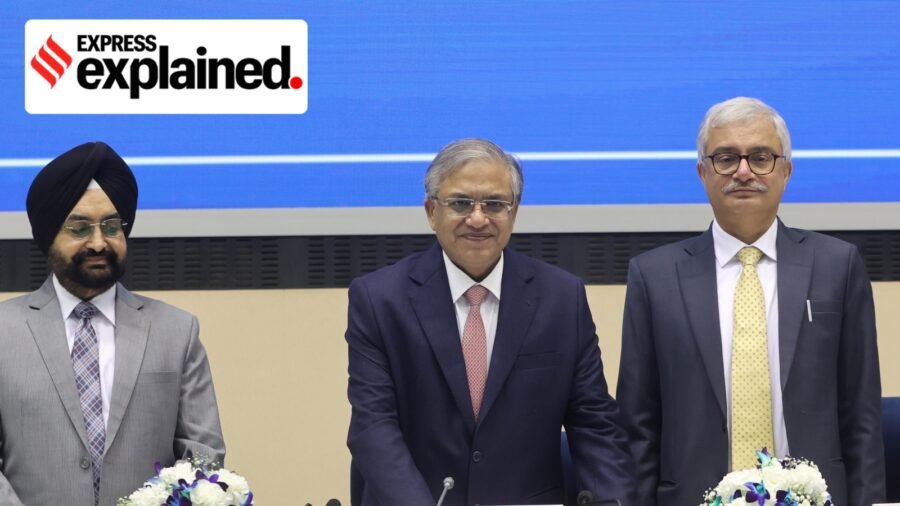
For 74 years, Parliament never walked through that door. No law was passed. Then, in 2023, the Supreme Court did what Parliament hadn’t: in Anoop Baranwal v. Union of India, it ruled that until Parliament acted, appointments should be recommended by a committee of the Prime Minister, the Leader of the Opposition, and the Chief Justice of India (CJI), a structure built to keep any one side from controlling the outcome.
Parliament did act and excluded the CJI from the selection committee. The Chief Election Commissioner and Other Election Commissioners Act, 2023, replaced the CJI on the selection panel with a Union Cabinet Minister nominated by the Prime Minister. The committee today is the Prime Minister, the Leader of the Opposition, and a minister the Prime Minister himself picks. Two of three seats effectively answer to the same person.
The perception of impartiality
None of this proves an Election Commissioner appointed under the new law will act improperly, or that the Commission has turned partisan. But it does raise a legitimate constitutional question, and it’s almost exactly the one Saxena and Kunzru asked in 1949: does this appointment mechanism give the government enough distance from the body that referees elections involving the government itself?
Story continues below this ad
Simply put: In an election, the government is one of the contestants. The Election Commission is the referee. The question was never whether the referee will actually favour one side. Actually, most of the time, individual Commissioners will do their jobs honestly. The question is whether a system that lets one contestant hold disproportionate sway over who gets to referee should be designed.
This is precisely why Saxena refused to let the Constitution’s safeguards depend on who happened to be Prime Minister at the time. His argument was structural, not personal. It’s a design principle, not a character judgment, and it holds regardless of who sits in which chair today. The system should be such that the selection of the referee should not only be impartial but also appear to be so.
Which is also why this controversy isn’t really about any individual Commissioner’s competence or integrity. It’s about whether the architecture of appointment produces both the right incentives and the right perception — because in institutions of this kind, the appearance of independence often matters as much as the fact of it. A referee no one fully trusts is, for practical purposes, no referee at all.
Seventy-seven years after Kunzru’s warning against a flawed electoral machinery, the argument has looped back to that exact source: who chooses the people who run the machinery? The Constituent Assembly saw the danger clearly, debated it seriously, and then — perhaps wisely, perhaps not — left the final answer to a Parliament that would one day have to decide for itself.
Story continues below this ad
Whether Parliament decided well is the debate we are having today, but what’s striking is how little the terms of that debate have changed. Sometimes, the sharpest commentary on the present isn’t written by today’s columnists at all. It was spoken, on the floor of the Constituent Assembly, by those who could not have known exactly how the future would test their words, only that it eventually would.
The author is a former IAS officer and economist. He was CEO of Ayushman Bharat – Pradhan Mantri Jan Arogya Yojana (AB-PMJAY) and the National Health Authority.

Safari season is back: What to know before visiting India’s national parks
By Sohail Khan · 4 Oct
Yami Gautam shares rare peek into private married life with Aditya Dhar
By Sohail Khan · 4 Oct
Is it safe to reheat rice more than once?
By Sohail Khan · 4 Oct
Leave a Reply