Work from home takes its toll on Mumbai’s women, draws children into labour
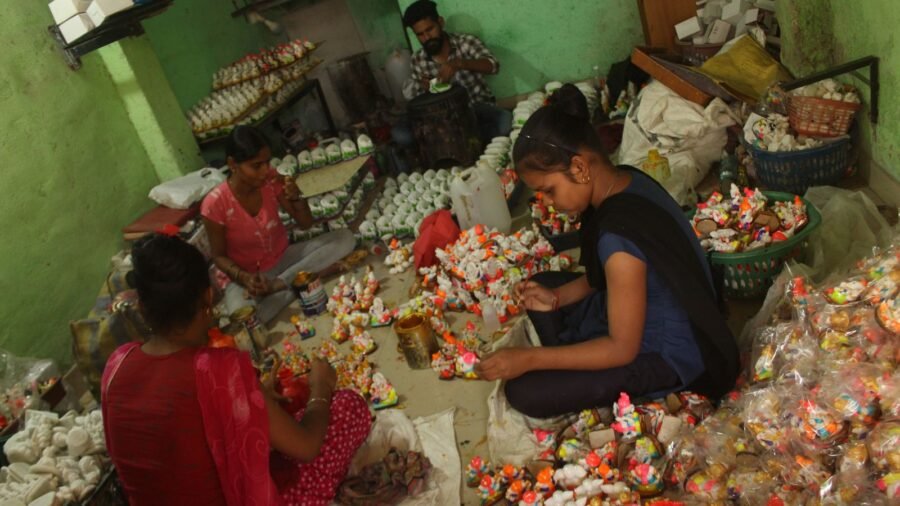
For women in Mumbai’s informal settlements, working from home offers flexibility but comes at a steep cost. A new study of women engaged in piece rate production work in Mumbai, Nalasopara and Navi Mumbai has found long working hours, earnings as low as Rs 100 to Rs 300 a day and a range of occupational health risks, while children are often drawn in as unpaid family workers.
The report, Visibilising Home Based Work in Mumbai Bastis: An Action Research Report, by development organisation Youth for Unity and Voluntary Action (YUVA), examines women making jewellery and hair accessories, packing toys and bindis, finishing garments and toys, soldering electronics, making matchboxes and cardboard boxes, processing food and producing seasonal items such as rakhis and flower garlands.
Workers typically earn Rs 20 to Rs 30 an hour, with reported earnings ranging from Rs 15 to Rs 50 an hour. A typical eight-hour day can fetch only Rs 100 to Rs 300. The report notes that these earnings are significantly below the benchmark of about Rs 520 a day for unskilled labour in Mumbai, despite the skills required for much of the work.
The study records back and neck pain as major concerns, along with eye strain, swollen hands and injuries from needles and blades. Workers also face heat, poor lighting and a lack of ergonomic equipment.
The study also highlights the involvement of children. In Nalasopara, eight of 13 piece rate workers and one own account worker surveyed reported children helping with the work, accounting for 64 per cent of the relevant sample. In Ambujwadi, six of 16 respondents reported involvement of unpaid family workers.
YUVA said such involvement can affect children’s schooling and expose them to workplace hazards, particularly where sharp tools and other materials are used.
“Home-based work is not yet legally recognised as a form of work in India, and there is no regulation specifically governing it,” said Marina Joseph, Associate Director, YUVA. “A hidden cost is borne by children, who often ‘help’ their mothers complete orders, affecting their education.”


Thane: 6 Including Schoolchildren, Sanitation Worker Bitten By Stray Dogs In Kalyan West
By Sohail Khan · 9 Sep

Leave a Reply