How a ‘carbon copy’ of a patriotic Indian film got banned in Pakistan, caused mass uproar
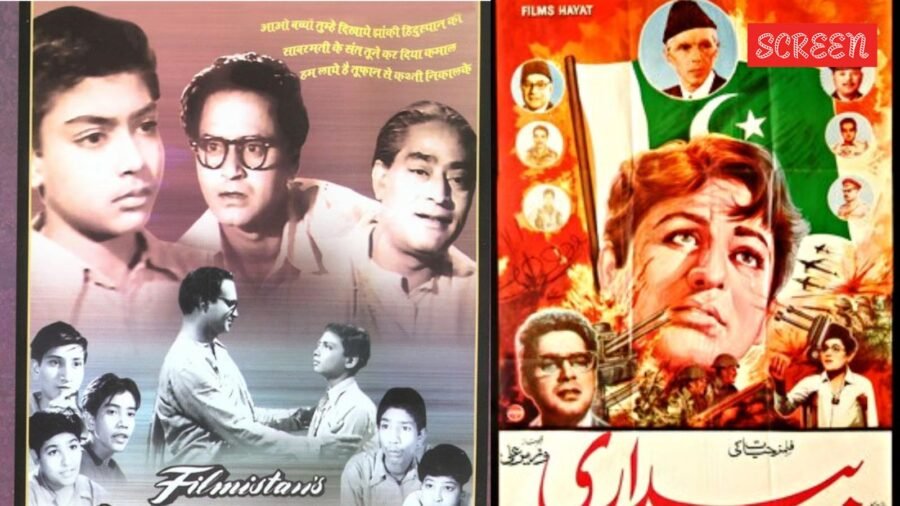
In 1956, audiences in Pakistan thronged theatres when a little-known film called Bedari was released. Directed by Rafiq Rizvi, the film starred Ratan Kumar alongside Ragni and Santosh Kumar. Its songs, especially “Aao Bachcho Sair Karain Tum Ko Pakistan” Ki by Saleem Raza, became extremely popular in Pakistan, and soon after, the film was declared a hit.
But, some members of the audience felt that they had seen the film before, and even felt that the music of this popular song was familiar. They soon realised why: Bedari was a “carbon copy” of the 1954 Hindi film Jagriti, which itself was a remake of the Bengali film Parivartan. The story eventually circled back to Ratan Kumar, born Syed Nazir Ali Rizvi, who had been one of the most popular child artistes in the Mumbai (then Bombay) film industry.
Born in 1941, Ratan Kumar began acting at the age of five after family friend and writer Krishan Chander cast him in a child role in his film Raakh.
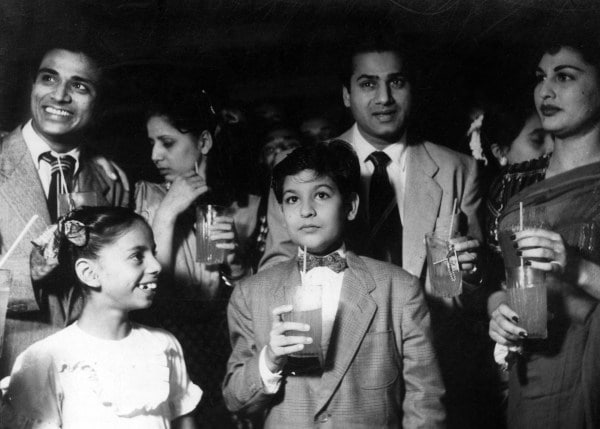 Jagdev, Geeta Bali, Shekhar, Begum Para and Ratan Kumar enjoying their drinks at the premiere of Naya Ghar. Express archive photo
He went on to work extensively as a child artiste, appearing in popular films such as Boot Polish and Baiju Bawra, before playing Shakti in Satyen Bose’s Jagriti. He was around 13 when the film released. Two years later, he moved to to Pakistan with his family, where several of their relatives had settled after Partition.
Soon after moving to Pakistan, Ratan Kumar’s elder brother Wazir Ali Rizvi established a production house, Film Hayat. Their first project was Bedari – a film that was a remake of Jagriti, that Ratan had previously featured in.
Ratan Kumar played two roles in Bedari
Having left India partly because of the lack of suitable work, Ratan Kumar took on a dual role in Bedari. He played both Ajay, renamed Zafar in the Pakistani film, and Shakti, renamed Sabar Ali. Even the character names were altered in a way that retained their meanings: Ajay and Zafar both signify victory, in Hindi and Urdu respectively.
Story continues below this ad
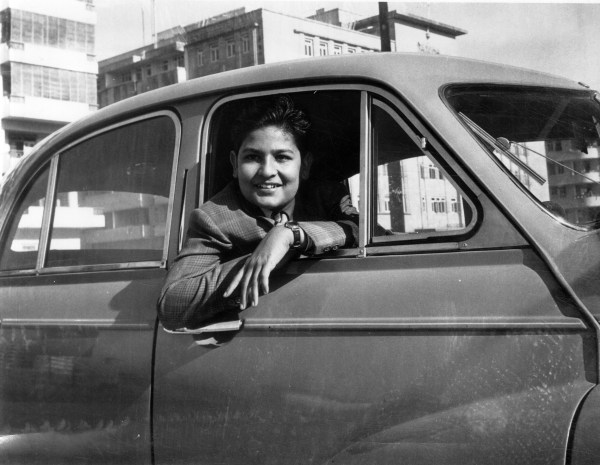 Actor Ratan Kumar. Express Archive
But it was the songs that made the similarities particularly striking. The tunes and melodies remained largely unchanged, while the lyrics were rewritten to replace the Indian nationalist references with Pakistani patriotic ones.
For instance, the famous line “Aao Bachchon Tumhe Dikhayen Jhaanki Hindustan Ki” was changed to “Aao Bachchon Saer Karayen Tumko Pakistan Ki.” Similarly, the Indian chorus “Vande Mataram” was replaced with “Pakistan Zindabad.”
Another song originally featured the lines: “De di humein azaadi bina khadag bina dhal / Sabarmati ke sant tune kar diya kamaal.” In Bedari, these were changed to: “De di humein azadi ki duniya hui hairaan / Aye Quaid-e-Azam tera ehsaan hai ehsaan.” The reference to Mahatma Gandhi was replaced with one to Muhammad Ali Jinnah.
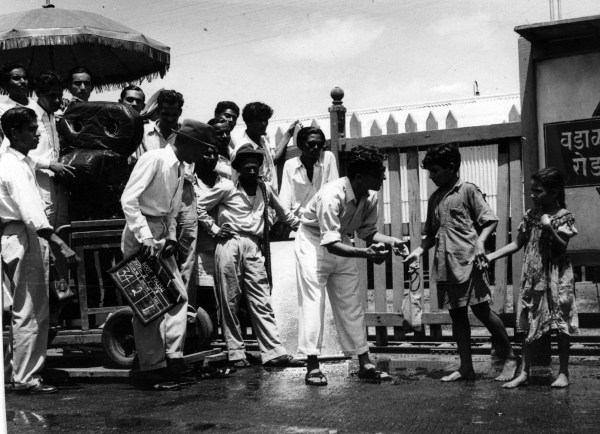 Actress Baby Naaz and Ratan Kumar during the shooting of Boot Polish. Express archive photo
The pattern continued throughout the film, with the makers retaining the original melodies while changing the lyrics and replacing several Indian references with Pakistani references.
Story continues below this ad
How did Bedari escape detection?
The striking similarity between the two films apparently went unnoticed initially, partly because Indian films had been banned from public exhibition in Pakistan at the time.
A member of Pakistan’s Censor Board later explained the controversy to Dawn, “Since a ban had been placed in Pakistan against the import or public exhibition of Indian films, the film producers in Lahore in 1956 cashed in on this opportunity to produce a film, namely Bedari, a carbon copy of the story and songs of the Indian film Jagriti.”
The film initially did excellent business. But once Pakistani audiences realised what they were watching, the response changed dramatically.
“When Bedari was released in Pakistan in 1956, it too made fabulous business in the first few weeks of exhibition. However, it dawned upon the Pakistani cinemagoers that they were watching a plagiarised film. There was a mass uproar that caused public demonstrations against exhibition of the plagiarised film. The Censor Board of Pakistan immediately put a ban on this film,” the censor board member told the publication.
Story continues below this ad
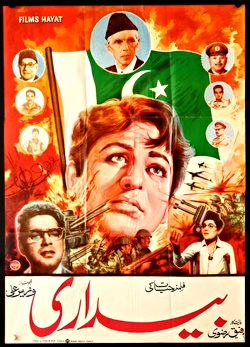 A poster of the Pakistani film Bedari.
The ban extended to the film’s songs as well.
Years later, however, one of the songs from Bedari was adopted by Pakistan Television (PTV) as its anthem, only for its origins to be pointed out once again, after which, it too was banned.
Did Bedari hurt Ratan Kumar’s career?
There has long been speculation that Bedari was an attempt by Ratan Kumar to establish himself in the Pakistani film industry after he left India. However, despite his popularity as a child artiste, he struggled to replicate that success as a leading man.
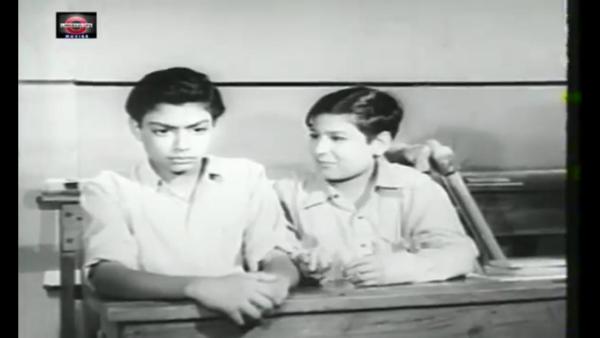 A scene from Jagriti.
Looking back at the ups and downs of his career, Ratan Kumar told The Express Tribune, “Everyone has ups and downs in their career. When I started out, I was young. I didn’t know what I was doing. But as I grew older, I started understanding how it works.” He added, “When it comes easy to you, you don’t learn. That’s why I teach my children not to take anything for granted.”
Story continues below this ad
Jagriti became a classic
In India, Jagriti went on to become one of the most celebrated children-centric films in Hindi cinema. Produced by Filmistan, the film was both a critical and commercial success and won multiple Filmfare Awards. It also received the National Film Award for Best Hindi Feature Film.
Decades later, Jagriti was screened and honoured at the 70th Independence Day Film Festival in 2016. Its songs, particularly “Aao Bachchon Tumhen Dikhaye” and “Hum Laaye Hain Toofan Se”, continue to be associated with school celebrations and patriotic programmes around Independence Day and Republic Day.

Suriya’s Scene first glimpse: Actor announces Diwali release for cop actioner
By Sohail Khan · 9 Sep

Musafir Cafe’s Vedika Pinto: Why do we want to make those clickbaity headlines?
By Sohail Khan · 9 Sep
Leave a Reply