Why is the UK refuelling Saudi jets against the Houthis, and how involved is it?
Story continues below.
Subscribe to see fewer ads.
UK Prime Minister Andy Burnham, who is attending the United Nations General Assembly in New York, told reporters that the arrangement would last for a few weeks, subject to a review.
Tensions between the Iran-backed Houthis and the Saudi-backed Yemeni government flared up again this month, after the rebels captured the strategic Mokha port in the Red Sea. In the following weeks, the Houthis have targeted Saudi-linked vessels, and launched missile and drone strikes at Saudi Arabia.
What does air-to-air refuelling allow Saudi jets to do?
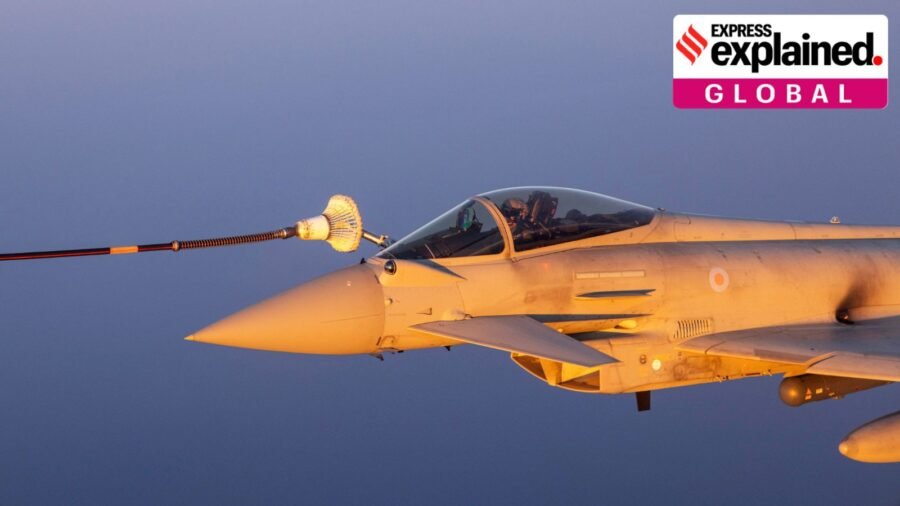
Air-to-air refuelling allows a military aircraft to receive fuel from a tanker aircraft while both are in flight. This lets fighter aircraft remain airborne longer without needing to return to an airbase to refuel, and extends both their range and the amount of time they can spend carrying out a mission.
The RAF Voyager is Britain’s only air-to-air refuelling tanker. Based on the Airbus A330, it can transfer fuel through hoses deployed from under its wings while flying alongside another aircraft.
Story continues below this ad
The RAF describes the Voyager as a “force multiplier”: for fast jets, it can extend the time they remain on task by around three times.
In Saudi Arabia’s case, the Voyager is expected to refuel Saudi fighter aircraft, which include British-built Eurofighter Typhoons, as they patrol Saudi airspace and respond to Houthi missile and drone attacks. This allows fighter jets protecting Saudi territory to remain on patrol for longer and gives Saudi Arabia greater capacity to respond when drones or missiles are detected. They would otherwise have to periodically return to base for fuel.
The UK has described the mission as defensive and time-limited. One Voyager is expected to operate from RAF Akrotiri in Cyprus for several weeks, with the arrangement kept under review.
How limited is the UK’s military support?
Military assistance can take several forms, involving different degrees and kinds of participation in a conflict.
Story continues below this ad
Support short of direct combat: Measures that do not require direct British involvement, such as supplying weapons and equipment, training another country’s forces, sharing intelligence, providing logistical support, or helping maintain and repair military systems. These do not necessarily involve British forces themselves attacking an adversary, although some forms of support, such as intelligence or targeting assistance, can still be operationally significant.
In March, Britain sent its Sky Sabre air defence system and UK personnel to Saudi Arabia to help protect against missiles and drones. Earlier this year, both nations also discussed increasing intelligence cooperation for defensive operations.
Operation-enabling support: Air-to-air refuelling falls here. The Voyager does not itself attack Houthi forces, but it can sustain Saudi combat aircraft carrying out operations against them.
The British government has characterised this as “defensive military support”.
Story continues below this ad
Direct participation in hostilities: This would involve British forces themselves taking part in hostilities, such as British combat aircraft intercepting Houthi missiles or drones, striking Houthi positions, or British forces taking part in military operations inside Yemen.
These distinctions can blur in practice. Support that falls short of direct combat can still expand the range, duration or effectiveness of another military’s operations.
Why are UK-Saudi defence ties so close?
The UK and Saudi Arabia have had close defence and security ties for decades, spanning arms sales, military training, intelligence cooperation and support for the Saudi armed forces.
The two nations signed a formal Military and Security Cooperation Agreement in 2017 spanning counter-terrorism, intelligence, training and education, medical services and logistics.
Story continues below this ad
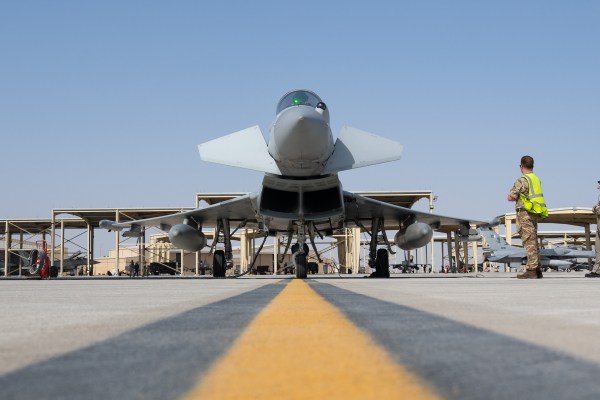 An RAF Typhoon on the runway in Saudi Arabia during Exercise Spears of Victory 2026.
Britain has also been a major supplier of military aircraft to Saudi Arabia. The Royal Saudi Air Force operates British-built Eurofighter Typhoons, after Riyadh agreed in 2007 to buy 72 of the jets under Project Salam, also called the Al-Salam Programme.
That relationship has continued to deepen. In 2024, the two countries agreed to explore cooperation on developing weapons systems including precision-guided missiles and armoured vehicles.
For the UK, its stake in Saudi security extends beyond this bilateral relationship: Saudi Arabia sits alongside some of the world’s most important energy and shipping routes. The nearby Red Sea and Bab al-Mandab Strait connect the Indian Ocean to the Mediterranean through the Suez Canal, while instability in the Gulf can disrupt oil supplies and maritime trade.
The British government has therefore repeatedly linked security in the region to its own economic interests. In announcing the latest deployment, it said escalating tensions could raise prices in the UK, disrupt energy supplies and impose additional costs on British businesses.
Story continues below this ad
Britain also maintains a wider military presence in the Gulf and has previously taken direct military action against the Houthis over attacks on Red Sea shipping. The latest assistance to Saudi Arabia is therefore part of a broader British effort to protect regional partners, commercial shipping and its own economic and security interests.

New vegetarian, non-veg labels for soaps, shampoos, toothpaste: What they mean for consumers
By Sohail Khan · 23 Sep
From rooftop solar to household gold: 5 lesser-known changes in India’s new GDP series
By Sohail Khan · 23 Sep
Satire | My personal BRICS goodie bag
By Sohail Khan · 23 Sep
Leave a Reply