Why are high gas prices changing US job searches? Workers seek remote jobs and higher pay
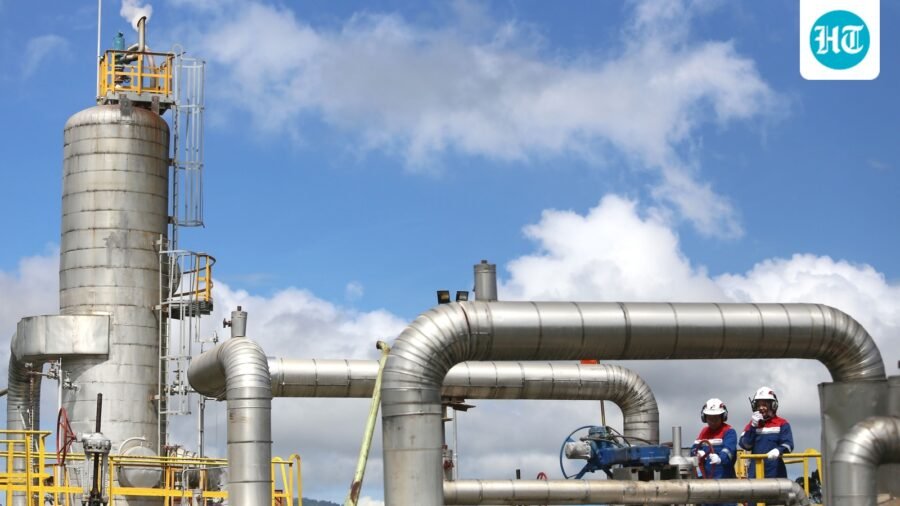
High gas prices are changing US job searches as workers seek remote jobs, shorter commutes and higher pay to manage rising fuel and commuting costs.
Updated on: Sep 28, 2026, 00:13:17 IST
Prefer HTon Google
Share via
Copy link
High gas prices are now affecting how Americans look for jobs. Workers are considering fuel costs, commuting time and pay before deciding which jobs to apply for. The change comes as the economic impact of the US-Iran conflict continues to affect oil and gas prices.
When the US-Iran conflict began, the White House had told markets and consumers to expect a short military campaign. Seven months later, higher oil prices are now affecting the US job market, with workers factoring the cost of commuting into their career decisions, according to Fortune.
A new survey by recruitment platform Monster found that 65% of people planning to change jobs are changing their job-search priorities because of gas prices, showing how fuel costs are becoming part of career decisions.
About 23% of prospective job movers said they are looking for jobs closer to home. This can help workers reduce the amount they spend on fuel and the time they spend commuting. Another 17% said they are paying more attention to salary expectations. These workers want higher pay that can help cover the increased cost of travelling to and from work.
Remote work is also becoming more attractive because of expensive gas. Monster's survey found that 20% of job seekers are prioritizing fully remote jobs, which can remove the need for a daily commute. At the same time, 5% of job seekers said they are applying for fully in-person jobs, showing that not all workers are moving toward remote work despite higher fuel costs, according to Monster.
The shift comes as US gas prices continue to rise sharply. The national average for regular gasoline was around $4.10 a gallon a month ago, compared with about $3.15 a gallon a year earlier, according to Fortune.
Prices are even higher for some types of fuel. Mid-grade gasoline is now a little above $5 a gallon on average, while diesel has climbed above $6.50, according to the current gas-price data. Crude oil prices have also moved higher during 2026. Brent crude was trading at around $105 per barrel on Friday.
The rise in oil prices is linked to disruptions to oil supplies from the Middle East. A major part of the problem is the Strait of Hormuz, a key waterway used to move oil from the Persian Gulf to global markets.
Iran is located next to the Strait of Hormuz, making the waterway especially important during the conflict. Ships have become more reluctant to travel through the strait, causing oil supplies to slow and putting upward pressure on prices.
The higher oil prices are therefore reaching consumers through more expensive gasoline and diesel. For workers who drive to work every day, that means commuting can take a larger share of their income. The situation could continue depending on what happens between the US and Iran. US-Iran talks were taking place in New York this week, and analysts had hoped the talks would provide more information about when the military action could ease, according to Fortune.
However, there were few public signs of an immediate breakthrough. Iranian President Masoud Pezeshkian told the UN that Iran would not “bend the knee” but said the country was ready for dialogue and diplomacy, according to Fortune. President Donald Trump said he faced a choice between negotiating and “annihilating” the regime.
Why expensive commuting matters for workers
Higher gas prices are making employers think about how much they need to offer workers who have to travel farther to work. Monster also asked employed Americans what would convince them to accept an additional 20 minutes of commuting beyond their preferred travel time.
About 32% of employed Americans said they would need at least a 20% pay increase to accept the longer commute, according to Monster's survey. Another 10% said a 10% salary increase would be enough to make the longer commute worthwhile.
About 11% said they would accept the additional travel if the employer offered a more flexible work schedule, including hybrid work, according to the survey. Another 9% said they would consider the longer commute if their employer reimbursed some of their gas costs. This shows that workers may be willing to travel farther when companies directly help with the financial burden.
But not everyone can be persuaded by higher pay or benefits. Around 30% of employed Americans said neither extra money nor greater flexibility would convince them to accept a longer commute, according to Monster.
Long commutes are already affecting career decisions
Commuting is not only becoming a bigger financial problem. It is already affecting whether workers accept job opportunities. Nearly 49% of employed Americans surveyed said commuting costs or the length of the commute had caused them to turn down a job opportunity, according to Monster.
The wider cost-of-living crisis is also changing what workers expect from their jobs. About 75% said the rising cost of living has made work-life balance more important, according to the survey. This means workers are increasingly looking at more than just their salary when comparing jobs. Pay, commute time, fuel costs, flexibility and work-life balance are all becoming part of the decision.
For employers, this could make it harder to fill positions that require workers to travel long distances every day, especially if companies do not offer higher pay, flexible schedules or commuting support.
Could commuting become less common?
The debate over commuting is also connected to the longer-term shift toward remote and hybrid work. Mark Dixon, CEO of IWG, said commuting could become extinct within the next 15 years. He previously told Fortune that future generations could find it strange that workers once travelled long distances simply to sit at a computer in an office.
Dixon's comments point to a possible long-term change in how companies organize work, with remote and flexible jobs reducing the need for daily travel. For now, however, office work has not disappeared. Companies and workers appear to have reached a middle ground between fully remote and fully office-based work.
Kastle Systems, which tracks office occupancy in 10 major US cities, says around 53% office occupancy has become the new normal. Its coverage includes cities such as New York, Washington, Los Angeles and Austin.
The current job market therefore reflects a mix of work styles. Some workers are choosing remote jobs to avoid expensive commutes, while others are willing to travel if they receive higher pay, flexible work arrangements or help with fuel costs.
The bigger issue is that high gas prices are no longer just a household expense. They are influencing where Americans want to work, how much they expect to earn and how far they are willing to travel for a job.
See Less


Palestinian death toll in Gaza war passes 74,000, and other Mideast news
By Sohail Khan · 28 Sep

Leave a Reply