The paradox of de-Sinification in global production
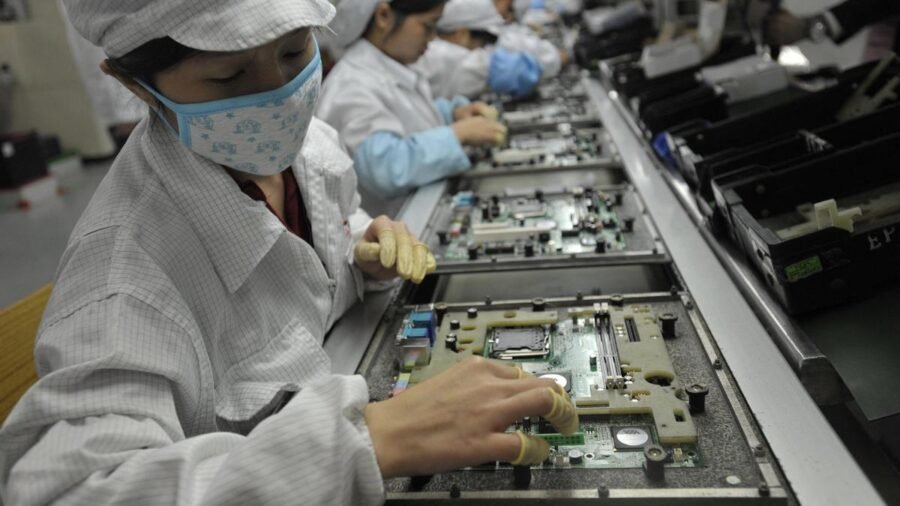
SpaceX’s reported efforts, in July 2026, to remove Chinese-made components from its supply chain capture a new phase in the restructuring of global production. The challenge is no longer simply where a product is assembled. It is increasingly about what lies several layers beneath the final manufacturer — and whether firms can identify, replace and verify suppliers embedded deep within complex production networks. Moving a factory may be relatively straightforward; removing an industrial ecosystem from the production process is not.
The other side of de-Sinification
Here lies a less noticed paradox. The ecosystem problem is not confined to foreign firms seeking to reduce their exposure to China. Chinese companies expanding overseas increasingly confront it from the opposite direction. While foreign firms struggle to disentangle themselves from Chinese suppliers and capabilities, Chinese firms must decide how much of the industrial ecosystem that supports their competitiveness at home can be carried abroad and how much must be recreated locally.
This difficulty is compounded by the fact that China’s industrial ecosystem is not standing still. Even as foreign firms seek to reduce their dependence on China, China is building capabilities in areas where it has historically relied heavily on foreign technology. Memory-chip maker CXMT is illustrative. It has emerged as the world’s fourth-largest producer of DRAM chips, although it continues to trail global leaders in advanced memory technologies and remains dependent on access to foreign chipmaking equipment. Attempts to reduce exposure to China are therefore taking place against a moving target: Chinese firms are simultaneously working to reduce their own external dependencies.
The reverse challenge becomes visible when Chinese manufacturers venture overseas. They too confront a form of de-Sinification, although from the opposite direction. Their internationalisation increasingly involves more than establishing final-assembly plants. The competitiveness of companies such as BYD and Xpeng rests partly on dense networks of component makers, engineering capabilities and production relationships developed within China. Moving a factory abroad therefore creates a choice: take existing suppliers along, cultivate new local suppliers, or combine the two. Each route carries different costs — and produces a different degree of genuine localisation.
Comment | Dealing with China’s weaponisation of e-supply chains
The challenge beyond factories
BYD’s expansion in Europe illustrates one response. As it builds manufacturing capacity in Hungary, the company is also developing relationships with European suppliers. Xpeng has chosen another route, contracting Canadian automotive supplier Magna to assemble its vehicles in Austria. The two approaches differ, but they expose the same underlying problem: producing outside China is easier than reproducing outside China, the ecosystem that made production in China efficient in the first place.
What makes these ecosystems difficult to unwind or reproduce is that they consist of more than identifiable suppliers. They embody accumulated relationships between firms, specialised skills, tooling and production knowledge, logistics networks, and the ability of suppliers to respond quickly when designs or production volumes change. Many of these advantages are built through repeated interaction rather than formal contracts. This is why replacing an individual Chinese supplier does not necessarily eliminate dependence on the wider Chinese production system — and why transplanting a Chinese factory abroad does not automatically transplant the capabilities surrounding it.
Seen from this perspective, de-Sinification has a less obvious, two-sided character. Foreign firms attempting to reduce their exposure to China confront the depth of China’s integration into their production networks. Chinese firms going global confront the difficulty of reproducing abroad the ecosystem on which their competitiveness depends. One side is trying to disentangle itself from an ecosystem; the other is trying to make that ecosystem portable. Both discover that changing the location of production is easier than changing the capabilities and relationships that sustain it.
What India needs to note, must build
This distinction matters particularly for India. The reorganisation of production is already creating openings. Japan’s TDK has expanded its battery production in Haryana, deepening an Indian manufacturing base that it has been developing as part of its broader China-plus-one strategy. Murata Manufacturing, another Japanese electronic-component maker, is expanding its manufacturing presence in India. These investments show that India is beginning to receive parts of production ecosystems previously concentrated in China. But making the most of this opening requires more than attracting individual factories. India needs domestic suppliers capable of meeting demanding cost, quality and delivery standards, alongside reliable logistics, skilled workers and access to critical inputs. The test is whether new investments progressively deepen linkages with Indian firms and bring specialised capabilities and intermediate production into the domestic economy. The same principle should inform Chinese investment: its value should be judged partly by the capabilities and supplier networks it develops locally. India’s opportunity is to convert the movement of factories into the gradual accumulation of an industrial ecosystem of its own.
The emerging geography of global production will therefore be shaped by more than decisions over where to locate factories. It will depend on whether the ecosystems behind those factories can be dismantled, transferred or rebuilt. De-Sinification may be visible in new factory locations and investment announcements, but its real test lies deeper within the production system. Factories can cross borders relatively quickly; industrial ecosystems, built through accumulated capabilities and relationships, are far less mobile.
G. Venkat Raman is Professor, Humanities and Social Sciences, Indian Institute of Management, Indore, Madhya Pradesh

Letters to The Editor — September 28, 2026
By Sohail Khan · 28 Sep
Kashmir as India’s gateway to Eurasian opportunity
By Sohail Khan · 28 Sep
The pitfalls of mandatory FIRs
By Sohail Khan · 28 Sep
Leave a Reply