Form 26 and the statutory mandate
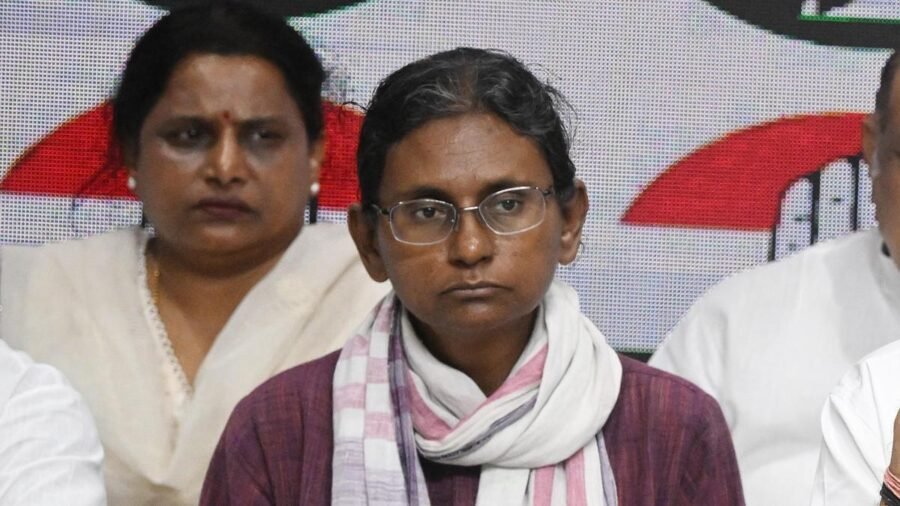
On June 12, the Supreme Court dismissed the petition filed by Congress leader Meenakshi Natarajan challenging the Returning Officer’s decision, rejecting her nomination for the Rajya Sabha election from Madhya Pradesh. The Returning Officer held that Natarajan had failed to disclose, in her Form 26 affidavit, a pending criminal complaint against her and had thereby suppressed material information.
The criminal complaint, instituted in 2025, alleged that Natarajan failed to take appropriate action against a party leader accused of misconduct. The case raises important questions about the scope of the disclosure obligations imposed on electoral candidates and the constitutional remedies available when nomination papers are rejected.
Editorial | Lows of the land: On Meenakshi Natarajan’s Rajya Sabha nomination
History of legislation
The statutory obligation requiring electoral candidates to disclose their criminal antecedents is of relatively recent origin. Parliament in 2002 inserted Section 33-A into the Representation of the People Act, 1951, or ROPA. The legislative amendment was prompted by the top court’s landmark decision in Union of India v. Association for Democratic Reforms (2002), where the court held that mandatory disclosure neither imposed an additional qualification for contesting elections nor conflicted with the scheme of the ROPA. Rather, it advanced the electorate’s right to make an informed choice and strengthened the purity of the electoral process.
Pursuant to the judgment, the Election Commission was directed to mandate disclosure of specified criminal antecedents, assets, liabilities and educational qualifications through an affidavit. The government subsequently introduced Sections 33-A, 33-B, 75-A and 125-A into ROPA and amended the Conduct of Election Rules, 1961, prescribing Form 26 as the affidavit to accompany every nomination paper.
Form 26 was initially aligned with Section 33-A; a significant departure occurred in 2018. Paragraph 5 of the Form was amended to require disclosure of all pending criminal cases, whereas Section 33-A mandates disclosure only of those cases involving offences punishable with imprisonment of two years or more in which charges have already been framed by a competent court.
It is this apparent divergence between the parent statute and delegated legislation that lies at the heart of the present controversy.
Disclosure mandate
The disclosure requirement is operationalised through Rule 4A of the Conduct of Election Rules, 1961, which requires every candidate to file an affidavit in Form 26 along with the nomination papers. Rule 4A, however, is merely a procedural mechanism for implementing Section 33A and thus, it cannot become an independent source of substantive obligations. Yet, the 2018 amendment to Form 26 appears to do precisely that. Paragraph 5 now requires disclosure of all pending criminal cases, regardless of whether charges have been framed.
The constitutional question, therefore, extends beyond Natarajan’s candidature. Can delegated legislation, under the guise of prescribing the manner of disclosure, enlarge a substantive statutory obligation?
State of Play | A highly-contested Rajya Sabha rejection
Constitutional remedies
While describing Article 32, Dr. B.R. Ambedkar famously called it the “heart and soul” of the Constitution. However, while dismissing Natarajan’s challenge to the rejection of her nomination, the top court relied upon the Constitution Bench decision in N.P. Ponnuswami v. Returning Officer (1952), which held that Article 329(b) bars judicial intervention in electoral disputes once the election process has commenced, leaving an election petition as the exclusive post-election remedy.
Natarajan’s case exposes the limits of that doctrine. Should the constitutional remedies under Articles 32 and 226 remain unavailable even where the Returning Officer’s decision is alleged to be manifestly arbitrary or patently without jurisdiction? Ponnuswami’s rationale was to prevent judicial intervention from interrupting the electoral process, not to insulate totally perverse administrative decisions.
Although Natarajan has been granted liberty to challenge her rejection through an election petition under Section 100 of ROPA, the broader constitutional question survives. It may be time for the Supreme Court to revisit Ponnuswami and clarify whether constitutional courts should remain powerless even in the face of patent arbitrariness during the electoral process.
Vanshaj Azad is an advocate based in New Delhi. Presently, he is working as a Law Clerk-cum-Research Associate at the Supreme Court of India

The paradox of de-Sinification in global production
By Sohail Khan · 28 Sep
Letters to The Editor — September 28, 2026
By Sohail Khan · 28 Sep

Leave a Reply