What goes on behind the screen when you pay through UPI? | Explained
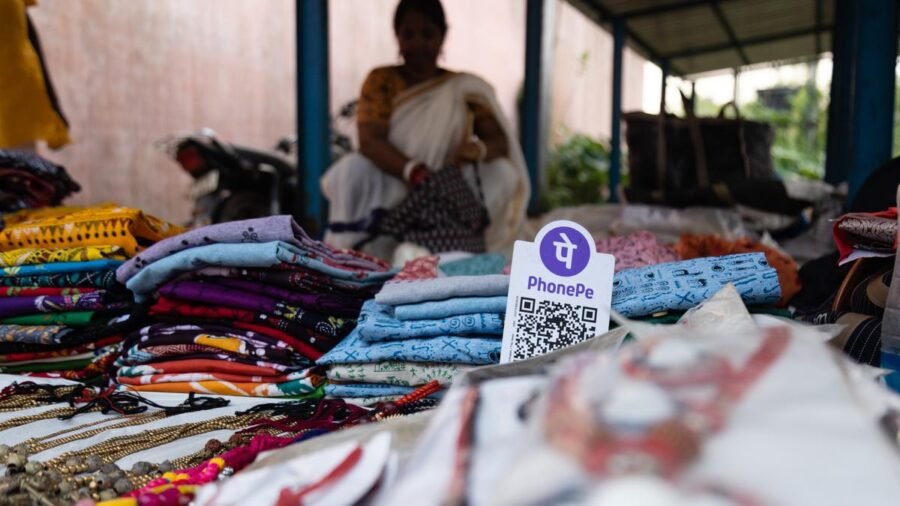
The Unified Payments Interface (UPI) is India’s preeminent digital payments system. In July 2026 alone, it processed 2,366 crore transactions — or around 7,600 transactions per second — in total worth nearly ₹30 lakh crore. Across the 2025-26 financial year, UPI handled 24,160 crore transactions worth ₹314 lakh crore, accounting for 85% of the country’s digital payment transactions by volume. According to the International Monetary Fund, UPI also accounted for a stunning 49% of all real-time payments worldwide in 2025.
How does UPI work?
Say Selvi has an account in Violin Bank and Shankar has an account in Flute Bank. Selvi wants to send Shankar ₹100 via UPI. First, Selvi tells her UPI app — which could be Google Pay, PhonePe, etc. — whom she wants to pay. Obviously the app will not understand who ‘Shankar’ is. Instead, she will have to tell the app in a language the app understands.
In this language, Shankar’s identity has two parts: his unique name and his unique bank name. So it will be something like shankar@flutebank. This UPI ID will be connected to Shankar’s bank account. In technical terms, the ID is an alias of the account.
So when Selvi tells her UPI app that she needs to send money to shankar@flutebank, the app will know which account the money should go to.
Second, the app will send a payment request to the UPI system. UPI is operated by the National Payments Corporation of India (NPCI). It provides the switching and routing infrastructure that links the 730 or so participating banks, allowing users to transfer money between accounts at these banks.
The UPI system will respond to Selvi’s app’s request by asking Selvi to authenticate the transaction. This is like a confirmation: “Let me make sure you want this transaction to happen.” Selvi will do this by entering her UPI PIN. Now the system will know she has signed off on it.
The third step is for the actual transaction to happen. Selvi’s bank, which is Violin Bank, will check the transaction. This involves asking questions such as whether Selvi’s account is valid, has enough money, if the request is authentic, if the transaction limit has been reached, and if the transaction shows any signs of fraudulent activity.
If the check passes all tests, Violin Bank will let the UPI system know that it is ready to execute the transaction.
Fourth, the UPI system will route the transaction to Flute Bank, which is Shankar’s bank, and into the account associated with shankar@flutebank.
Fifth, Violink Bank will deduct ₹100 from Selvi’s account and Flute Bank will add ₹100 to Shankar’s account.
Sixth, and finally, Flute Bank will report the addition to the UPI system, which will then relay it to Violin Bank, and finally to the UPI app in Selvi’s hand.
How complex is the system?
This simplified picture is essentially what the UPI system makes possible. However, it is not complete. The system has more technical components to ensure that different banks can trust each transaction, update records correctly, and be able to respond in a predictable way when a transaction goes awry.
For a glimpse, to connect to Violin Bank — from where Selvi initiated the transaction — the UPI app (Google Pay, PhonePe, etc.) will communicate with TPAP/PSP infrastructure, which allows apps to interact with banking services. TPAP is a company that provides the app used to make UPI payments, e.g., PhonePe. And PSP is the bank or company that connects the app to the NPCI infrastructure.
For another, Violin Blank and Flute Bank will exchange multiple messages during the transaction, including to start payment, authenticate it, authorise it, confirm debit, confirm credit, and confirm status at each step.
And so on.
On the hardware side, UPI requires thousands of servers, which process transactions, store and use databases, facilitate API calls, run monitoring and security systems; high-speed network switches and routers, which connect banks and data centres; and redundant servers, cooling systems, networking equipment, and of course power supplies.
On the software side, the system is made possible by APIs, transaction switches and routers, databases, message queues, encryption and authentication services, fraud detectors, reconciliation software, and disaster recovery protocols. The banks and the apps also have software to connect their systems with the NPCI infrastructure.
The UPI ID
The UPI ID, e.g., shankar@flutebank or selvi@violinbank, is created and maintained by the respective bank, based on a rule the bank has.
For example, if two account holders have the same name, their IDs can be distinguished by a number — selvi1@violinbank and selvi2@violinbank. Users may also be able to customise their UPI IDs, e.g. selvithestar@violinbank.
Fundamentally, the UPI app knows that the string before the ‘@’ is the user account’s alias and the string after the ‘@’ is the bank’s identity. The latter tells the UPI system which service will know which account the former is an alias of.
An individual user can have multiple UPI IDs because their bank account can have multiple aliases. These aliases can also be encoded in QR codes.
UPI — past, present, future
The NPCI built the UPI system with entrepreneur and Infosys co-founder Nandan Nilekani as an advisor and with the Reserve Bank of India (RBI) providing regulatory guidance. Its foundation was as an interoperable layer over the Immediate Payment Service (IMPS), which is a system to quickly transfer funds from one bank to another round the clock.
Then RBI Governor Raghuram Rajan piloted UPI in April 2016 with 21 banks, with the service also becoming available via the banks’ apps a couple months later. UPI 2.0 followed in mid-2018 with new features like linking overdraft accounts, adding mandates (authorising periodic transactions into the future), verifying invoices before payment, signed QR codes (to better verify merchants before transactions), and enhanced autopayments.
The UPI system crossed 100 crore transactions per month in October 2019.
NPCI International Payments, Ltd. (NIPL) is a wholly owned subsidiary of the NPCI whose job is to facilitate international adoption of India’s digital payments systems, especially UPI.
In 2021, NIPL and the Royal Monetary Authority of Bhutan enabled UPI in the kingdom — the first foreign adoption. Then, Singapore followed in 2021, the UAE in 2022, France, Mauritius, Sri Lanka, and Nepal in 2024, Qatar in 2025, and Cambodia, Greece, and the Maldives so far in 2026.
NIPL is reportedly also working on making UPI interoperable with the payment systems of Indonesia, Malaysia, and Thailand.

Essar eyes $18-billion US steel plant: Why Indian firms are investing in US amid tariffs
By Sohail Khan · 29 Sep
The volume knob we often forget to turn down
By Sohail Khan · 29 Sep
Woman loses 43 kg in 8 months: What experts say about losing 10 kg in a month
By Sohail Khan · 29 Sep