‘User should always be in control’: Meta’s VP of AI products Vishal Shah on Muse
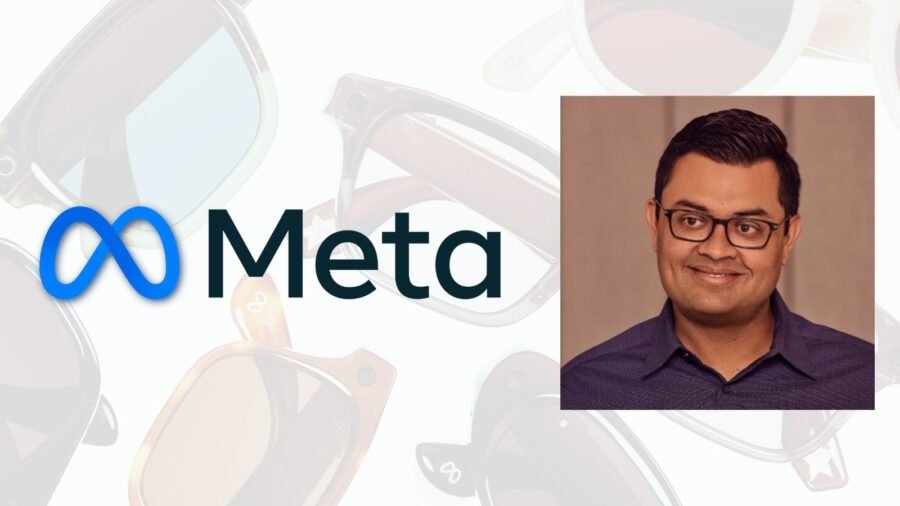
A few weeks ago, Meta launched Muse and has been shipping updates almost every single day since. The most recent additions include a Mac app that lets Muse operate a user’s computer directly, and voice and embodiment features that allow Muse’s character to converse with the user in real time. Perhaps the most significant shift is Meta’s plan to make Muse the default AI agent on its line of smart glasses.
Story continues below.
Subscribe to see fewer ads.
“You’re not just talking to a generic assistant; you are talking to your Muse,” Shah said, describing it as part of a broader attempt to build the next generation of AI product, one that “knows you, understands your goals, and can help you remove the things that maybe are too tricky for you to handle on your own.”
Muse and control
The conversation with Shah touched on autonomy, specifically how much freedom an AI agent should have to act on behalf of a user without asking first. Shah said the guiding principle is that users should always feel in control. Certain actions, like making a purchase or sending something on a user’s behalf, will always require explicit approval. Shah explained that other permissions are more flexible and adjust as Muse learns a user’s preferences.
“It starts off being more conservative, and then as it understands what you are looking for, it might decide whether to ask each time or act on its own,” Shah explained, adding that users retain override control throughout. He cited email integration as an example. For instance, when a user connects to Gmail, Muse defaults to read-only access, and the user has to explicitly grant permission for it to send or write on their behalf.
Shah said that this level of caution is intentional. “If something does something that you don’t expect, that’s a surprising thing, and we want to avoid that,” Shah said. “At the same time, if something is asking you too frequently, that can feel annoying.” For now, Meta’s approach is to ask more often at first, then loosen those restrictions as users get comfortable, instead of assuming broad permissions from the start.
Story continues below this ad
This is not just an app-level design choice. Shah said permission settings are also built into the underlying infrastructure, the secure virtual machine that runs Muse in the cloud. “We think an agent like this needs a new kind of computer, not just one that you can sort of set up on your own,” he said.
What’s powering Muse?
Muse is backed by Meta’s new AI model, Muse Spark 1.3, which, according to Shah, was built with a narrower goal than pushing raw benchmark performance. He shared that it is specifically trained for personal superintelligence – tasks like managing long-running goals or coordinating multiple subagents on something like a home project instead of being optimised for purely general intelligence. Shah shared that coding ability is a byproduct of that focus. If a user wants Muse to connect to an app that doesn’t have a built-in integration, it can write that connector itself. “It is not coding for coding’s sake,” Shah said. “It’s coding because it helps you use Muse.”
When asked how Meta approaches building AI at scale with regard to its billion-plus users across WhatsApp, Instagram, and Facebook, Shah framed it as a philosophical standpoint rather than a technical one. “We really do believe that personal superintelligence should be for everyone,” he said, highlighting Muse’s large free tier as evidence of that approach carrying through to pricing decisions, not just product design.
He also argued that most AI products today put the burden of figuring out how to use them on the user. “If you think about a lot of AI products today, they start with a text box, and it’s sort of up to you to decide how you want to use it,” he said. Muse’s design, by contrast, leans on the format of a single ongoing conversation, similar to messaging apps like WhatsApp, rather than separate threads a user has to manage. “You are not writing things down so the person remembers them. The person just remembers them,” Shah said, describing that familiarity as central to lowering the learning curve.
Story continues below this ad
The grander scheme of things
When asked where Muse fits into Meta’s grander vision for personal superintelligence, Shah candidly responded that Muse remains in its early stages, with current use cases centred on personal productivity, finance, and health and fitness. He described glasses as a way to extend the assistant beyond the phone and into physical spaces, saying the goal is to give people “more time to do the things that they want to do, not just the things that they have to do.”
Muse is currently limited to the US and Canada. When asked how Meta plans to expand Muse beyond boundaries and languages, Shah shared that the expansion would require both language support and integration with the apps and services people actually use locally, alongside the broader work of scaling a new product. “I’m very excited about the Indian market,” he said, citing his own family background. The Meta executive described India as an incredible kind of entrepreneurial market with strong demand for new technology among small businesses and individuals looking to build a new life for themselves.

Lava Shark 2 Pro 5G launched at ₹16,699: Check specs, features and more
By Sohail Khan · 29 Sep
How OpenAI plans to make training AI models safer in three key ways
By Sohail Khan · 29 Sep
HMD launches Vibe2 Pro 5G under ₹15,000 with 5G, a big battery and a smooth Full HD+ display
By Sohail Khan · 29 Sep
Leave a Reply