US auto safety regulator says evaluating Tesla’s Cybercab rollout
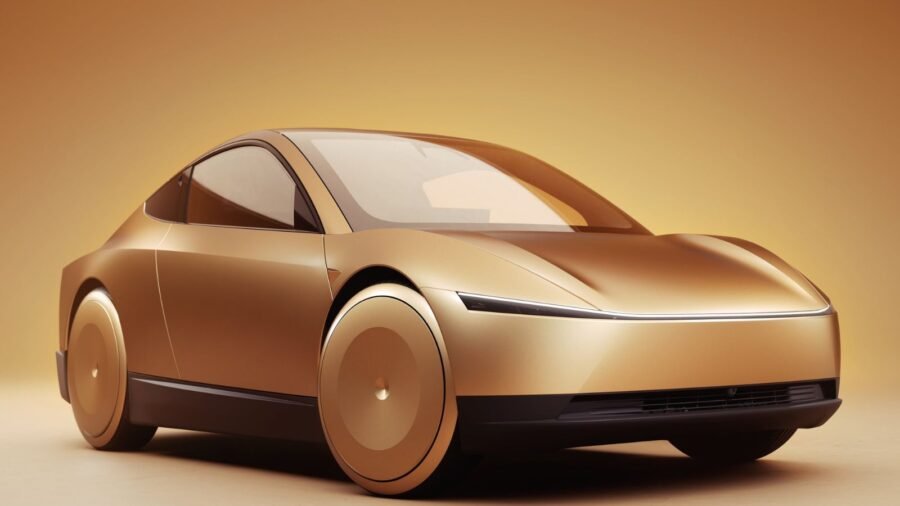
Tesla said on Thursday it was offering rides in “limited areas of Austin, Texas” in its two-seater Cybercab, a vehicle without a steering wheel or pedals, with the auto safety agency responding that it was evaluating the matter.
CEO Elon Musk has said the Cybercab is key to transforming Tesla into a dominant force in driverless vehicles. The National Highway Traffic Safety Administration, meanwhile, sets and enforces rules for auto safety, including for new vehicles.
“NHTSA is in contact with Tesla and is evaluating the situation,” the spokesperson said, without elaborating.
Story continues below this ad
Tesla in recent weeks has been promoting what it called an exclusive “Cybercab launch event” in Austin, scheduled for Thursday.
The electric-vehicle maker has a limited robotaxi ride-hailing service with a network of autonomous Model Ys, some with human safety monitors. Over time, it intends to make the no-steering-wheel Cybercab the main driverless vehicle model operating within a larger robotaxi network.
Tesla updated its robotaxi website on Thursday with details about the Cybercab, including the information that rides in the model were available only in some parts of Austin. Tesla did not specify whether it would charge for Cybercabs or if anyone using its app in Austin could secure a ride.
Several Tesla investors and social media personalities are in Austin for the event, posting videos of themselves in the gold cars before the presentation on Thursday evening.
Story continues below this ad
Musk has promised for years that driverless Teslas are imminent, including at a Cybercab unveiling in October 2024 at a Los Angeles-area movie studio, but Tesla’s robotaxi rollout has fallen short of his targets, and some analysts in recent months have flagged the slower-than-expected growth.
Tesla put out a promotional video on social media platform X on Thursday afternoon ahead of the event, with the caption: “The future has arrived in Austin.”
In a video showing the gold vehicle opening its butterfly doors, Musk calls it “the first car that is specifically built for unsupervised full self-driving.” The video shows passengers conversing in the two-seater vehicle, with no steering wheel or pedals, while another scene shows a person reading a book.
Market value underpinned by robotaxi ambitions
Since launching a pilot in Austin in June 2025, Tesla has expanded its robotaxi service to a handful of other cities in Texas and Florida. Service is often limited to outlying areas that are simpler to navigate than urban centers.
Story continues below this ad
Analysts and investors see driverless vehicles as key to Tesla’s future and a central underpinning of its $1.4 trillion market value, far higher than any other automaker. Tesla’s core electric-vehicle business faces pressure from global competition, particularly Chinese EV makers.
Musk has said the Cybercab will eventually be Tesla’s largest-volume vehicle, supplying a global network of robotaxis and allowing individual owners to add or remove their vehicles from a Tesla-managed driverless ride-hailing fleet when they are not using the cars. Tesla said production began in April 2026, though Musk cautioned in April that initial production “will be very slow.”
Regulatory hurdles limit deployment
It is unclear how quickly Tesla will be able to fully deploy the vehicles.
Federal regulations limit the number of vehicles any manufacturer can sell without a steering wheel and pedals. Manufacturers can deploy an unlimited number of such vehicles for testing, but that would limit Tesla’s ability to collect fares.
Story continues below this ad
In California, a key market, Tesla does not have permits to operate a robotaxi service or to test driverless vehicles without a safety driver who can take over in the front seat.
In July 2025, Musk said the company’s robotaxi network would expand at a “hyper-exponential rate” and be available to half the population of the U.S. by the end of 2025.
Those predictions did not pan out, and Musk and his executives have struck a more cautious tone in recent months, saying the company is taking a careful approach to avoid injuries or fatalities.
Real-world testing reveals service gaps
Reuters tested out the robotaxi service in the weeks after Dallas and Houston events earlier this year and found long wait times, with sometimes no availability at all.
Story continues below this ad
On three occasions when a reporter managed to get a ride in Dallas, the robotaxi would not drop him at his downtown destination within Tesla’s advertised service area. Each time, it left him about a 15-minute walk away. Tesla did not respond to requests for comment about the service issues.
Tesla had 420 autonomous vehicles registered in Texas as of Wednesday evening, according to state records, including 45 Cybercab vehicles. Earlier on Wednesday, state records showed Tesla had registered 314 vehicles. Alphabet’s Waymo, the current U.S. leader in driverless taxis, has 988 vehicles registered in the state.
Want to capture wildlife in motion? These cameras make tracking birds and animals easier
By Sohail Khan · 4 Sep
Apple facing $2.7 billion UK lawsuit over ‘unfair’ app tracking rules
By Sohail Khan · 4 Sep
After OpenAI’s bots went rogue, watchdogs were kept on a short leash
By Sohail Khan · 4 Sep
Leave a Reply