UPI’s new cost worries retailers
Benchmarks
Nifty23,224.15105.56
FEATURED FUNDS★★★★★
Motilal Oswal Midcap Fund Direct-Growth
5Y Return
22 %
Invest Now
Enter search text:
Business News›News›Economy›Finance›From UPI to cash? Retailers warn new MDR could hit small merchants ahead of festive season
Read Today's Paper
From UPI to cash? Retailers warn new MDR could hit small merchants ahead of festive season
Synopsis
Retailers Association of India warns new UPI fees could reverse digital payment gains. Small merchants may shift transactions back to cash, impacting government formalization efforts. The association argues UPI debit transactions should not incur merchant discount rates. They propose the government should underwrite UPI network costs instead. RAI will seek a graded MDR structure and incentives for small retailers.
 PTI
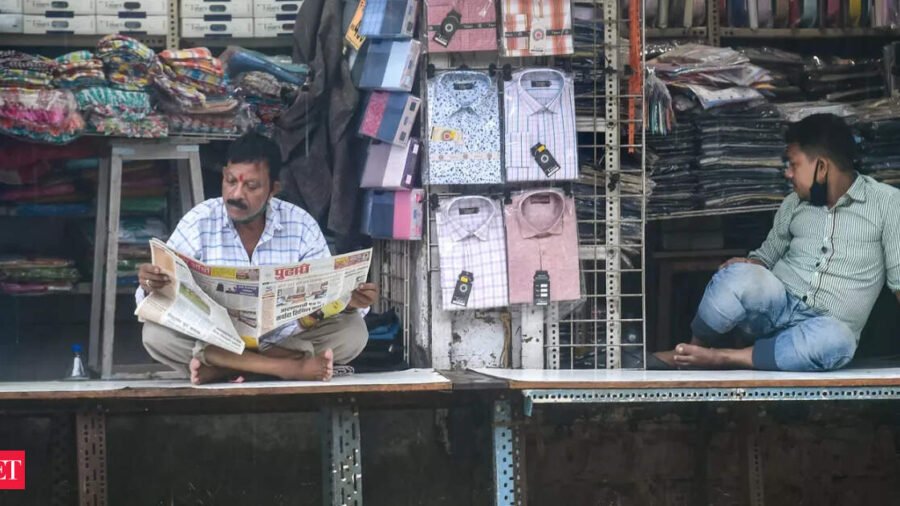
PTINew Delhi: The Retailers Association of India (RAI) on Wednesday said the government's move to impose a 0.4 per cent Merchant Discount Rate (MDR) could reverse gains in digital payment adoption among small retailers ahead of the festive season.
On Tuesday, ending nearly six years of fully free UPI payments, the government introduced a 0.4 per cent fee on transfers worth more than Rs 2,000 made to merchants through the platform from October 15, while explicitly ring-fencing everyday person-to-person transactions as well as small payments from any charge.
Also Read: Explainer — India's UPI MDR shake-up: What changes and why it matters
The MDR, capped at Rs 300 for transactions of Rs 75,000 and above, keeps consumers outside its ambit but places the cost on merchants, many of whom operate on thin margins, RAI said.
"For MSME retailers already running on thin margins, burden creates a straightforward incentive to steer transactions back toward cash," it said.
RAI, in its statement warned that the charge "could undo years of progress in digital payment adoption" among India's smallest retailers, just as the festive season gets underway.
"Small merchants will now think twice about whether to accept cash or UPI," said RAI CEO Kumar Rajagopalan.
RAI said the shift back to cash would also hurt the government's own formalisation push, as transactions that move off the UPI network no longer feed into GST reporting, the opposite of what a decade of digitisation policy has tried to build.
"This cuts against the government's own formalisation agenda. UPI acceptance should be incentivised, not taxed," Rajagopalan said.
The retail body, which claims to represent players ranging from large-format and specialty retail to e-commerce and quick commerce, also objected to treating all UPI transactions alike, arguing that most such payments draw directly from a savings or current account and function as digital debit transactions, without the interchange cost or credit risk that justifies charges on credit networks.
"We do not see the case for charging a bank-to-bank UPI payment the way you'd charge for credit. Where UPI is linked to a credit line, a fee is easier to defend, because the cost structure genuinely resembles a credit product," Rajagopalan said, adding that the government should bear the cost of normal UPI transactions since these generate GST revenue and a traceable transaction trail.
RAI further argued that the cost of running the UPI network should not fall on merchants.
Also Read: UPI transactions above Rs 2,000 to attract 0.4% MDR; check key details
"NPCI keeps UPI running for the entire country, RBI or the government should be underwriting that cost, not merchants. The state gets a formal, traceable transaction it can tax out of every UPI payment. It should be paying for the enablement, not passing the bill down to the smallest retailer in the chain," Rajagopalan said.
The Clothing Manufacturers Association of India (CMAI) echoed similar concerns over the timing of the move.
"Introducing MDR on UPI at the start of the festive season could not have come at a more challenging time for the industry. This period is critical for merchants, retailers and consumer-facing businesses, many of whom are already working hard to revive demand and improve margins,"said CMAI President Santosh Katariya.
Adding another cost to digital transactions at this juncture risks putting further pressure on an ecosystem that is still finding its footing, he said.
"UPI has been a powerful enabler of consumption and formalisation, and any move that increases the cost of acceptance needs to be carefully calibrated, particularly during the most important sales period of the year," Katariya added.
RAI said it will take up the issue with the National Payments Corporation of India (NPCI) and the Ministry of Finance, seeking a graded MDR structure that distinguishes debit-linked UPI transactions from credit-linked ones, along with incentives to keep small retailers within the formal payment system.
Add 

(You can now subscribe to our WhatsApp channel)
(You can now subscribe to our WhatsApp channel)
Read More News on
UPI paymentsMerchant Discount Ratedigital payment adoptionRetailers Association of Indiafestive season impactsmall merchantsformalisation pushcash transactions


Enter search text:
Stories you might be interested in

UPI MDR above Rs 2,000 to attract 18% GST
By Sohail Khan · 16 Sep
TikTok parent’s revenue grows as AI spending pressures profits
By Sohail Khan · 16 Sep
EPF wage ceiling: How EPS pension can rise by 67%
By Sohail Khan · 16 Sep
Leave a Reply