UPI MDR fee hike explained in 10 points: No rollback, Rahul Gandhi vs Centre
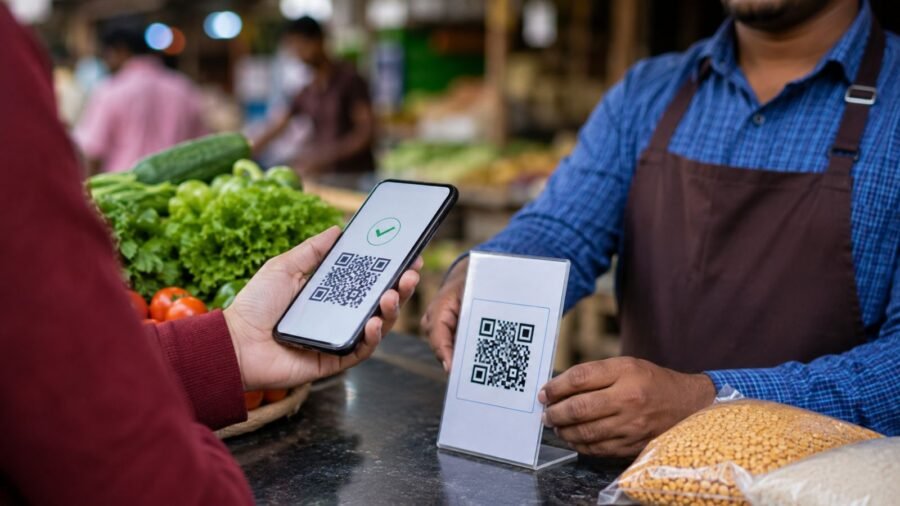
There will be no rollback of the proposed 0.4 per cent fee on person-to-business UPI transactions worth more than Rs 2,000, government sources told news agency PTI on Wednesday.
Asked if the government had considered withdrawing the MDR, or merchant discount rate, order, an official said there is ‘no question of reversing it’. But the UPI fee hike – expected to take effect from October 15 – already faces a potential legal challenge after a plea was filed in the Supreme Court this afternoon.
The 0.4% UPI MDR fee has also been criticised by the opposition. The government has responded to the criticism, with the Finance Ministry and Finance Minister Nirmala Sitharaman issuing statements.
Story continues below.
Subscribe to see fewer ads.
1. ‘Modi prostrated himself’: Rahul Gandhi on UPI fee
Rahul Gandhi has been leading this charge; in a searing video message posted earlier today the Congress MP accused the Narendra Modi government of having prostrated himself in front of United States President Donald Trump.
Gandhi’s attack came a day after the National Payments Corporation of India – a government body facilitating digital payments – confirmed a revised merchant pricing framework that revolves around the levy of 0.4 per cent MDR.
2. ‘No foreign pressure’: Centre on UPI transaction fee
However, in the light of Gandhi’s criticism and the opposition’s red flags about the poorer sections of society being squeezed, the government has said ‘external pressure’ played no role in its decision to set a MDR for certain transactions.
The charge is to be borne fully by the merchant in each case, the Finance Ministry said in an explainer infographic on X, and will be capped at Rs 300 for transactions of Rs 75,000 and above. Person-to-person UPI transfers will remain free.
Story continues below this ad
3. ‘Transcend sectoral interests’: FM Sitharaman
Union Finance Minister Nirmala Sitharaman on Wednesday said tax reforms must look beyond “sectoral interests” and focus on India’s wider economic needs, including creating a fair, predictable system that promotes investment and innovation.
Speaking at the Eighth International Tax Conference in Bengaluru, she called for independent tax policy research in public discourse and urged tax professionals to “put the nation first”. She also highlighted efforts to rationalise TDS and TCS provisions, reduce unnecessary criminal consequences and renegotiate tax treaties with Mauritius, Singapore and Cyprus to restore India’s right to tax capital gains at source.
4. What is MDR?
MDR is the fee merchants must pay to banks and payment service providers for processing digital payments.
This fee is also used to help maintain the payments infrastructure, which includes cloud storage, the payment app itself, and customer support features.
Story continues below this ad
The fee is shared between banks and payment service providers involved in processing the transaction. Credit cards, for instance, face an MDR of one to three per cent of transaction value, while it is up to 0.9 per cent for debit cards.
UPI has operated under a zero-MDR regime since January 2020, i.e., as the Covid pandemic was worsening and the need for social distancing became paramount.
5. What is UPI fee hike
The new framework – announced Tuesday – ends six years of free UPI transactions. Under it the 0.4 per cent MDR will apply from October 15 to merchants above Rs 2,000. Person-to-person transfers and small payments will remain free.
The decision to levy an MDR – a practice followed in several other countries – was taken when the UPI system was introduced in 2020. The new framework, sources explained, is aimed at ‘making UPI financially self-sustainable’.
Story continues below this ad
6. Why the need for UPI charges?
More than 55 crore people use UPI now and 703 entities – from banks to payment service providers – are involved in facilitating its transactions.
But there are costs involved in maintaining the digital payments infrastructure, and these have been borne by banks and payment service providers for years.
This may be as high as Rs 20,000 crore every year.
7. Why does this matter?
Two reasons.
First, because it is the consumer who could end up facing the fee. In the case of credit cards, for instance, small merchants have been known to pass on the MDR amount to the consumers. The same may happen with UPI.
Story continues below this ad
However, the government did say on Tuesday that it had ‘advised’ banks to ensure merchants do not pass on the additional MDR cost to consumers.
Second, such a fee would affect a significant chunk of UPI transactions.
While transactions above Rs 2,000 accounted for only four per cent of person-to-merchant (P2M) UPI payments by volume in 2025-26, these made up around two-thirds of UPI payments by value. In 2025-26, over 24,000 crore UPI transactions worth Rs 314 lakh crore were made.
Government sources said the move had been introduced in the ‘broader interests of the UPI ecosystem’, particularly to strengthen its safety and security.
Story continues below this ad
8. Parliamentary concerns over not charging UPI fees
The Parliamentary Standing Committee on Finance had earlier raised concerns about the sustainability of the zero-MDR model. In its 32nd report, the panel said the regime ‘puts pressure on government finances’ and warned that ‘establishing a viable revenue mechanism is critical to ensuring the UPI ecosystem achieves financial sustainability without perpetually straining the government exchequer’.
The committee also noted the government is currently spending roughly Rs 2,000 crore annually to fund the incentive scheme associated with the zero-MDR policy.
9. What about micro merchants, small vendors?
Small merchants, including street vendors, receiving up to Rs 1 lakh per month through UPI QR codes into their personal bank accounts will not be subjected to MDR charges.
These merchants are part of a special category – Person-to-Person-Merchant – and, according to the NPCI, small merchants aren’t required to replace or re-register their QR codes under the new MDR framework.
Story continues below this ad
10. History of UPI in India
The technology was developed by the RBI-regulated NPCI and the Indian Banks’ Association. Work on it started as long back as 2012-13, with the payment systems ‘vision document’ for 2012-15 making noteworthy points.

Severe anaemia in one baby orangutan, mild in two as rescued apes undergo tests
By Sohail Khan · 16 Sep
Addiction, suicide, environment damage: Kashmir mosques to take up issues beyond religion
By Sohail Khan · 16 Sep
10 get death in 2013 Maoist attack that almost wiped off Chhattisgarh Congress leadership
By Sohail Khan · 16 Sep
Leave a Reply