Addiction, suicide, environment damage: Kashmir mosques to take up issues beyond religion
The pulpit in Kashmir mosques is moving beyond the traditional religious discourse.
Broadening its conversations beyond the matters of faith, the Valley mosques will now take up issues closer to the community – from drug addiction to suicide and self-harm to environment issues.
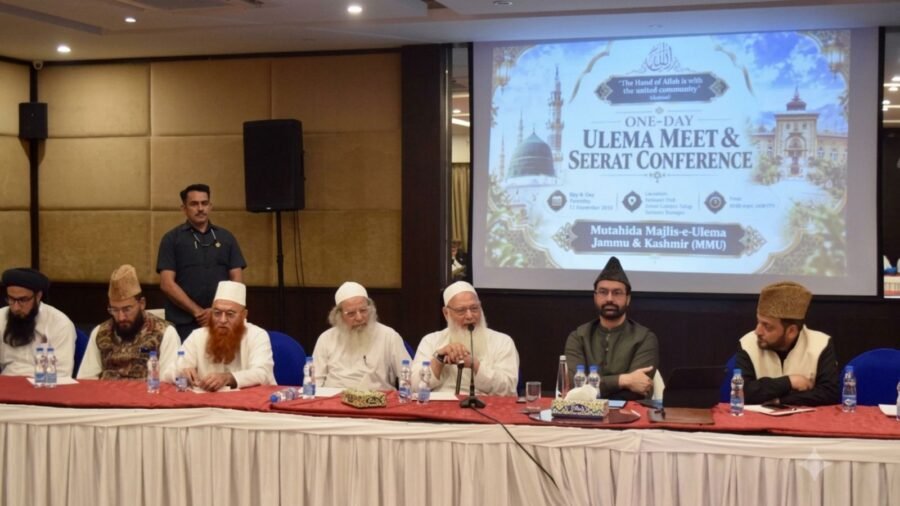
The decision was taken at a recent meeting of religious scholars from Jammu & Kashmir, and Ladakh, bringing together clerics from across the Shia-Sunni divide. The meeting held on Tuesday was headed by Valley’s chief cleric Mirwaiz Umar Farooq.
Story continues below.
Subscribe to see fewer ads.
“We are witnessing an increase in self-harm and emotional distress among young people, and the steady degradation of our environment. These are no longer issues that can be left only for the government (to tackle) or occasional seminars. They require a sustained social response,” Mirwaiz told . “The mosque and the mimbar (pulpit) have a unique reach and influence in our society and the ulema (scholars) have a responsibility to use that platform constructively.”
Mirwaiz said that the seriousness of these social challenges prompted the initiative. “The pulpit can’t replace doctors or counsellors but can educate and mobilise the society towards positive action,” Mirwaiz said. “We have decided that on designated Fridays, a common social issue will be taken up across mosques, creating awareness, encouraging families to recognise problems early, reducing the stigma around counselling and professional help, and reminding people of their responsibility towards their surroundings.”
Mosques as community welfare centres
The religious scholars, from across different schools of thought, who met under the banner of Muttahida Majlis Ulema (MMU) headed by Mirwaiz, agreed to transform the mosques and madrasas as community welfare centres.
“The conference underlined that mosques and madrasas must increasingly become centres of guidance, counselling, youth engagement, family support and community welfare, alongside their primary religious and educational responsibilities,” MMU said in an official release. “Their close connection and proximity to people’s homes give them the ability to identify problems early and help families seek appropriate support.”
Story continues below this ad
Stressing upon the role of pulpit to counter social challenges, the religious scholars agreed that the clerics and pulpit can “play an important preventive and supportive role by creating safe spaces where young people and families are able to speak uninhibitedly about personal emotional distress, loneliness, anxiety, family pressures and other reasons, without fear of stigma.”
The religious scholars plan to travel to different parts of the region to interact with and sensitise the local religious leader about these social issues and to “understand the local concerns to develop a practical response suited to each area”.
‘Don’t promote alcohol in the name of tourism’
While raising serious concern over drug addiction, the scholars said the campaign against the menace “cannot yield the desired results if, at the same time, new liquor licences are issued and alcohol is promoted or expanded in the name of tourism”.
“Such contradictory policies undermine efforts to protect young people from addiction,” they said while calling upon the government to “reconsider this approach and to stop further promotion and expansion of alcohol availability.”
Severe anaemia in one baby orangutan, mild in two as rescued apes undergo tests
By Sohail Khan · 16 Sep
UPI MDR fee hike explained in 10 points: No rollback, Rahul Gandhi vs Centre
By Sohail Khan · 16 Sep
10 get death in 2013 Maoist attack that almost wiped off Chhattisgarh Congress leadership
By Sohail Khan · 16 Sep
Leave a Reply