Trump’s Big Move Amid 100% Tariff Bill: Why Is The US Buying Uranium From A Country At War?
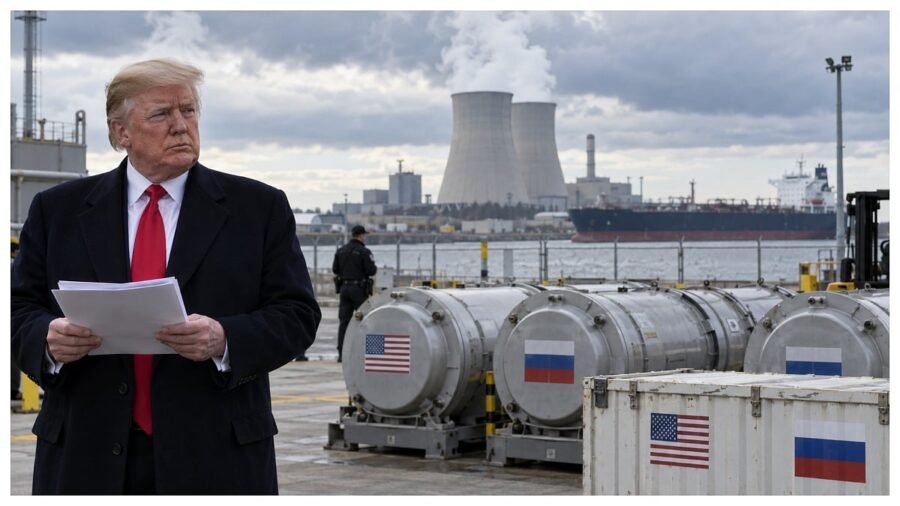
The US may punish Russian oil buyers with 100 percent tariffs, but its own nuclear sector still relies on Russian enrichment services allowed through waivers.
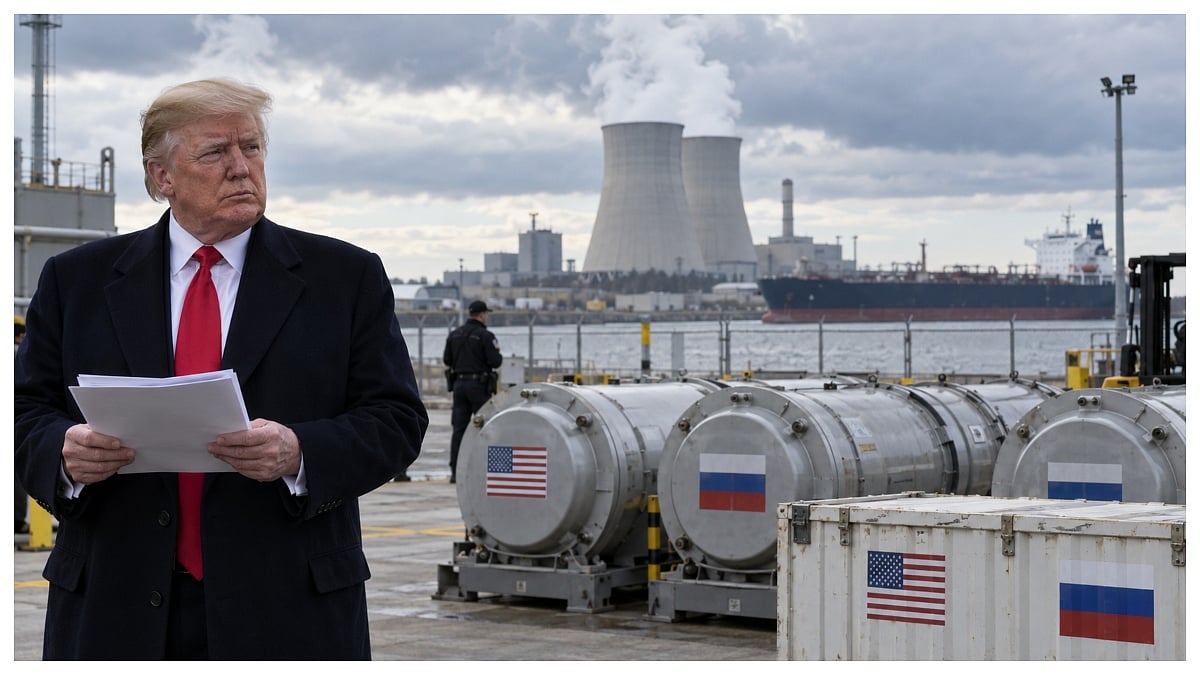
The US may punish Russian oil buyers with 100 percent tariffs. |
Mumbai: has approved the Lindsey O. Graham Sanctioning Russia and Iran Act of 2026, giving President Donald Trump authority to impose tariffs of up to 100 percent on countries buying large quantities of Russian oil and gas. India and China, Moscow’s biggest energy customers, could face the strongest pressure.
The bill passed by 262 votes to 159 and now awaits Trump’s signature. It targets Russian banks, energy operations, defence interests and the shadow fleet used to move sanctioned oil. Its stated objective is to restrict funds flowing to Russia during the .
The Uranium Contradiction
The tougher stance, however, exposes a gap in Washington’s own policy. While threatening other countries over Russian fossil fuels, the US nuclear industry continues to use Russian enrichment services under legally permitted waivers.
A 2024 law banned imports of Russian low-enriched uranium from August 11 that year. However, the US Department of Energy can approve temporary exemptions when alternative supplies are unavailable or when imports serve the national interest. This waiver authority can continue until January 1, 2028.
`;
Latest US Energy Information Administration data show that Russia still supplied 26 percent of the foreign-origin enrichment services purchased by American reactor operators and owners in 2025. The dependence reflects Russia’s powerful position in global uranium enrichment and America’s limited domestic capacity.
Why Washington Still Needs Russia?
Uranium ore is only one part of nuclear fuel production. It must be converted and enriched before being used in reactors. Russia has built enormous enrichment capacity, while the US allowed much of its domestic supply chain to shrink.
An immediate halt could therefore disrupt fuel deliveries, increase costs and create risks for nuclear plants that provide dependable electricity. Washington is investing billions of dollars to rebuild domestic enrichment capacity, but replacing Russian services requires new facilities, contracts and time.
What It Means For India?
The uranium exception strengthens India’s argument that energy security cannot be changed overnight. Russia supplied 30.3 percent of India’s crude imports in FY2026, worth USD 40.8 billion out of a total USD 134.7 billion. Its share reportedly crossed 50 percent in July as Middle East disruptions squeezed alternative supplies.
The proposed law does not automatically impose a 100 percent duty. Trump would decide the rate, product coverage, timing and whether exemptions should apply. Any levy could hurt Indian exporters and raise prices for American buyers.
The central question is now difficult for Washington to avoid: if its own nuclear system needs a managed transition away from Russian uranium, can it reasonably demand that India rapidly abandon Russian oil while protecting energy supplies for 1.4 billion people?
That apparent double standard could become a central fault line in trade negotiations between New Delhi and Washington.

Add As a
Trusted Source 




Leave a Reply