Surendra Koli found dead: Why the Nithari killings case against him collapsed
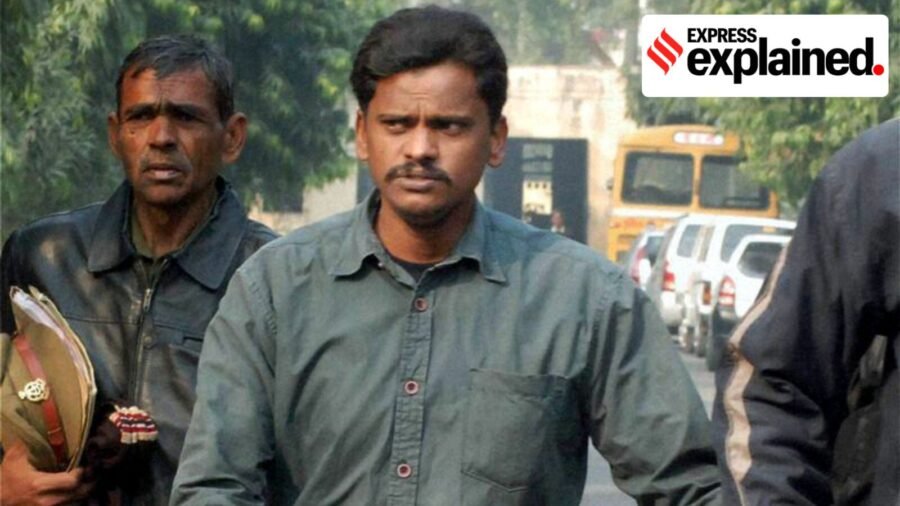
Surendra Koli, who was acquitted in the 2006 Nithari serial killings case in 2025, was found dead in Haridwar on Friday (September 18), police said.
Police suspect suicide, but a post-mortem examination is awaited.
We recall the Nithari killings case, how Koli came to be convicted, and why the prosecution’s case against him ultimately collapsed.
How the Nithari killings came to light
In 2003, residents of Nithari, an urban village in the middle of Noida, began reporting an unnaturally high number of disappearances of women and children in the area. However, the Noida police refused to file complaints in several of these cases, while those that were registered did not see much progress.
Story continues below.
Subscribe to see fewer ads.
A turning point came in May 2006, when a distraught father went to the police about his missing daughter. He claimed that she had visited the home of a certain Moninder Singh Pandher in Noida’s Sector-31 near Nithari on the day of her disappearance. No FIR was lodged until June, when the father made a scene at the official residence of a senior police officer.
A trace of the missing woman’s phone led the police to Surendra Koli, who worked as Pandher’s domestic help at the time. Koli was arrested but soon released on bail.
In December 2006, plastic bags stuffed with human skeletal remains, as well as the belongings of the missing victims, were found dumped in a drain behind Pandher’s house. This led the police to arrest Koli and Pandher on December 29 for abducting and killing multiple women and children.
With the case now grabbing national headlines, and the Noida police’s previous inaction and ineptitude under the spotlight, the probe was handed over to the Central Bureau of Investigation (CBI) on January 10, 2007. The CBI’s forensics team carried out further searches of Pandher’s house and uncovered more skeletal remains and evidence of heinous crimes.
How Koli and Pandher were prosecuted
Story continues below this ad
On March 1, the CBI recorded Koli’s confession in the presence of a magistrate. The domestic help admitted to the killings “in great detail” and said that he lured the victims inside D-5, strangled them, and then “chopped up and ate their body parts after cooking them”.
Noida police had filed 19 FIRs against Pandher and Koli relating to crimes against 19 different girls, and the CBI filed charge sheets in 16 of them. In a 2007 charge sheet for one of the cases, the CBI alleged that Koli had “necrophiliac” and “cannibalistic” tendencies.
Both Koli and Pandher were convicted and sentenced to death by a special CBI court on February 13, 2009, for the rape and murder of a 14-year-old. On appeal, the Allahabad High Court acquitted Pandher but upheld Koli’s conviction and death sentence.
Koli then approached the Supreme Court, which dismissed his appeal in 2011 and a review petition in 2014. But in January 2015, Koli’s death sentence was commuted to life imprisonment by the Allahabad HC, citing an “inordinate delay in the disposal of the mercy petition”.
Story continues below this ad
In 2017, a CBI special court awarded the death sentence to Pandher and Koli for the rape and murder of the woman whose father’s complaints had first led the police to the duo. On October 16, 2023, the Allahabad High Court acquitted Koli in 12 cases and Pandher in two, citing “unsatisfactory” evidence, procedural lapses, improbable possibilities, and allegations of tutoring and torture. Pandher walked out of prison in October 2023, while Koli was released in November 2025.
Why the prosecution’s case collapsed
Koli’s conviction rested largely on two pieces of evidence: his 2007 confession, and the evidence of human remains and belongings recovered in 2006.
While hearing appeals in the other Nithari cases, the Allahabad High Court questioned the reliability of both pillars of the prosecution’s case. It ruled that the confession could not be considered voluntary or reliable, noting that Koli had been in continuous police custody for 60 days with no access to a lawyer. The confession also contained references to him being tutored and tortured.
It further held the recovery of skulls and bones inadmissible under the Indian Evidence Act, observing that the police and public already knew about the remains and digging had begun even before Koli was brought to the spot. The recovery site — an open strip of land behind the house — was not under his exclusive control.
Story continues below this ad
In October 2023, the Allahabad High Court acquitted Koli in all 12 cases and Pandher in the two against him. The state’s appeals against these acquittals were dismissed by the Supreme Court in July 2025, making them final.
Why the Supreme Court finally acquitted Koli
At that stage, this created a legal anomaly: Koli was acquitted in 12 cases, but remained convicted in one based on substantially the same evidence. The Supreme Court took note of this contradiction and exercised its curative jurisdiction to correct a “manifest miscarriage of justice”.
The court held that two irreconcilable outcomes on identical evidence could not lawfully coexist, as this would undermine public confidence in the justice system.
Applying the same reasoning that led to the other acquittals, the Supreme Court found the confession and recoveries in the last case legally unreliable. It said the defects were not factual peculiarities but “structural infirmities inherent in the mode of proof relied upon across the Nithari prosecutions”.
Story continues below this ad
The court thus recalled its 2011 judgment and 2014 review order, acquitted Koli of all charges in the final case, and ordered his immediate release.

Science quiz: Scientific problems featuring cities
By Sohail Khan · 18 Sep
Milind Soman at 60 completes gruelling Ironman Wales: ‘Hard, hard, hard’
By Sohail Khan · 18 Sep
What EPFO wage ceiling hike means for employees, why some have criticised it
By Sohail Khan · 18 Sep
Leave a Reply