The teak leaves Gadchiroli. The women are making it stay
Story continues below.
Subscribe to see fewer ads.
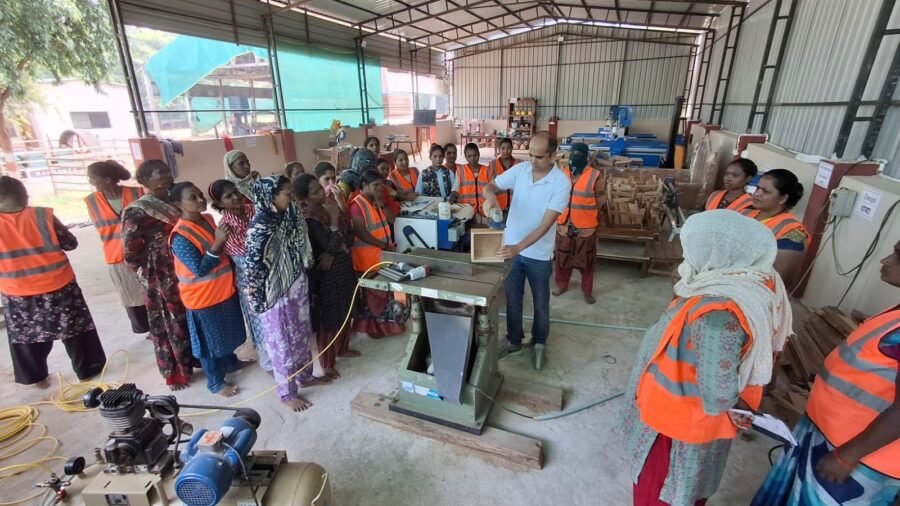
For these women, the change has a more immediate meaning.
A single mother, 34-year-old Kavita Mulkari had tried tailoring, painting and other odd jobs in Allapalli, but the income was never enough to support the education of her son, studying in Class 2. When she heard about the carpentry training at the new centre, she got herself enrolled.
Working there for two months, Kavita has made study tables and wooden boxes, among other products. “Now, I am able to manage the household expenses better and save a little for my son’s future,” she says.
Kavita is among around 20 women currently working at the centre — 10 in carpentry, 5 in polishing, and 5 in measurement. Another 25 women are undergoing training.
Story continues below this ad
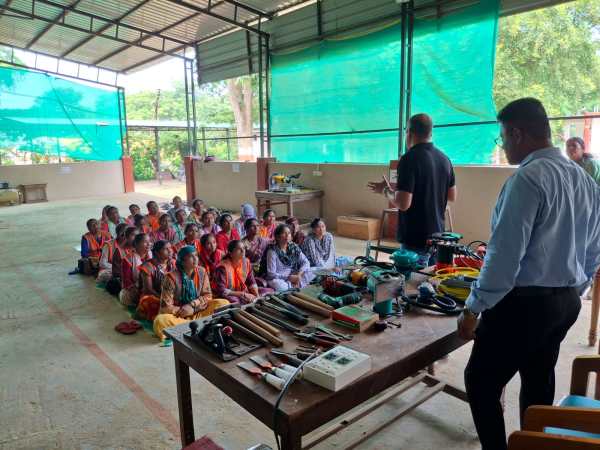 20 women currently working at the centre – 10 in carpentry, five in polishing and five in measurement.
The centre was sanctioned under the District Planning Fund in March 2025 under the Innovative Scheme at a cost of around Rs 1.6 crore and formally inaugurated on August 25. Officials say the objective is to create a chain from training to production, orders and income, while ensuring that more of Gadchiroli’s forest wealth is processed locally.
Richness from forests
Gadchiroli is one of Maharashtra’s most heavily forested districts, with 10,015.48 sq km, 69.49 per cent of its geographical area, under forest cover, according to the 2023 India State of Forest Report. Its predominantly dry deciduous forests are rich in teak, bamboo and other commercially important species.
Teak remains an important part of the local forest economy, with the Maharashtra Forest Department continuing to auction timber from the Gadchiroli circle. Yet much of the timber has traditionally left the district in cut sizes, with the higher value processing taking place elsewhere.
The new wood processing centre at Allapalli is an attempt to change that by bringing processing and value addition closer to the source, while creating local employment.
Story continues below this ad
Ganesh Motkar, divisional manager, FDCM, said the initial plan was to explore employment opportunities for local youth, including ITI students. But officials found considerable interest among women, including housewives and farm labourers.
“What they are doing now is very delightful. Some of them had never even picked up a chisel,” Motkar said.
Mastering the skill
The transition has not always been easy. Nailing, for instance, was initially difficult for some of the women. The centre has introduced pneumatic nail guns, hand sanders, planers and other modern equipment, while training the women to operate the machines themselves.
“We are introducing the women to all the machines during the training so that they gradually learn. Our approach is that they are our future designers,” said Divya Bharathi, regional manager, Chandrapur FDCM.
Story continues below this ad
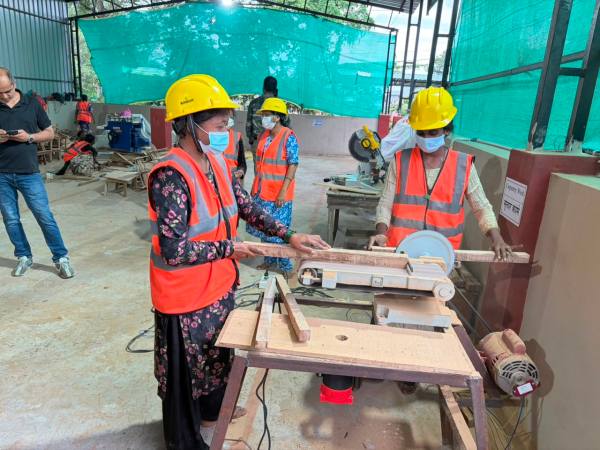 Kavita has made study tables and wooden boxes, among other products
The centre has already moved beyond training to production. The women have made around 800 study tables against an order for 1,000, with each table priced at around Rs 3,000. They are also making food serving trays and wooden statues.
Boosting the economy
According to Motkar, orders worth around Rs 50 to 60 lakh are currently pending, including requirements from the Chandrapur Forest Academy, Sangli International Sainik School, Tadoba Tiger Reserve and the Bamboo Research and Training Centre in Chandrapur.
The women currently receive a minimum wage of around Rs 500 a day. Motkar expects their earnings could rise to Rs 800 to Rs 1,000 a day as they become more skilled and take up job-based work. The long-term aim, he said, is to give skilled women greater flexibility to choose their working hours around family responsibilities.
For 30-year-old Rubina Sheikh, the opportunity came after another livelihood disappeared. She had been working at an agarbatti project in the village before it shut down. She now works alongside her husband and contributes towards the education of their two children.
Story continues below this ad
The shift is also changing the character of a workplace where sawing was largely a male domain. Around 15 to 20 men worked as sawyers at the facility. Women are now entering different stages of the wood-processing chain.
District Collector Avishyant Panda said the focus on women emerged after officials saw the interest among local women who were not engaged in regular employment.
“Initially, ITI students were surveyed. However, seeing the interest from women in the area who were not engaged anywhere, we decided to take forward the concept of women carpenters,” Panda said.
“This is the first time it is being processed in Gadchiroli so that locals get both expertise in intricate carpentry and a sustained income,” Panda said.
Story continues below this ad
Beyond jobs
The administration and FDCM are now looking at ways to take the products beyond the workshop. Plans include a showroom in Chandrapur and a “Cart on Wheel” model to display and sell the products at exhibitions. Officials also hope that some of the trained women will eventually be able to open their own shops.
Motkar said the immediate aim is to have 100 women working at the facility by March.



Leave a Reply