The future is not ours to see
The occasion was an engagement ceremony. A three-year-old daughter of the bridegroom’s elder brother had a piece of advice for her grandfather’s sister, whom she called bua because her father called her by that appellation. The tiny tot said: “Bua, now that my chachi is coming, you have to move over.” Move over Gen X, Y, Z. Welcome on board Gen Alpha.
More than 70 years ago, as a child, I saw my father use a special soap cake, in a branded case, to lather his face for shaving. By the time I had come of “shaving age”, the soap cake had been replaced by shaving cream. In due course, shaving gel and foam had emerged as potent competitors.
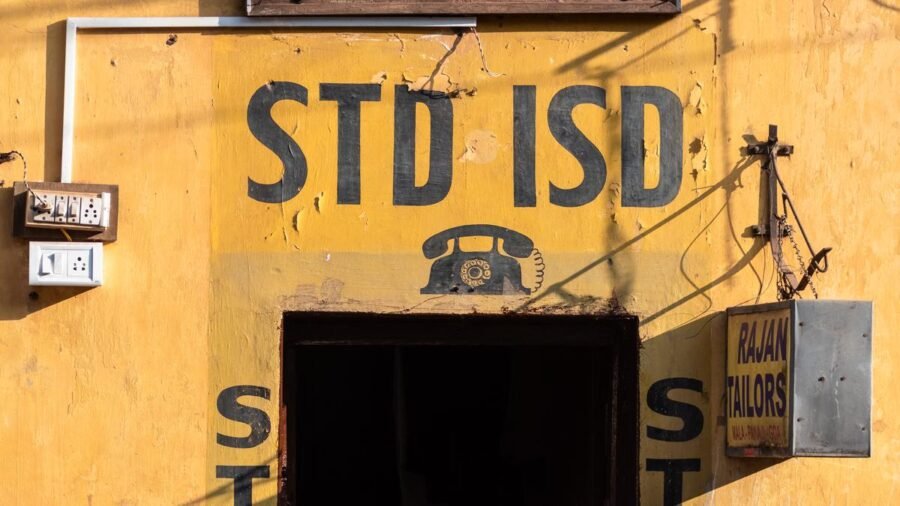
My father had an official telephone at home, and to make a call, one had to go through the telephone exchange. To make an inter-city call, then known as a “trunk call”, we had to go to a post office. After booking the call, one had to wait indefinitely for it to “mature”. Then came the era of STD (Subscriber Trunk Dialling). By adding the city code to the telephone number of the receiver, one could talk to the person concerned. The introduction of mobile phones made things much easier. You can even make a video call and a conference call.
My father used to buy petrol by gallons (approximately 3.8 litres to a gallon) for his car. Each gallon cost a rupee and a quarter. A seer of milk (roughly equal to a litre or 9.33 grains, or 0.6 grams, in weight) cost the same, so did a packet of 10 Capstan cigarettes, my father’s favourite. Today, petrol is ₹100 or more a litre; milk is ₹60 or more; and a packet of 10 Capstan cigarettes is ₹90 or more.
In the my school canteen, everything, from a samosa to a cup of tea, cost one aana (six paise). Thus, one could get 16 of them for a rupee. Today, you would be lucky if you could get either of them, in a roadside dhaba, for less than ₹10. In a five-star hotel, they may cost you a fortune.
Confusing console
Originally, there was the much-loved radio with an array of knobs. My siblings and I spent quite some time with it listening to cricket commentary and Binaca Geetmala, among others. Then came the more popular portable “transistor radio”, which people carried around like the mobile today. The scenario changed completely with the introduction of television. First it was only in black and white, with only a few hours of programmes on a single government-run channel. Today we have hundreds of colour channels, mostly private, running 24×7, with satellite replacing cable transmission.
For writing, one used a pen-holder with replaceable nibs. This instrument used to be dipped in an ink bottle, time and again, to continue writing. Then came the fountain pen, the body of which had to be filled with ink with a dropper. A later version had a tube, which sucked in the ink from the bottle. Parker pen became the gold standard. The tube was replaced by a cartridge, in due course. In the meantime, ball-pens have become universal. There is a large variety of options available today to suit everyone’s taste.
That brings to mind the ubiquitous typewriter. I first saw it in a small room of a PA to an officer. It looked huge, and filled the room like the original computer. Now, only a sophisticated version of its keyboard remains to be seen everywhere.
The typewriter was, indeed, a very handy device. But there was a catch. If one wrong key was punched, correcting the mistake was an ungainly exercise, particularly if a stencil was being cut for cyclostyling (as ‘duplication’ was called then). Often, the paper had to be pulled out, rolled into a ball, and thrown into the dustbin. Electronic typewriters made some difference. But the arrival of the computers changed all that.
The computer was popularised through desktops, followed by laptops and palmtops. Now, the mobile, loaded with a speech-to-text app, does most of the work. Operating systems have moved from MS-DOS to Windows, macOS, etc. External storage devices have gone from the humble floppy (a few kilobytes) to diskettes, CDs, pen drives, and hard discs (in terabytes).
When the desktop was introduced in offices, it was treated with a lot of respect. Shoes had to be taken off before entering the computer room. Sometimes, cloth slippers were provided to be worn instead. The computer room was air-conditioned. There was, therefore, a race among officers to place the computer in their room, along with the operator, of course.
The computers, coupled with the Internet revolution and advances in Information and Communication technologies, have created a mind-boggling scenario. Today, social media rules the roost: for good or bad. Humanoids play football, robots perform intricate operations, and drones do patrolling for security and surveillance. Then there is AI, the flavour of the day: chatbots, such as ChatGPT, Gemini, Claude, and our own home-grown Sarvam. It is all so ‘perplexing’.
If I were to recount all the changes witnessed, it would fill up a book.
What next? Thought-to-text, a rainy app or a ‘mind-bot’?
vkagnihotri25@gmail.com

Good foundation: on India’s strong industrial growth performance
By Sohail Khan · 1 Oct
Bitter pills: on Court’s intervention, drug pricing
By Sohail Khan · 1 Oct
Household debt, financing today against tomorrow
By Sohail Khan · 1 Oct
Leave a Reply