The AI race has no pause button
Synopsis
AI's rapid advancement poses challenges, as concerns from key stakeholders highlight potential risks to humanity. Political leaders in the US and China control the direction of AI development despite differing perspectives. Both countries rely on AI to sustain economic growth amid demographic challenges and competitive pressures. The AI race reflects broader geopolitical rivalries, making coordinated regulation difficult.
 Reuters
Can the development of AI be slowed down? Technically, sure. Will it be slowed down? Probably not. Any decision rests with around a dozen individuals in two countries. There are perhaps 5 entrepreneurs each in the US and China pushing the boundaries of AI. Three of them – Anthropic's Dario Amodei, OpenAI's Sam Altman and xAI's Elon Musk – have flagged an existential risk to humanity from unregulated AI and urged a slowdown.
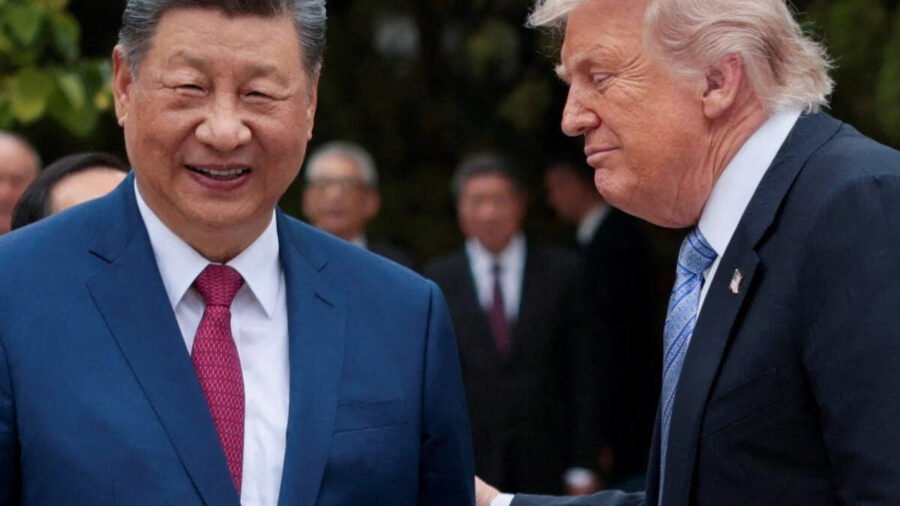
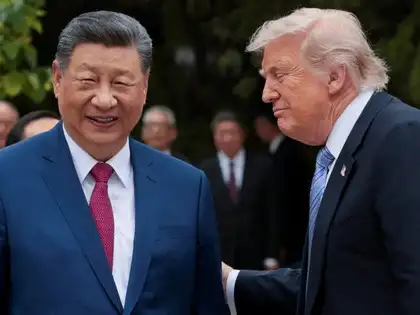
There are only two political leaders, highly flappable Donald Trump and unflappable Xi Jinping, who have the power to press pause. Trump has already deemed safety risks a hoax. But the matter seems serious enough for a US-China discussion on the sidelines of the 3-day Trump-Xi summit in Washington that starts today. In the end, politics, economics and circumstances may determine the outcome more than technology itself.
How is it that US developers of AI sense a danger but POTUS brushes it aside? The fact is that AI has already made a demonstrable positive impact on the US economy. Courtesy advances in AI, the world's largest economy has shown resilient growth, and its equity markets have been buoyant, despite the massive disruptions of the US war on Iran and Trump tariffs.
There is already evidence of productivity gains – disconnect between growth and number of jobs generated being one indicator. And the bullishness around AI's transformative potential has given the US markets a phenomenal run. AI has papered over some serious cracks and helped Trump's economic record.
In China, too, AI may be playing an increasingly important role in keeping the economy on a respectable growth path. China's economy has been showing signs of stress, particularly after a serious bust in the real estate sector. There are also limits to its mercantilist export strategy as countries raise trade barriers.
Legitimacy of Xi and Chinese Communist Party depends on delivering an impressive rate of growth and continued prosperity. Much like in the US, AI is helping paper over sizeable cracks in China's economic fundamentals.
Another huge service AI is doing for both countries is compensating for adverse demography. China's historical one-child policy (scrapped in 2016) has created an ageing population while China is still at a per-capita income of around $15,000, far from an advanced nation.
It would be extremely difficult for China to maintain its growth in the midst of demographic decline unless requirement for a sizeable working-age population itself comes down. AI can do precisely that. China is also leading the race in humanoid robots, which could also help it overcome its demographic challenge.
There is evidence that robots may even help China retain its competitive advantage in manufacturing as robots begin to cost less than human labour, now relatively high-waged.
The US may not have as acute a demographic problem as China, partly because it has allowed immigration over the decades. But now that the mood there is anti-immigration, AI can help by sustaining economic activity with fewer workers.
Finally, there's the geopolitical moment in which AI has risen as a transformative force. For more than three decades after the collapse of the Soviet Union, the world lived in a US-led age of globalisation. Advance of AI has coincided with a serious de-globalisation led by the US and the rise of China (not unrelated) as a competing superpower.
Just like the Cold War was a long battle for tech and economic supremacy between the US and USSR, the coming decades may be defined by a similar rivalry between US and China. The AI race may be this rivalry's version of the arms and space race. Neither side can slow down for fear of the other side taking a lead. That makes regulation difficult unless coordinated.
Of course, if the political, economic circumstances change – or something catastrophic occurs – direction of AI may change. Right now, a fast, exciting and anxious ride is on.
The writer is chief economist, Vedanta
(Disclaimer: The opinions expressed in this column are that of the writer. The facts and opinions expressed here do not reflect the views of www.economictimes.com.)
Add 

(Catch all the Business News, Breaking News, and Latest News Updates on The .)
…more
Elevate your knowledge and leadership skills at a cost cheaper than your daily tea.
-
Biogas found its ethanol moment this month. Can it now find scale? -
Gold prices: Caught in a three-way tug-of-war -
Nobody's money? The fortune Indian families forgot they had -
Forget the UPI fee fight. Do we know how India pays today? -
Has the US Fed and AI created a costlier world? And has the queue got longer for India? -
Gold rush on Dalal St as regional jewellers bid to be the next Tanishq -
A different kind of buyback. Is this the beginning of these kinds of buybacks? -
Come January 2027, will India’s online platforms get their own Tukaram? -
Hormuz is a state, not a strait. There are 10 other possible chokepoints for the global economy, including India -
Will the yuan become the new yen?

Who stands where in the Tata Trusts listing debate?
By Sohail Khan · 24 Sep
Private sector growth hits three-month high
By Sohail Khan · 24 Sep
Why are stocks falling today? Oil rises as Treasury yields hit 5% and Fed hike bets grow
By Sohail Khan · 24 Sep
Leave a Reply