Delhi’s infra-governance problem
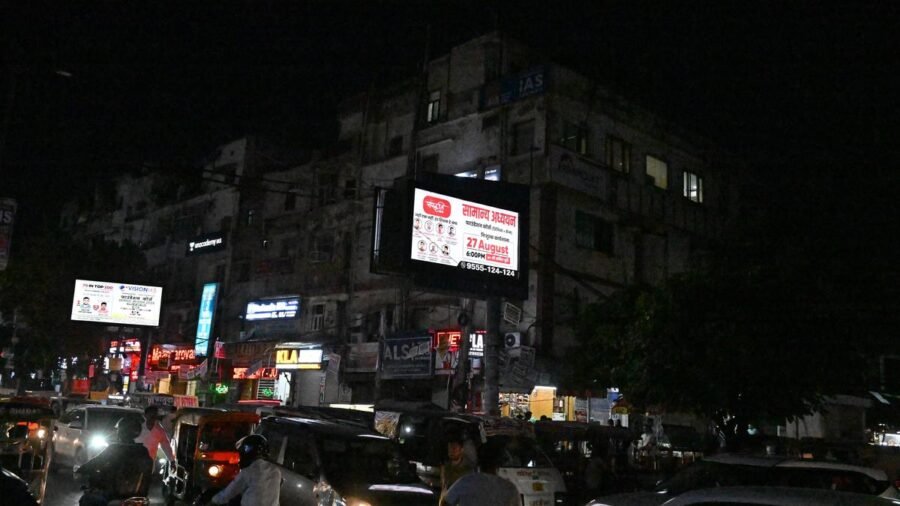
Every year, news of an infrastructural disaster in Delhi taking precious student lives sends shock-waves across the nation. Investigations into enforcement of building bye-laws, suspension of officials, and arrest of landlords gain momentum for some time and slowly settle down until yet another year invokes a fresh infrastructural horror. It is Satya Niketan now, it was a flooded basement in Rajinder Nagar two years ago. Delhi houses millions of students who move to the city either to join premier institutes or to prepare for competitive government exams. This influx of students has created a sprawling ecosystem of largely unregulated Paying Guest (PG) accommodations and coaching centres.
PGs have over time transformed from an extra room in a house rented out for extra cash to full-blown commercial establishments. Moreover, several coaching centres also operate in certain floors of buildings marked as residential establishments. This changes the nature and use-type of the building from residential to partly or wholly commercial and ideally makes them subject to a completely different set of safety norms. Municipal laws, regulations and bye-laws govern safety norms for residential and commercial buildings in the Union Territory but there is a significant enforcement gap which is unable to identify/accommodate these hybrid establishments. Regulations that would typically apply to similar establishments such as schools and college hostels are not directly applicable to these establishments. Therefore, PGs and coaching institutes need to be recognised as a separate category of mixed-use educational buildings under municipal and urban local body regulations.
Delhi’s regulatory framework is split across the Master Plan of Delhi (MPD), the Unified Building Bye-Laws (UBBL) and the Ministry of Education’s 2024 coaching centre guidelines. Together, they create an odd mismatch between the law on paper and the way it actually functions. The MPD does not specifically mention PGs, and while the UBBL recognises coaching centres as an educational building, development controls prescribed under the bye-laws are not applicable to coaching centres. The Guidelines lack teeth and cover only broad infrastructural requirements. Thus, the regulatory landscape falls severely deficient in accounting for the on-ground realities of the city, especially student-focused areas such as Rajinder Nagar, Mukherjee Nagar and Satya Niketan.
The road ahead
The regulatory landscape needs to solve for two gaps — one, the absence of substantive safety standards for mixed-use educational buildings, and two, the lack of routine enforcement. Both the Delhi Development Authority and the Municipal Corporation of Delhi need to acknowledge coaching centres and PGs as a separate category of land-use. Specific standards applicable to such mixed-use educational buildings need to be developed prescribing requirements such as appropriate protection against fire hazards, safe exits, minimum floor area per person, maximum capacity of a mixed-use building etc. Individuals aiming to open a PG or coaching centre may register the building in this separate category.
To enable enforcement, it is essential to note that the prescription of blanket minimum standards with little recourse for correction may encourage rent-seeking and by-passing of regulatory requirements through illegal means. Accordingly, an enforcement mechanism needs to be established which provides support to building owners to enable them to ensure compliance with the prescribed minimum standards. The following process may be followed to ensure compliance: a building safety task force or district-level committee with State oversight must be created consisting of representatives from urban local bodies; periodic audit of mixed-use educational buildings must be conducted; a compliance resolution plan which highlights compliance gaps and whether such gaps are capable of being addressed should be drawn up (in cases where the flagged gaps are alarming the building may be shut down immediately); and periodic annual reports must be submitted by the safety task force to the State government showcasing the number of buildings shut down and the number of buildings rehabilitated.
It is time to re-evaluate urban governance models and regulatory infrastructure; preferably before the next headline of an infrastructural disaster devouring young lives.
Kartavi Satyarthi is Senior Resident Fellow, Vidhi Centre for Legal Policy

On the draw: September 24, 2026
By Sohail Khan · 23 Sep
7 cities to explore on India’s Golden Quadrilateral road trip
By Sohail Khan · 23 Sep
Armaan Jain faces questions over cooking in aluminium utensil: ‘Don’t use’
By Sohail Khan · 23 Sep
Leave a Reply