Tech industry calls on Trump administration to withdraw new H-1B visa fee
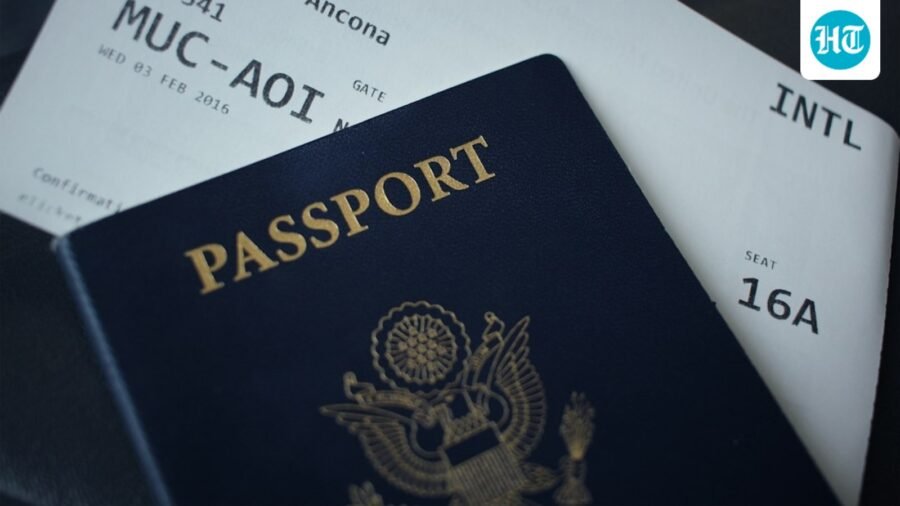
The clash over a proposed DHS rule to charge a 3,265 fee is reigniting a spat over highly skilled immigration.
Published on: Sep 24, 2026, 18:00:41 IST
Prefer HTon Google
Share via
Copy link
WASHINGTON—An industry group representing the country’s largest tech companies is urging the Trump administration to withdraw its proposal to charge companies $103,265 for most new H-1B visa applications, reigniting a fight between the White House and Silicon Valley over a popular program for highly skilled immigrants.
The sector’s opposition, filed Thursday as a public comment on the Department of Homeland Security’s pending H-1B fee rule, is significant because tech companies—which consistently oppose tightening access to immigration paths—have almost uniformly supported President Trump’s policies of minimal regulation and tax cuts. DHS proposed the new $103,265 fee last month.
Hoping to force companies to hire American workers, the Trump administration has taken unprecedented steps to restrict legal immigration avenues, especially those that allow international students to remain in the U.S. for work and eventually become citizens.
That is a concern for tech giants such as Apple, Amazon.com, Google parent Alphabet and Facebook operator Meta Platforms because they often struggle to find the skilled workers they need and say there isn’t adequate talent currently in the U.S. for many specialized roles.
TechNet, which filed the public comment, represents the biggest internet platforms as well as leading artificial-intelligence companies, including OpenAI and Anthropic, and said the policy could set the U.S. back in the AI race against China.
“This proposal undermines the president’s championing of American global competitiveness, preventing U.S. companies from accessing the top talent from around the world they need to lead the world in innovation, build successful businesses and create prosperity for American communities,” the group wrote. TechNet also represents smaller companies, which analysts say would be hardest hit by the fee.
CEOs including Jensen Huang of Nvidia, another TechNet member, have said that roughly half the world’s AI researchers are Chinese, meaning that restrictive policies could backfire on the U.S. More top scientists in the field from China, South Korea and Europe are staying at home, recent studies from organizations including the Carnegie Endowment for International Peace think tank have found.
Huang is among the tech CEOs expected to attend Thursday’s state dinner with Trump and Chinese leader Xi Jinping.
Created by Congress in 1990, the H-1B program is the main pathway to the U.S. for highly skilled foreign workers, making it an engine of the tech industry and startup ecosystem. Visa holders can eventually become eligible to apply for green cards, which let them stay in the country indefinitely.
Companies such as Amazon use the program to hire thousands of workers every year, making it a lightning rod for criticism from opponents like White House deputy chief of staff Stephen Miller, who argue that companies use it to substitute low-cost workers from overseas. The companies say the foreign workers often fill specialized roles and earn competitive salaries.
The H-1B issue became a concern for tech companies about a year ago, when Trump and Commerce Secretary Howard Lutnick suddenly announced via an executive order signed on a Friday afternoon that new and existing H-1B visa holders would have to pay a $100,000 fee. The move set off a weekend scramble among tech companies, which raced to tell employees who were traveling abroad and already visa holders to return to the U.S. because they weren’t sure if they would be allowed back into the country without paying the fee.
In the end, the administration clarified that the fee would only apply to new applicants. The Chamber of Commerce and other groups sued to block the fee, which was struck down by a federal judge in June.
DHS is accepting comments on the rule through Thursday. It would also only apply to new applicants. Attempting to enact the rule through a formal process in which stakeholders can comment is seen by some as a more durable way to pass the fee, though skeptics say it could still be subject to legal challenges.
Write to Amrith Ramkumar at amrith.ramkumar@wsj.com and Michelle Hackman at michelle.hackman@wsj.com
See Less

McDonald’s to spend $8.5 billion: What customers can expect from the new strategy
By Sohail Khan · 24 Sep
AI-written speeches are taking over politics
By Sohail Khan · 24 Sep
Xi-Trump meeting: How US-China AI rivalry is pushing China’s tech industry forward
By Sohail Khan · 24 Sep
Leave a Reply