Supreme Court asks Centre to consider exempting Class 6 students from CBSE three-language policy this year
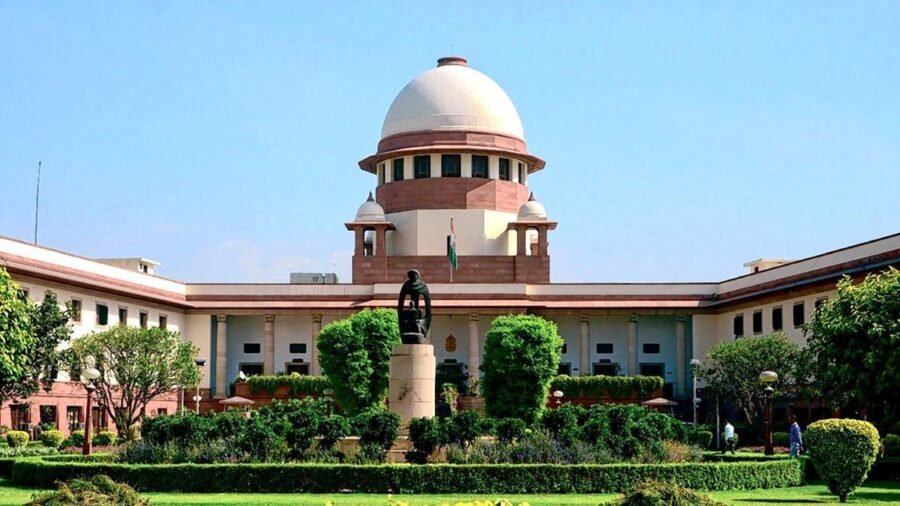
The Supreme Court on Monday directed the Central Board of Secondary Education (CBSE) to extend to Class 6 students the same relaxation available to Class seven regarding evaluation under the three-language formula.
A Bench headed by Chief Justice of India Surya Kant passed the order after Solicitor General of India Tushar Mehta representing the Union government and the CBSE along with Additional Solicitor General Aishwarya Bhati, submitted that the Centre would attempt to persuade the court to allow implementation for Class six itself.
Class 7 students, along with Classes 8 and 9, have been granted a transitional relaxation from the CBSE Board exam in the third language when they reach Class 10. The third language would be assessed only through internal school-based evaluation, with no pass or fail consequence linked to Board results.
Hearing the petitions challenging the three-language scheme, the court had, in previous hearings, asked the law officers to seek instructions on whether the current batch of Class 6 students could be exempted from the scheme.
Mr. Mehta, on Monday, said the impact of the scheme would be minimal. He said out of 28,819 schools, except for 1.2% of schools, the others had already attuned themselves to the demands of the scheme.
The Solicitor-General said the children would “adapt”.
But Justice Joymalya Bagchi, on the Bench, responded that it was not about children’s prowess to adapt, but they should be “comfortable”. “It is about their comfort,” Justice Bagchi said.
Justice Bagchi said that if any school held back a student in internal assessment, the court would intervene.
“Yours is a reasonable apprehension. If any school held back one student, you come to us,” Justice Bagchi addressed the petitioners’ side.
The lawyers for petitioners, who included parents, highlighted study pressure on students and the lack of infrastructure in schools, restricted language options, and even English becoming a “foreign” language under the scheme in English-medium schools. They pointed to textbooks being made available only in the virtual mode, making it almost impossible for children in rural areas to access them in print.
But Justice V. Mohana, on the Bench, reminded them about the Covid years, when children across the country used mobile phones to attend online classes.
The Bench asked the CBSE to reach out to aggrieved parents and schools to ascertain their difficulties.


Leave a Reply