Power from renewables should not be curtailed
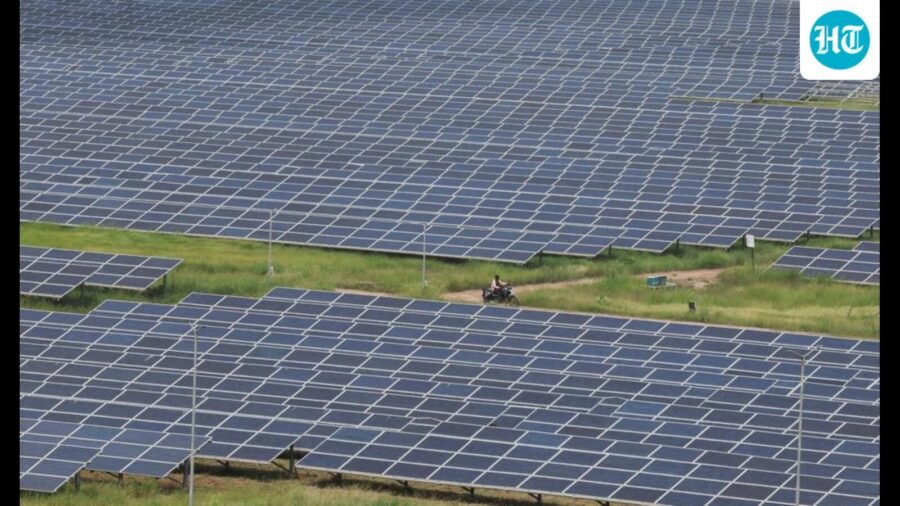
The next phase of India’s renewable deployment demands better data, clear responsibility for curtailment, and a modernised grid, among other imperatives
Published on: Sep 29, 2026, 06:15:16 IST
Prefer HTon Google
Share via
Copy link
India’s renewable buildout is one of the clearest energy transition successes — solar alone has gone from 2.8GW in 2014 to over 160GW. So why is India seeking to “switch off the sun”?
Curtailment occurs when a plant is instructed to cut output because the network cannot accept the power. Growing renewables curtailment is not unique to India, and not unambiguously bad; it can even be economical during brief periods of excess supply or congestion. But persistent curtailment results in foregone developer revenue and can weaken investment. Between April and June 2026, India curtailed 8,133 GW-hours of solar, over 10% of its potential output for that quarter.
Around 21GW of renewable capacity is connected through temporary arrangements while dedicated grid infrastructure gets built. These projects can send power only when spare capacity is available; so, they are curtailed first during periods of congestion. About 12GW faces restrictions during peak solar hours.
According to credit rating agency ICRA, 37% of renewable capacity at affected substations operates through temporary access and can face curtailment of 30-50% during solar hours. Industry sources estimate that developers have lost about ₹4,500 crore since February 2025.
India’s grid code treats two forms of curtailment differently. Generators may receive compensation when solar output is reduced to preserve real-time grid stability. But payment is not guaranteed when transmission delays or congestion cause the restriction.
Renewable developers have sought up to ₹3,000 crore in relief, including repayment moratoriums, concessional bridge financing, and longer loan tenures, given increasing worries about their ability to service debt. The government is reportedly considering low-cost loans for such producers. Cheap credit could offer an immediate cash-flow salve, but it does not determine who absorbs curtailment risk over the long term. That question remains open for projects already built and financed.
Public-sector banks and financial institutions have deployed about ₹5.08 lakh crore in renewables over the pasttwo financial years. The scale of public lending raises the stakes of leaving the financial risk of curtailment undefined.
India, therefore, needs rules that make the costs of curtailment clear before investment decisions are made and project finance disbursed. Three reforms can help.
First, India should record curtailment by cause, location, and time of day. The Australian Energy Market Operator releases quarterly reports that break down reductions from curtailment caused by network or security constraints. Australia’s market differs from India’s, but the example shows that system operators can disclose why and where renewable output is being curtailed. Such data would help Indian regulators assess curtailment risk and design compensation rules.
Second, regulators should clarify how the cost of curtailment is to be absorbed between industry and the government. They should publish expected curtailment as part of grid-connection terms, especially for projects using temporary access. They should also assign responsibility according to the cause of each restriction. Predictability would allow developers to reflect the risk in tariff bids and lenders to size debt against realistic revenue.
Finally, India needs electricity prices that reflect changing grid conditions. Experts argue that government-controlled prices and rigid, long-term power purchase agreements make it hard to respond to market signals about what electricity is worth at different times and locations. The Institute for Energy Economics and Financial Analysis, similarly, has called for market coupling and more flexible contracts so that bids are cleared togetherand available transmission is used more efficiently.
Chile shows how market rules can support storage: Its 2022 law allowed standalone projects to receive energy and capacity payments. The country’s renewables association estimates that battery storage mitigated curtailment in 2025 by roughly 2 terawatt-hours. Energy think tank Ember has argued that batteries should be procured as transmission assets, with capacity payments shared across states like transmission charges. It estimates that 3-4 gigawatts of two-hour storage at major pooling stations could absorb most curtailment caused by transmission constraints.
Transmission investment also improves competition.Yale economist Nicholas Ryan found each rupee invested in transmission returned 1.85 rupees in northern India and 2.74 rupees in southern India. Better connections will become more valuable as surplus power generated in one part of India covers shortfalls in another.
The next phase of India’s renewable deployment demands better data, clear responsibility for curtailment, a modernised grid, and a price system capable of coordinating across all of them.
Saksham Khosla writes on international finance. The views expressed are personal
Get Current Updates on India News, Elections 2024, Lok sabha election 2024 voting live , Karnataka election 2024 live in Bengaluru , Election 2024 Date along with Latest News and Top Headlines from India and around the world.
See Less


What could be a just, dignified and lasting peace in Ukraine?
By Sohail Khan · 29 Sep
The race to avoid tomorrow’s technological dependencies
By Sohail Khan · 29 Sep
Leave a Reply