Revisiting Kuwait’s invasion amid war
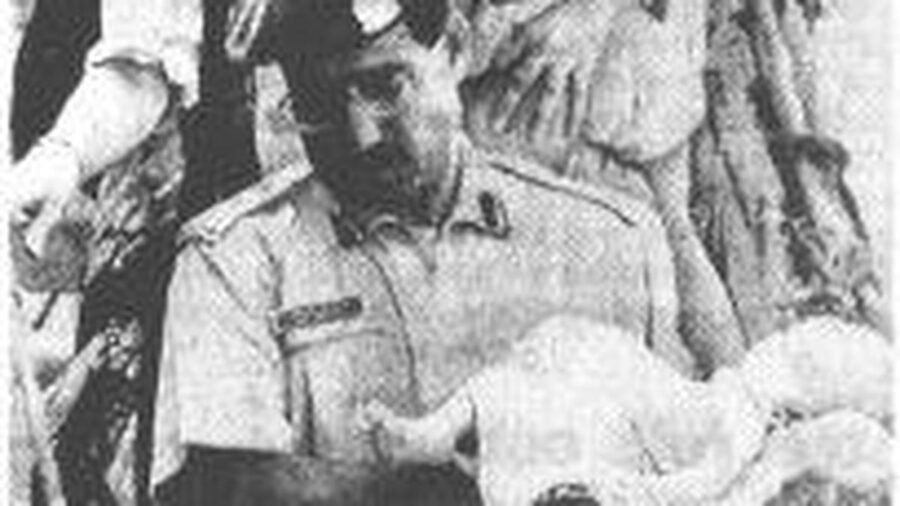
As the world witnesses yet another war in West Asia, the passage of August revives the haunting memory of Iraqi troops invading Kuwait on August 2, 1990. As Kuwait remembers that sordid day, another story, which has largely been forgotten, also needs to be remembered — the story of the migrant workers. For them, the war was not an abstract international crisis; it meant unemployment and the loss of everything they had built abroad.
The labourers and domestic workers were the most hit, being abandoned when employers fled. Many returned empty-handed, leaving behind wages, savings, and possessions. And while some chose to undertake the arduous return journey, others had no choice but to stay back.
Infographics | The great Indian evacuation of 1990: How India rescued its citizens from Kuwait during the Gulf war
There were also cases of employers utilising the war as a pretext to withhold dues. While a UN Compensation Commission was set up to retrieve wages, it was fruitful in compensating only white-collar workers and high-skilled blue-collar workers while labourers, domestic workers and other low-skilled workers lost all their hard-earned wages. This is the same story that unfolded decades later during the COVID-19 crisis which triggered the Justice for Wage Theft Campaign.
However, because of their dire circumstances, when the war ended, migrants went back to the same jobs and in many cases to the same employers, proving that the Gulf Dream was only a mirage for many.
From the Archives | Kuwaitis hostile after Gujral’s visit
After the invasion, some undertook extraordinary journeys to return home; some of them travelled via roads in cars, crossing many international borders over days, and were able to reach Keralam through informal networks of assistance. Many others were evacuated via civilian-led airlifts, made possible by the efforts of diaspora leaders.
However, some stayed back in the war rather than returning home to debt, and adapted in remarkable ways. One of our respondents who had then just opened an electrical shop, remained in Kuwait, taking on odd jobs; he sheltered quite a few fellow migrants and was briefly detained by Iraqi soldiers. When the war ended, he reopened his shop under skies darkened by burning oil wells, hoping for a brighter future. A tailor, who was stranded after his employer disappeared without paying his wages, survived through casual labour, and sheltered in basements during the war.
Community as resilience
The invasion also saw stories of resilience and courage. When Kuwait was occupied by Iraq, the Indian embassy could not continue its operations and was formally withdrawn and the staff relocated to Basra. One of the migrants recalls how a voluntary committee of Indian businessmen assumed critical roles, coordinating evacuations, liaising with officials in Basra, and arranging buses, ships, and flights to ensure that migrants were not left to fend for themselves. In an extraordinary move, they were entrusted to issue travel documents using official seals.
Despite logistical hurdles and long desert waits, these leaders were able to evacuate 1,70,000 Indians — an exceptional instance of diaspora-led crisis management in the absence of state infrastructure and embassy guidance.
Another striking manifestation of the war was the contrasting response of migrants after returning to Keralam. In south Keralam, large public rallies expressed support for the Emir of Kuwait, while in north Keralam, especially Kozhikode, massive demonstrations backed the Iraqi leadership.
The legacy of the invasion extended well beyond 1991, with the war reshaping not only migration strategies but also the social geography of the Malayali diaspora in Kuwait. A lingering sense of insecurity took hold, with workers beginning to save more aggressively; transferring money home quickly; and investing in land and houses back home. The social geography of Kuwait also changed. Migrants from Keralam who were never ghettoised, started clustering in neighbourhoods such as Abbasiya — “mini-Kerala” — creating tightly knit communities, with community and religious organisations assuming more importance. This offered emotional support and a sense of stability to the migrants. Thus, the war not only reshaped individual lives but the collective outlook of migrant groups across the Gulf.
As war once again unsettles West Asia, these memories acquire renewed relevance. Migrant workers continue to build the economies of the Gulf while remaining among those least protected when conflict erupts.
Ginu Zacharia Oommen is Chairperson of the Kerala State Food Commission, and visiting professor at International Institute for Migration and Development. Anu Abraham is Research Affiliate, PRIO Migration Centre, Peace Research Institute Oslo

A rising graph: On the doping culture in Indian sports
By Sohail Khan · 14 Sep
The evidence gap in dole politics
By Sohail Khan · 14 Sep
Letters to The Editor — September 14, 2026
By Sohail Khan · 13 Sep
Leave a Reply