Red hexagon on your snack pack: What FSSAI’s new proposed warning label means | Explained
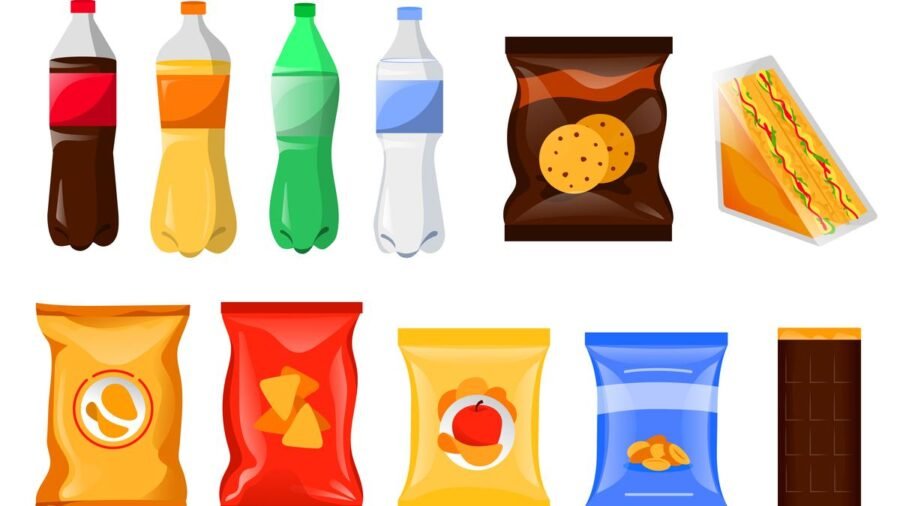
The story so far: India’s food regulator has proposed a red, hexagonal warning label on the front of packaged foods high in added sugar, saturated fat or salt, in a move aimed at giving consumers a simple, at-a-glance signal about unhealthy products.
The Food Safety and Standards Authority of India (FSSAI), in an affidavit filed in the Supreme Court on August 28, has proposed that the warning initially apply to products high in two or more of the three “nutrients of concern” — added sugar, added saturated fat and salt — as well as specified highly sweetened beverages.
The proposal comes after years of debate over front-of-pack labelling and intervention by the Supreme Court. The Court is scheduled to consider the affidavit on September 10.
How the proposed system is expected to work?
FSSAI has proposed a two-phase rollout. In the first phase, products high in at least two of the three nutrients would carry the red hexagon, along with specified highly sweetened beverages.
In the second phase, the warning would extend to products high in any one of the three nutrients. However, FSSAI has not specified a firm timeline for moving to the second phase.
The thresholds are proposed to be based on the Indian Council of Medical Research–National Institute of Nutrition (ICMR-NIN) Dietary Guidelines for Indians, 2024. However, the FSSAI proposal refers to added sugar and added saturated fat, rather than total sugar and total fat.
Single-ingredient foods and products inherently rich in these nutrients, including ghee, edible oil, jaggery and honey, are also proposed to be exempt.
What do critics say about the proposed change?
Nutrition advocates say the biggest concern is the decision to initially require a product to be high in two nutrients before it attracts a warning. A product that is high in sugar but low in salt and fat, for instance, could escape a warning altogether.
“This defeats the purpose of a warning label,” Arun Gupta, convenor of Nutrition Advocacy in Public Interest (NAPI), told . He has argued for a simpler principle: if a product is high in sugar, salt or saturated fat, it should carry a warning.
The distinction could matter particularly for products such as sugary beverages, which may be high in added sugar but contain little or no fat or salt and could therefore fall outside the warning requirement in Phase I.
Dr. Gupta has also raised concerns over the use of “added” rather than total sugar and fat, the size of the proposed warning and the absence of a firm deadline for Phase II. He has called for the warnings to be available in Hindi and English, arguing that language and visibility are essential if the labels are to reach consumers across the country.
He has urged the Court to examine the proposed nutrient thresholds, definition of high-fat/sugar/salt foods, warning size, language requirements and exemptions to ensure that the system remains visible and scientifically robust.
Why is this significant?
Front-of-pack warning labels have been under discussion in India since at least 2018. Draft regulations on high fat, sugar and salt (HFSS) foods were proposed in 2022, but did not become law.
The issue returned to the centre of the public-health debate in 2026 after the Supreme Court directed FSSAI to move towards interpretive warning labels for unhealthy packaged foods.
The regulator’s approach has also evolved rapidly in recent weeks. An earlier proposal placed before the Court in August relied on displaying nutritional information against recommended daily limits. Following the Court’s intervention, FSSAI returned with the red-hexagon warning framework in its August 28 affidavit.
For consumers, the proposed red hexagon is intended to make it harder for marketing claims such as “natural” or “multigrain” to obscure the nutritional profile of a product.
For the food industry, mandatory warnings could increase pressure to reformulate products by reducing sugar, salt and saturated fat. FSSAI has said the phased approach would give industry time to reformulate.
But the proposal is not yet a notified regulation. The immediate question before the Supreme Court is whether the framework provides a clear and meaningful warning or leaves products high in a single nutrient outside the net for an unspecified period.




Leave a Reply