Muslim Personal Law Board’s Shariat campaign draws Pasmanda pushback – ‘Could polarise voters’
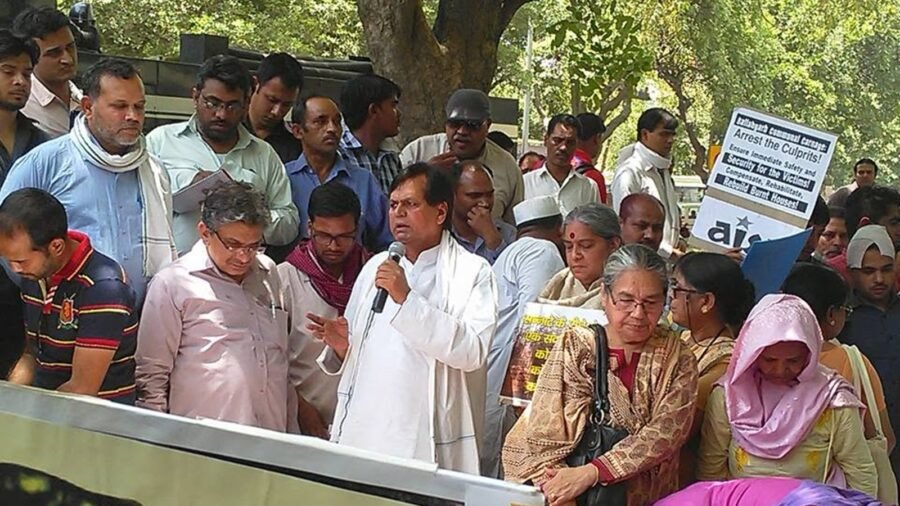
Days after the All India Muslim Personal Law Board (AIMPLB) announced a nationwide campaign to protect the “Constitution and Sharia (Islamic law)”, the All India Pasmanda Muslim Mahaz (AIPMM) described the move as “uncalled for”, saying it could “polarise” voters ahead of the Uttar Pradesh Assembly elections.
On August 31, the AIMPLB called for the “Save India, Save Shariat” drive, stating that “selective enforcement of law was not acceptable and houses were being bulldozed selectively”.
Through the campaign, which begins on September 17 and will run for three months, the AIMPLB said it wanted to highlight its concerns over the Uniform Civil Code adopted by various states, framing it as an attack on Muslim identity and religious freedom.
Story continues below this ad
Ali Anwar Ansari, former MP and national president of the Pasmanda Muslim organisation AIPMM, told that the campaign was “driven by emotional and religious slogans and carries the risk of causing religious polarisation”.
There was “no immediate cause” to launch such a campaign, he said.
“Initiating such a campaign under the current circumstances will ultimately benefit right-wing forces. Even if one does not doubt the intentions of the Muslim Personal Law Board officials, their lack of wisdom is certainly regrettable. However, there are visible issues concerning the targeting of the entire country, particularly Muslims, through SIR, delimitation, and large-scale removal of names from voter lists. Overall, democracy and the Constitution face a clear threat. If these religious leaders had launched a campaign focused on issues of common public concern rather than emotional matters, they could have secured the sympathy and support of people from all religions,” the former MP said.
The AIPMM chief recalled how Muslim religious leaders, during the Shah Bano case, had pressured the government of the day to overturn the Supreme Court’s judgment. He was referring to the Rajiv Gandhi government’s passing of the Muslim Women (Protection of Rights on Divorce) Act on May 19, 1986, to nullify the Supreme Court’s 1985 ruling.
Story continues below this ad
“However, under pressure from right-wing forces on the other side, the government was forced to unlock the Babri Masjid [on February 1, 1986], the fallout of which the country is still enduring today,” Ansari said.
Ansari regretted that Muslim organisations and some influential Muslim leaders were talking less “in the larger interest of the public and community” and had been engaged more in the politics of individual bargaining. “With elections coming up in Uttar Pradesh, the country’s largest state, there is a greater need to stay away from such religious campaigns,” he said.
This comes months ahead of the Assembly elections in Uttar Pradesh, Himachal Pradesh, Goa, Uttarakhand, Punjab, Manipur and Gujarat.
During its press conference in Delhi, the AIMPLB raised concerns about the protection of civil and constitutional rights. Without specifically mentioning Uttar Pradesh, the board said: “Laws are being enforced selectively, as seen in the selective bulldozing of houses”.
Story continues below this ad
The Board also raised strong objections to the move to make all six stanzas of Vande Mataram compulsory.


Why police suspect weapons theft from Secunderabad cantonment was an inside job
By Sohail Khan · 3 Sep
Meta glasses, fake sites and drones: Tirumala temple security has many headaches
By Sohail Khan · 3 Sep
Leave a Reply