‘Postcard from future’: Super El Niño may trigger 15,800 excess heat deaths in India
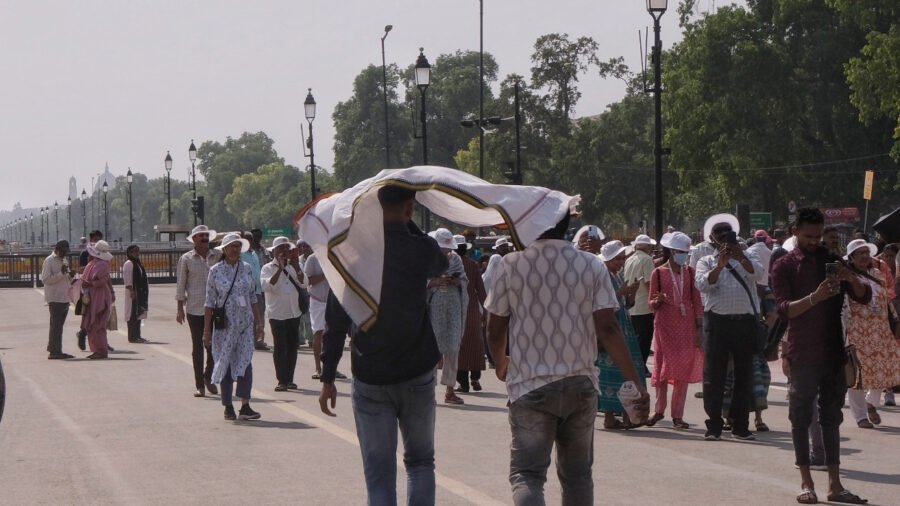
Globally, the report estimates 4,51,000 excess deaths tied to the current El Niño episode since it began in June, with 2,39,000 of those occurring within the six-month window covered by the forecast (September 2026–February 2027).
Story continues below.
Subscribe to see fewer ads.
Researchers compare that toll to being about 65 times larger than the number of people believed dead or missing in the recent Nepal flash flood.
El Niño refers to a weather phenomenon that causes abnormal warming in the equatorial Pacific Ocean, suppresses the Indian monsoon, and leads to higher temperatures.
Emily Grover-Kopec, the report’s co-author, said the mortality estimates come from CIL’s research on how temperature relates to excess deaths, built separately for 24,378 regions worldwide to account for local climate, vulnerability, and adaptive capacity.
Those relationships are applied to the European Centre for Medium-Range Weather Forecasts’ seasonal forecast, producing projected excess deaths against the 1996-2025 average. The margin of error reflects two things: uncertainty across the 51-member forecast ensemble, and uncertainty in the mortality relationships themselves.
Story continues below this ad
Grover-Kopec, also director of the climate and energy practice at Rhodium Group, where she leads the firm’s work with the Climate Impact Lab, said the model is rigorous and evolving, built to sharpen as more evidence comes in.
How will India fare
The Sahel regions of Nigeria, Sudan, Niger, and Chad are expected to bear the heaviest burden, with roughly 66,800 additional deaths.
India is estimated to be among the fourth hardest-hit countries, behind Nigeria, Indonesia, and Sudan. The Southeast nations bloc of Philippines, Vietnam, Thailand, and Cambodia will see 19,400 combined excess deaths, it is estimated.
The report’s authors — Michael Greenstone, Tamma Carleton, Genevieve Maricle and Grover-Kopec — note that India’s death toll is expected to build over time rather than peak early. Between December 2026 and February 2027 alone, the country was projected to see about 7,400 additional heat deaths.
Story continues below this ad
And unlike other regions in the report’s six-month window, India’s risk doesn’t taper off: the researchers specifically flag India and Pakistan as northern hemisphere countries where heat-related mortality will likely keep climbing into their summer months, beyond the current forecast horizon
“Northern India’s winters are normally cold enough that heat rarely drives deaths there – so a warmer-than-usual winter won’t move the numbers much,” Grover-Kopec said, responding to queries on projections of excess deaths in India from winter to springtime.
“Southern India is different. Normal winter temperatures there stay warm enough to cause heat deaths on their own, so abnormal warmth layered on top pushes deaths up sharply. That’s part of why India ranks 4th globally for projected heat deaths this winter, even as the sharper regional increases sit further south,” she added.
“Beyond the six-month forecast window, which runs through February, CIL expects India and Pakistan to see heat deaths keep rising into summer, as the same abnormally warm conditions persist and stack onto seasonal heat.”
Story continues below this ad
CIL argues that because deaths are forecast months in advance, governments and humanitarian organisations have a window to intervene through heat early-warning systems, cooling centres, hydration stations, worker protections, and expanded health outreach.
The authors describe the current warm spell as a “postcard from the future,” arguing that the added lead time, compared with long-term climate change, gives India and other at-risk nations a rare opportunity to act before, rather than after, deaths occur.

‘Arrest Gyanesh Kumar, cancel recent elections’: Arvind Kejriwal on Express investigation
By Sohail Khan · 23 Sep
Break caste, ditch horoscopes in weddings: VHP’s plan to boost Keralam Hindu birth rate
By Sohail Khan · 23 Sep

Leave a Reply