‘Ozempup’: Why pet weight loss is turning into a new health conversation
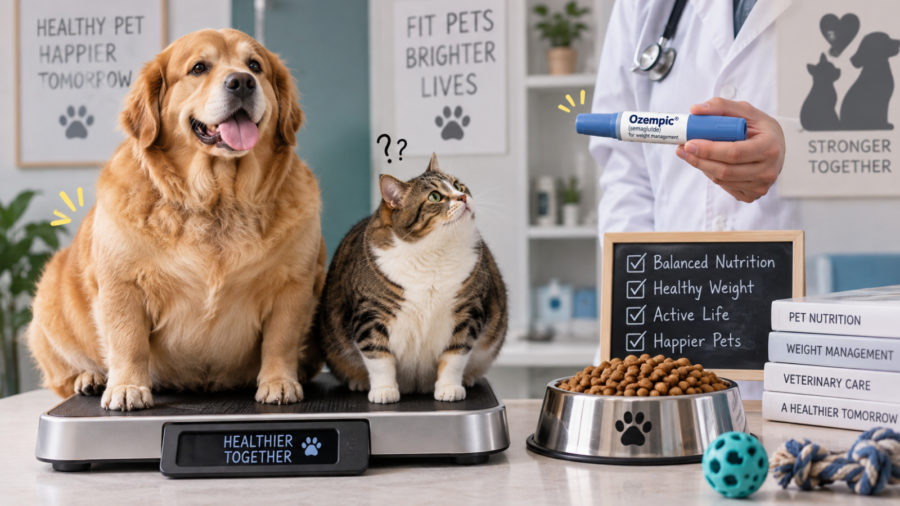
The weight loss conversation may have started with humans, but it is increasingly affecting the pet world too. As obesity becomes a growing concern among pet parents, specialised weight management diets, satiety-focused formulations, and an interest in pharmaceutical approaches are being discussed.
So, could an “Ozempup” moment be the next one? While veterinarians say, “Not yet,” pet weight management is definitely changing.
Growing problem of pet obesity
Pet obesity is becoming an increasingly common problem in both dogs and cats, says Dr Ramjilal Yadav (BVSc) of New Life Care Pet Clinic in Rajasthan’s Chandwaji.
“The major reasons are overfeeding, excessive treats and table food, calorie-dense diets, lack of physical activity, and not adjusting food intake according to the pet’s age, breed, activity level, and neutering status,” Dr Yadav says.
He adds that, in some cases, underlying medical conditions or medications can also contribute. But body weight alone does not tell the full story, he says.
Vets assess pets using Body Condition Scoring (BCS), along with body weight and physical examination. They look at the ribs, waist, abdominal tuck, and overall body shape.
“A commonly used system is the nine-point BCS scale, where around 4–5/9 is considered ideal,” says Dr Yadav, adding that the assessment gives vets a much better idea of the pet’s actual body condition than weight alone.
Story continues below this ad
What data says
According to the Association of Pet Obesity Prevention, in 2024, 35 per cent of dog owners and 33 per cent of cat owners in the US said their pets were overweight or obese.
In addition, a report published by PubMed found that a large 2024 study of about 4.93 million dogs and 1.34 million cats seen in US primary veterinary practices found obesity was particularly common in adult animals.
In India, the situation is no better. As per Mobility Foresights, the India Pet Obesity Market is projected to grow from $1.1 billion in 2025 to $2.4 billion by 2031, at a CAGR of 13.4 per cent during the forecast period.
Story continues below this ad
Could Ozempic-style treatments be the next big thing?
Dr Deepraj Prajapati, a senior veterinarian at RD Pet Hospital, Ambedkar Nagar, Uttar Pradesh, describes it more as a veterinary medicine responding to a genuine and increasingly recognised problem of pet obesity, rather than an ‘Ozempup’ trend at this stage.
There is good enough reason to take pet obesity seriously, as it is associated with several health complications, including diabetes, joint disease and reduced quality of life.
Dr Prajapati says that we should be careful about directly transferring the human Ozempic phenomenon to pets.
“GLP-1-based therapies are attracting interest because they can influence appetite, satiety, glucose regulation and body weight, but research around this is still in progress. However, human semaglutide products should not be given to animals without specific veterinary direction, and the safety, appropriate dosing, long-term effects and effectiveness of these drugs in different species require dedicated veterinary evidence,” he says.
Story continues below this ad
The recent increase in accidental exposure to GLP-1 medications also reinforces the need for caution.
 Pet obesity can be managed by proper diet and exercise
For now, diet is key
If GLP-1 therapies are still in their early stages, specialised weight-management food can help obese pets.
Dr Shashank Sinha, Chief Executive Officer, Drools, points out that weight-management pet food is designed to help pets consume fewer calories without compromising essential nutrition.
“A good weight-management diet has a controlled calorie and fat level, while maintaining an appropriate protein-to-calorie ratio. This is important because during weight loss, the goal is not simply to make the pet lighter, but to help reduce excess body fat while preserving lean muscle mass,” Dr Sinha says.
Story continues below this ad
On weight-management formulations, he says they may also include soluble fibre to promote a feeling of fullness and support healthy digestion, and ingredients such as L-carnitine, choline and lysine, which support normal fat and energy metabolism. Because excess body weight can put extra stress on the joints, glucosamine and chondroitin can also support joint health.
So, compared to regular food, a weight-management diet is not simply about “feeding less.” It is specifically formulated to provide controlled energy, adequate nutrition, better satiety and support for the pet’s overall health during weight reduction.
 Weight management pet food helps pets consume fewer calories
Another problem
Another challenge when putting your pet on a diet is hunger.
“From what I’ve seen,” says Manish Paul, Co-Founder and CEO, Moe Puppy, “you put a dog on a diet and within a few days it’s following you around the house for food.”
Story continues below this ad
For pet parents, sitting through a calorie-controlled diet can be difficult when a hungry dog keeps asking for food.
Paul says newer formulations are targeting hunger itself instead of just cutting calories.
“Fibre sources, such as psyllium husk, pea fibre, and beet pulp, do most of that work. They bulk the food up without bringing calories with them, so the bowl still looks like a real meal and the dog isn’t scavenging an hour later,” he adds.
Protein is another part of the equation. “Cut calories without keeping protein up, and the animal loses muscle along with the fat, which defeats the point,” says Paul, adding, “So these foods hold protein high and pull fat down, because that’s where the calories sit.”
Story continues below this ad
But he mentions that satiety is about the owner as much as the pet. “A dog that isn’t begging is a dog whose owner sticks with it,” he says.
More than diet
Weight-management food is an important part of the solution, but food alone cannot solve obesity. Experts say successful, sustainable weight loss requires a combination of the right diet, appropriate portion control, physical activity and, most importantly, consistency from the pet parent.
“Even a specially formulated low-calorie diet can result in excess calorie intake if portions are not controlled. Treats, table scraps and frequent snacking can also add significant calories without the owner realising it. The soluble fibre can help with satiety, but it does not replace portion control,” says Dr Sinha.
“For most overweight pets, medication should not replace the fundamentals of obesity management: a properly calculated diet, controlled portions, appropriate treats, regular physical activity and veterinary monitoring. If these drugs eventually become established veterinary treatments, they should be viewed as another clinical tool for selected cases, not as a shortcut for responsible feeding and lifestyle management,” Dr Prajapati of RD Pet Hospital adds.
Story continues below this ad
For now, the ‘Ozempup’ moment remains more speculation than reality. So, veterinary guidance, an appropriate weight-management diet, measured portions, sensible treats, regular activity and consistency at home all need to work together.
Pet parents weigh in
Rather than turning to medication, pet parents say they would prefer a healthier diet, portion control, and regular exercise to help their pets maintain a healthy weight.
“I would never give Ozempic to my pet. When it comes to their health and well-being, we have a responsibility to make thoughtful, informed choices and to use medications only when they are specifically appropriate and prescribed for them. A natural, gradual weight loss through a balanced diet, appropriate portions, regular exercise, and a healthy lifestyle is always better,” Parul Pandia, a pet parent, says.
Sunaina Malani, another pet owner with 18 cats, agrees. “Our pets don’t need complicated solutions. They need good-quality food, the right amount, exercise, playtime, attention, and love. Ozempic and similar drugs are still relatively new, and there are questions about their long-term effects even in humans.”
For Kolkata-based pet-parent Abhishek Majumdar, a strict diet and exercise would be his first choice. However, he would consider Ozempic-like treatment under specific circumstances. “I would only go for Ozempic-like treatment if my pet has heart issues, as then there is a limitation on how much my pet can exercise. But, I would skip it if my dog is 11 to 12 years.”
Explore more captivating stories about pets and animals here, and make us your daily stop for the latest from the animal kingdom.

The jungle knows where the tiger is — here’s how to read the signs
By Sohail Khan · 1 Oct
Jyotika praises her mother-in-law, says ‘only a queen can raise a prince’
By Sohail Khan · 1 Oct
Can a police confession justify NSA detention? What Supreme Court said in Sambhal case
By Sohail Khan · 1 Oct