Over 4,200 books withdrawn from circulation in J&K — 94% of them in Kashmir
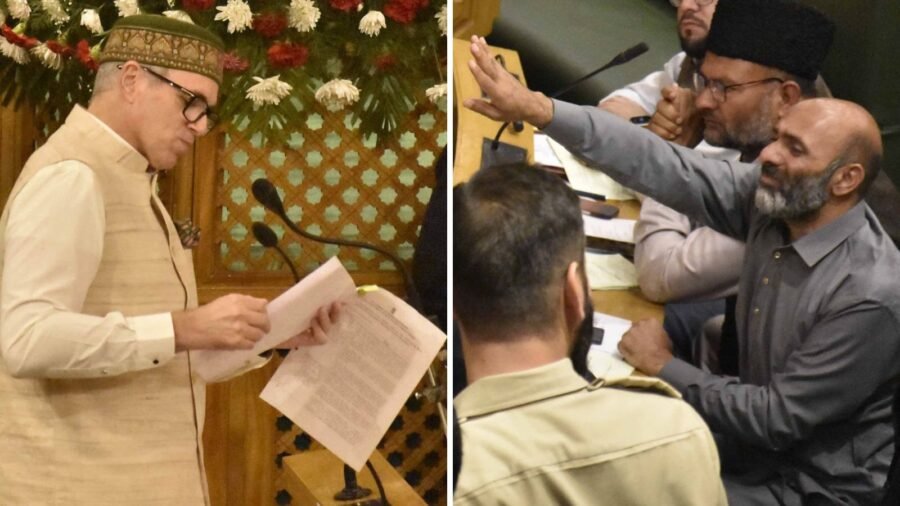
Over 4,200 books have been withdrawn from circulation in Jammu and Kashmir for “objectionable material”, the government said in response to a question in the Assembly on Tuesday.
Though the period during which the books were withdrawn was not made clear, the reply stated that a majority of the titles, 94% of them, have been withdrawn in the Kashmir division while the rest were withdrawn in the Jammu division.
The query was raised by Langate MLA and Awami Ittehad Party leader Sheikh Khursheed.
Story continues below.
Subscribe to see fewer ads.
The government said that “clear and objective criteria has been adopted for identifying objectionable material” for scrutiny of books available in colleges in terms of directions as contained in a circular from the Higher Education Department.
On the reasoning behind the move, the reply explained that higher education institutions constitute centres of higher learning, research and academic excellence, and “are expected to foster an environment that upholds Constitutional values, academic freedom, critical thinking, scientific temper, responsible citizenship and respect for the sovereignty, unity and integrity of India.”
Speaking to , Sheikh Khursheed expressed dissatisfaction with the government reply since it did not provide the list of books and authors that have been withdrawn from circulation. “This is not a comprehensive reply. I could not ask what exact titles or authors have been withdrawn. The question was pushed further down the agenda and could not be taken up during question hour, but I will continue to pursue this,” he said.
Over 21 lakh books examined
As many as 21,815,12 titles were examined by a three-tier “academic and content scrutiny mechanism”, comprising committees at the college level, directorate level and administrative department level. Following this, 4,249 books have been withdrawn from circulation by the government.
Story continues below this ad
In the circular issued in this regard in July this year, the department noted that it has become necessary to establish a transparent, accountable and institutionally robust mechanism for the evaluation, academic and content audit, procurement, recommendation, retention, circulation and periodic review of academic material.
This is necessary, the circular stated, “so as to prevent the inclusion or continued availability of publications containing factually inaccurate, misleading, inflammatory, unlawful or otherwise objectionable content, including material that directly or indirectly promotes, glorifies, legitimises or justifies terrorism, violent extremism, secessionism, radicalisation or any activity prejudicial to the sovereignty, unity, integrity or security of the Nation.”
The document lays down conditions for the “academic and content audit” to take a comprehensive review of the academic relevance, factual authenticity, pedagogical suitability, along with conformity of every publication with the Constitution of India, the applicable laws, University Grants Commission regulations, government policy, and the educational objectives of the higher education department.
To build Viksit Bharat, India must be drug-free: Amit Shah
By Sohail Khan · 22 SepEC announces biennial polls on October 16 for 11 Rajya Sabha seats across UP, Uttarakhand
By Sohail Khan · 22 Sep

Leave a Reply