Of betting in tennis and rising online player abuse
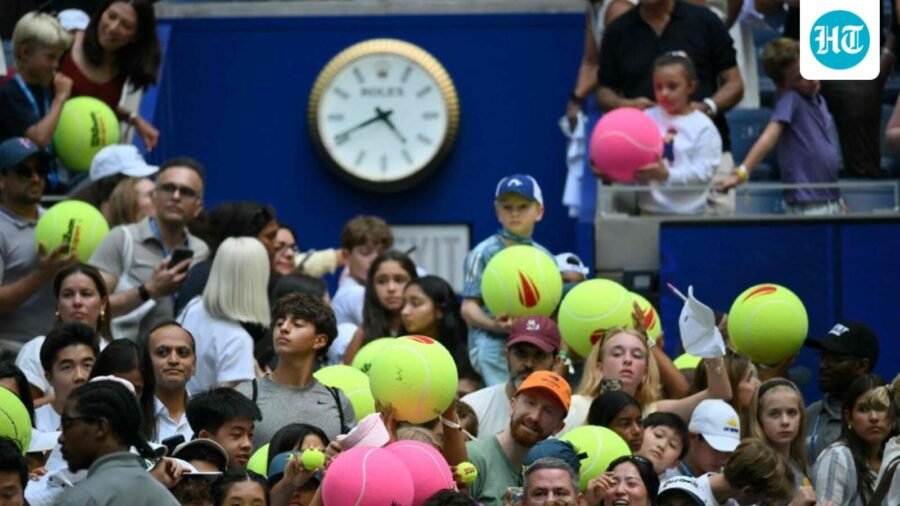
Players at the receiving end as aggrieved online gamblers pepper vitriol on their social media accounts
Published on: Sep 8, 2026, 18:56:46 IST
Prefer HTon Google
Share via
Copy link
With the US Open well into its home run, questions mill around whether Carlos Alcaraz can be stopped and if the women are going to have a new No.1. In the midst of its general noise and bling, independent journalist Ben Rothenberg’s ‘Bounces’ sub-stack drew attention to an alarming, totally contrarian fact: for the first time this year, the US Open has what it calls an official prediction market partner. Aka a betting platform. Sorry trading platform, but let’s not be shy.
The United States Tennis Association (USTA)’s press release said its “exclusive, multi-year” partnership with Kalshi, a predominantly sports “prediction market”, is focused around main draw singles matches. Kalshi, founded in 2021, is now the US’ largest prediction market valued at around $22b.
Rothenberg’s substack was titled, “The US Open is a casino now”. A report in the Sydney Morning Herald about Kalshi was headlined, “It’s gambling dressed up as trading — and it’s taken over the US Open”. USTA’s new chief executive Craig Tiley, who was Tennis Australia CEO for 13 years before shifting Slams, said the Kalshi signing was “about keeping tennis at the cutting edge of global sports innovation and fan connection… pioneering the next generation of fan engagement while ensuring the integrity about the sport.”
Kalshi is not the first official prediction partner in pro tennis; only last month, ATP signed up with Polymarket, who also have ATP streaming rights covering the approximately 20,000 matches every season including qualifiers. These deals appear to have arisen from some enthusiastic sports number crunchers in both organisations predicting revenues upticks in GigaX.
Rothenberg and SMH’s Michael Koziol described the instant impact of these decisions on the event. A fan told Koziol, “I would not be here if I did not have my Kalshi account.” (Is this what Tiley meant about next generation engagement?) At qualifying, Rothenberg saw spectators at matches — mostly men, “constantly betting on their phones… Sometimes they’re quiet and surreptitious; sometimes they’re loud and boisterous.” To him it seemed a “dehumanizing experience which multiplies the considerable stress of being an elite tennis player.” Rothenberg said, “players could already feel the effects 24/7 as aggrieved online gamblers pepper vitriol at their social media accounts.”
These partnerships represent absurdity, contradiction and cynicism in tennis clothes. Running alongside tennis authorities’ invitations to place money on their matches is a different kind of programme designed for athletes’ online safety. It is called the Threat Matrix™ (TM) system, operational since January 2024 across the WTA, ITF (now called World Tennis) tours, Wimbledon, the US Open and as of 2025, Roland Garros. Devised by online security experts, the Signify Group, TM is “a proactive monitoring service that aims to protect athletes from online threat and abuse.”
It was set up, a WTA spokesperson told a few months ago, “in response to the growing volume and severity of online abuse directed at professional athletes.” Annual TM reports released over the last two years have consistently identified “angry gamblers” as the main source of online abuse and threats against the tennis pros. The 2024 report released mid 2025 said 8,000 posts from 4,200 accounts of the 1.6m posts and comments analysed by TM, were found to be “abusive, violent or threatening.” Action was taken against “the most serious and prolific of these, including 15 accounts escalated to law enforcement,” which in 2025 grew to 35.
The 2024 report said that “angry gamblers” made up the vast majority — 77% – of direct abuse (via DMs) sent to the players “compared to open-source social media (40%).” These angry gamblers used DMs to “cause direct emotional distress to players following lost bets.”
The 2025 report released this July took note of the “continued and disproportionate impact of abuse linked to gambling activity.” The proportion of angry gamblers responsible for verified abuse was 40% in 2025, and 42% in 2026; they also account for “59% of all serious abuse.” The TM reports talk about the “disproportionate” role of a small number of “prolific abusive offenders.” The latest report says 9% of abusive accounts send 87% of what was categorised as abuse of “high concern.”
The percentage of accounts sending abusive or threatening posts/ comments may be focused on a very small cohort but that number has only increased, from 43% in 2024 to 49% in 2025.
When the first TM report was released in 2025, tennis governors were “calling on the gambling industry to more effectively tackle those responsible.” In June 2026, US betting company Fanatic Sportsbook joined hands with Signify, to, according to a spokesperson for the latter, “help identify angry gamblers behind online abuse. Once identified, Fanatics is then empowered to ban individuals from its sports betting platform.” Signify CEO Jonathan Hirshler complimented Fanatics for taking a “leadership position” on issues affecting athletes. “This is a clear message to anyone who believes threatening, harassing or abusing athletes online is simply part of being a fan: it is not.”
And here come Polymarket and Kalshi. The two firms quickly renamed themselves from gambling or sports books, and now identify themselves as “prediction markets.” They are not the “house”/ bookmaker who sets odds where you place money, but merely online platforms where you trade against others over outcomes, in this case, tennis matches. With these new tennis buddies, you don’t “bet” rather you undertake “opportunities to trade” (Polymarket) or are “trading a contract” (Kalshi).
Eventually, money is being placed on tennis results and angry, unhinged “traders” will be as unhinged as angry, unhinged gamblers, regardless of whether their money reaches bookies or platforms. When asked to respond to the USTA-Kalshi partnership, Signify said, “We don’t comment on our client’s commercial or sponsor deals.” A response from WTA – whose support and push for Threat Matrix remains commendable – about this latest USTA GenNext engagement is still awaited.
See Less

China or Japan, who was the biggest winner of the 2026 Asian Games
By Sohail Khan · 4 Oct
India’s Mission Los Angeles 28: A list of dos and dont’s
By Sohail Khan · 4 Oct