China or Japan, who was the biggest winner of the 2026 Asian Games
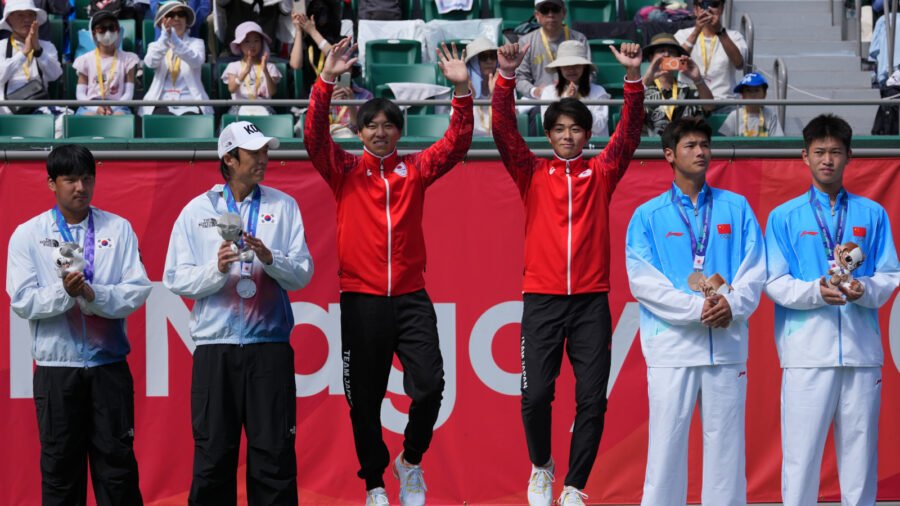
Meanwhile, Japan may have finished second in their home Asiad, but they have cause to celebrate having increased their gold medal haul by 31 (83 in Aichi-Nagoya while 52 in Hangzhou) and their total medal tally by 81 (269 in Nagoya compared to 188 in Hangzhou).
Story continues below.
Subscribe to see fewer ads.
China’s medals came in 57 different disciplines in Hangzhou but fell to 47 sports in Nagoya. In comparison, Japan claimed medals across 56 disciplines in 2026 compared to 48 in Hangzhou.
So where did China miss out compared to the previous Asian Games? And what sports did Japan’s gains come in?
Story behind China’s tally
The single biggest contributor to the 32 gold medals China was short of their Hangzhou tally was the exclusion of disciplines like dragon boat racing (five golds), xiangqi (three) and chess (three) from the recently concluded Asiad. The boxers also came back four golds shorter than in Hangzhou while sailors returned with three less golds.
Then there were many disciplines like athletics, badminton, rowing where they could not reclaim two golds, while there were other events like artistic gymnastics, basketball where they fell short by one gold.
Story continues below this ad
Five sports — swimming, athletics, shooting, diving and wushu — contributed half of China’s gold medal haul with wushu being the one sport where China’s 12 medals were all gold.
At the Nagoya Asian Games, one sport where China made visible gains was archery, particularly compound archery. China had three medals at Hangzhou, all in recurve. Of the six archery medals China won at Nagoya, three were in compound archery, a discipline where they had none in Hangzhou. This is understandable, since compound archery will be a medalled sport at the Olympics in LA 2028.
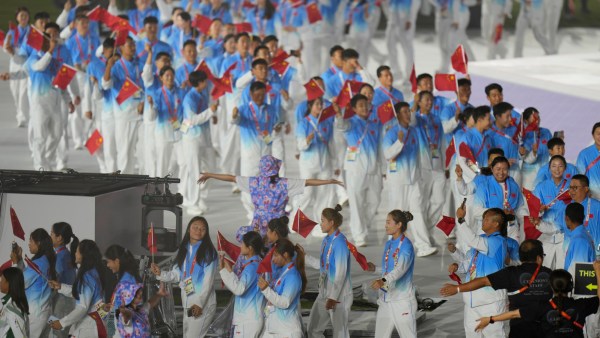 Five sports — swimming, athletics, shooting, diving and wushu — contributed half of China’s gold medal haul with wushu being the one sport where China’s 12 medals were all gold.
The 19-year-old swimmer Zhang Zhanshuo was China’s athlete of the Asian Games, winning seven golds in freestyle distances ranging from the 100m relay to the 1500m solo. Swimmers Yu Yiting and Li Bingjie contributed to five golds each. In fact, if there were to be an individual medals table for medal-winning athletes, among the top 20 athletes ranked by number of medals won, 19 would be Chinese. Most of them were swimmers and shooters, and almost all of them were in the age group of 18 to 24.
Story continues below this ad
“At this Asian Games, we have achieved our goals of testing our team, discovering new talent, identifying problems and conducting comprehensive training, further strengthening our confidence in achieving outstanding results at the Los Angeles Olympics,” Zhang Xin, secretary-general of the Chinese delegation, said in a statement.
China sent a 815-athlete contingent to Nagoya — which had 36 Olympic gold medalists — who broke five world records, 11 Asian records and 22 Games records, But of these athletes 548 (about two-thirds) were competing at their first Asian Games.
Where did Japan gain?
At their home Asian Games, Japan’s biggest gain came in athletics, where they turned their two gold medal return from Hangzhou to 10 golds. At least four of these golds were upgraded medals from Hangzhou: Misaki Morota turned her women’s pole vault silver from Hangzhou to gold while Yuma Maruyama converted his bronze in men’s decathlon from three years back to gold.
Japan actually lost five golds from the 10 it had won in track cycling in Hangzhou. But sports like judo (nine golds in 2026 compared to five in 2023), fencing (six golds in 2026 compared to two), wrestling (seven compared to five), swimming (seven compared to five) helped make up for it.
Story continues below this ad
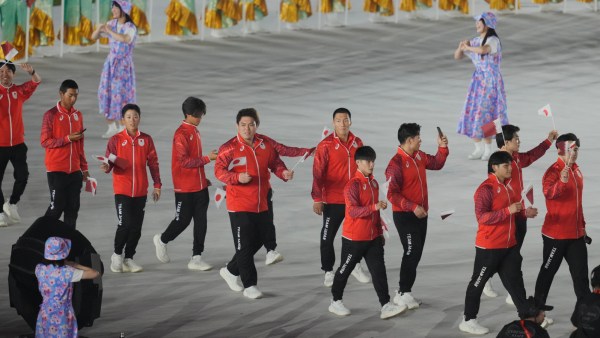 At their home Asian Games, Japan’s biggest gain came in athletics, where they turned their two gold medal return from Hangzhou to 10 golds.
The total medals from fencing for Japan was not too different, but the colour changed. Japanese fencers earned 10 medals at Hangzhou, only two were gold while half of those 10 were bronze. This time in Nagoya, the fencers earned six golds in an overall haul of 12 medals on the piste.
The Nagoya Games also served as a reminder of Japan’s inclination towards combat sports, with 19 of their gold medals and 44 total medals coming from 8 disciplines: judo (nine golds and 14 overall), wrestling (seven gold, 15 overall), boxing (one gold, four total), karate (two gold, four overall), kurash (two bronze), taekwondo (two bronze), wushu (two bronze) and MMA (one bronze).
Japan had three golds and a silver in the triathlon in Hangzhou. At Nagoya, China took away two golds and two silvers while Japan had three medals, one of each colour.
Japan had eight medals in soft tennis at Nagoya, four of them gold. China, in contrast, had no athlete representing it in the discipline, understandable since it’s not an Olympic sport or a discipline with any history with China.
Story continues below this ad
China’s biggest medal earners at Nagoya
- Swimming: 54 medals (30 gold)
- Athletics: 39 medals (17 gold)
- Shooting: 28 medals (16 gold)
- Diving: 16 medals (10 gold)
- Cycling Track: 14 medals (6 gold)
- Artistic gymnastics: 13 medals (7 gold)
- Wushu: 12 medals (all 12 gold)
- Canoe Sprint: 10 medals (8 gold)
- Rowing: 10 medals (9 gold)
Japan’s biggest medal earners at Nagoya
- Swimming: 37 medals (7 gold)
- Athletics: 32 medals (10 gold)
- Artistic gymnastics: 15 medals (2 gold)
- Wrestling: 15 medals (7 gold)
- Judo: 14 medals (9 gold)
- Fencing: 12 medals (6 gold)

India’s Mission Los Angeles 28: A list of dos and dont’s
By Sohail Khan · 4 Oct

Leave a Reply