Mining amendment is unfair to States
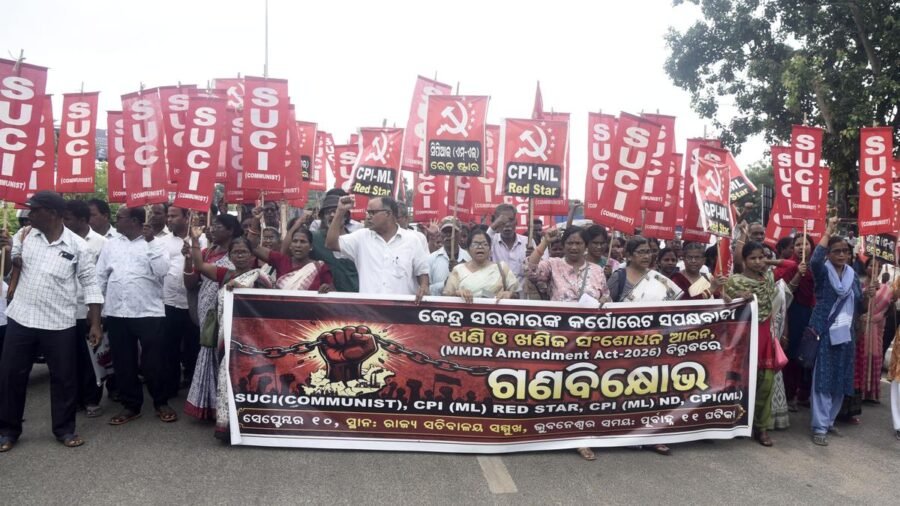
India’s mineral wealth is not evenly spread across the country. States such as Odisha, Jharkhand, Chhattisgarh, and Karnataka possess enormous reserves of coal, iron ore, and other minerals that feed industries across India. While mining brings in investment and employment, it also leaves the host State to deal with challenges such as the resettlement of displaced groups; environmental damage; pressure on public infrastructure; and the long-term consequences of extracting minerals that can never be replaced.
That is why the Mines and Minerals (Development and Regulation) Amendment Act (MMDR), 2026 deserves closer attention. At the heart of the amendment is Section 9D which restricts State Governments from imposing taxes, cesses or other levies on mineral rights or mineral-bearing land except in accordance with conditions prescribed by the Central government. The Centre says the measure is intended to create a predictable tax environment, prevent excessive levies, and to encourage long-term investment in mining. There is an understandable economic argument behind that objective. Mining projects involve enormous investments and operate over decades; investors need to know that the financial rules will not change unpredictably from one year to another. However, this logic has been contested by the States.
The real question is not merely whether States will continue receiving the royalty, the auction premium and other revenues they receive today. The Centre claims that 90% of mining sector revenue accrues to the States and that this will continue. The larger concern is about what States may be prevented from earning tomorrow.
A mineral-rich State possesses a natural economic advantage. Ordinarily, one would expect it to have some ability to use that advantage to raise resources for its own development. Section 9D substantially reduces that freedom by making future State levies related to minerals dependent upon a framework controlled by the Centre. This matters enormously for States whose budgets are closely connected with mining. NITI Aayog’s Fiscal Health Index has highlighted the strong performance of Odisha and Chhattisgarh in mobilising revenue and has specifically recognised the role played by mining receipts. In Odisha, mining has accounted for a large proportion of the State’s non-tax revenue. Mineral producing districts often require greater public expenditure because they bear the costs of mining.
The federal problem
The constitutional issue is equally significant. The Constitution gives States the power to tax mineral rights under Entry 50 of the State List, although Parliament can impose limitations on that power through laws relating to mineral development. States also possess a separate constitutional power to tax lands and buildings under Entry 49 of the State List.
In 2024, a nine-judge Bench of the Supreme Court in Mineral Area Development Authority vs. Steel Authority of India held, among other things, that royalty payable on minerals is not a tax. It also recognised the States’ legislative power to tax mineral rights and held that mineral-bearing land can fall within the States’ taxation power over land. The 2026 Amendment risks rendering the impact of this judgment nugatory.
While Entry 50 permits Parliament to place limitations upon State taxation on mineral rights, Section 9D of the amending statute goes further by extending its restriction to taxes or levies on mineral-bearing lands. That is likely to raise an important debate: how far can a Central law dealing with mineral development restrict a State’s exclusive power to tax land? The issue is larger than mining policy alone. It concerns the relationship between the Union and the States.
India’s federal system cannot function effectively if States have responsibilities without financial capacity. A State that bears the infrastructural and social consequences of mineral extraction must retain a meaningful stake in the economic value generated from its natural resources. Uniformity may make taxation more predictable, but predictability should not come at the cost of narrowing the fiscal choices available to States.
The debate over the MMDR Amendment should therefore not be reduced to a contest between promoting investment and imposing taxes. The minerals beneath a State’s soil may serve the entire country, but the costs of extracting them are felt most directly by the people who live above them.
Ashok Kumar Panda is a Senior Advocate; Aniruddha Purushotham is an Advocate

What India’s growth really means
By Sohail Khan · 17 Sep
Letters to The Editor — September 17, 2026
By Sohail Khan · 16 Sep
China’s strategy amid West Asia’s security realignment
By Sohail Khan · 16 Sep
Leave a Reply