Mental health must anchor public health
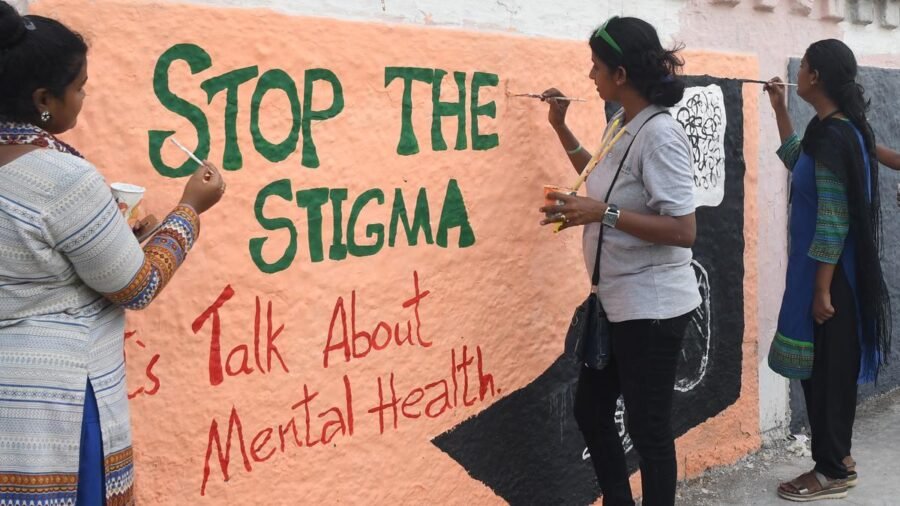
India stands at a defining moment in its journey towards the vision of Viksit Bharat 2047. Under the Healthcare for All pillar, the government has rightly prioritised strengthening Ayushman Bharat, expanding primary healthcare, reducing out-of-pocket expenditure, and promoting preventive care. Yet there is one element that cuts across all these ambitions and determines their success: mental health.
Mental health is not a niche concern. It influences educational attainment, workforce participation, social cohesion, and physical health outcomes. A healthier and more productive India cannot be built without placing mental well-being at the centre of public health.
Major implications
The scale of the challenge is substantial. Mental illness affects one in seven Indians, with nearly 200 million people living with a diagnosable mental health condition. The contribution of mental disorders to India’s total disease burden has doubled over the past three decades. Yet the national treatment gap remains 84.5%, meaning that more than four out of five people who need care do not receive it. The reasons are well known. India has only 0.3 psychiatrists per 1,00,000 population, alongside significant shortages in clinical psychologists, psychiatric social workers, and psychiatric nurses. These shortages are the result of decades during which mental health received insufficient attention, both in India and globally.
Mental disorders significantly increase the risk of chronic diseases, while chronic diseases in turn increase the risk of mental illness. More than 60% of people attending primary care facilities have a diagnosable mental disorder. Rates of anxiety and depression are substantially higher among people living with diabetes, hypertension, tuberculosis, and HIV/AIDS. Ignoring mental health, therefore, undermines efforts to control non-communicable diseases and reduce healthcare expenditure.
The economic implications are equally compelling. A 2025 modelling study by researchers from PGIMER and NIMHANS estimated that integrating universal depression screening into India’s primary healthcare system could generate net savings of ₹291 billion to ₹482 billion annually, equivalent to as much as 0.32% of GDP. Mental health is not a social welfare issue alone — it is also a human capital investment and an economic growth strategy.
The encouraging news is that India has already built many of the foundations required for transformation. More than 1.73 lakh sub-centres and primary health centres have been converted into Ayushman Bharat Arogya Mandirs, with mental healthcare included among the essential service packages. The District Mental Health Programme now covers more than 90% of districts. Tele-MANAS, launched in 2022, has expanded across all States and Union Territories.
Three main priorities
The task now is not to start from scratch. It is to build on this foundation at scale.
First, one must empower frontline health workers to become the backbone of community mental healthcare. India’s one million ASHA workers represent the world’s largest community health workforce. Evidence from Madhya Pradesh and other States demonstrates that, with appropriate training and supervision, ASHAs can successfully identify, support, and refer individuals with common mental disorders. Expanding this model through validated screening tools, digital learning platforms, and performance-linked incentives could expand access to care.
Second, India must invest more systematically in community-based care. Models such as Zimbabwe’s Friendship Bench, Atmiyata in India, and programmes implemented by The Live Love Laugh Foundation demonstrate that trained community workers can bridge the gap between awareness and treatment, particularly in rural and underserved populations. These approaches improve access and reduce costs, and deserve wider adoption and funding. Third, the country must fully realise the promise of financial protection. Extending outpatient mental health benefits under the Pradhan Mantri Jan Arogya Yojana and strengthening the implementation of insurance parity as per the Mental Healthcare Act, 2017, would make mental healthcare affordable for millions who currently go without care.
If India is to become a truly developed nation by 2047, mental health must move from the margins of public policy to its centre.
Indu Bhushan is the founding CEO of India’s National Health Authority and Ayushman Bharat; Anisha Padukone is the CEO of The Live Love Laugh Foundation

Corn hair is being called a kidney remedy: What science actually says
By Sohail Khan · 29 Sep

Don’t buy a lab-grown diamond before checking these 7 things
By Sohail Khan · 29 Sep