Maharashtra draft SIR red flag: 1.22 crore voters under scanner – Who’s at risk?
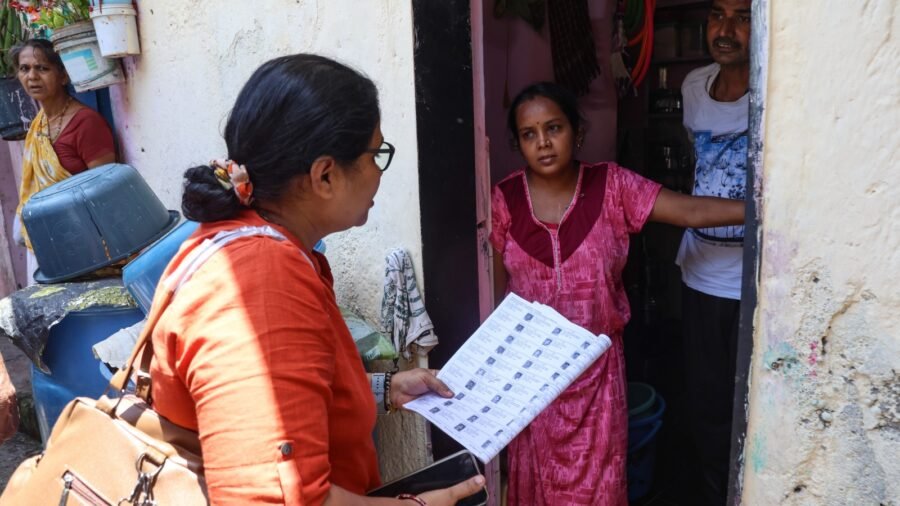
Maharashtra draft SIR: As many as 62,48,281 voters have discrepancies in the details of their relatives, while 59,75,726 voters could not be mapped to a relative in the previous electoral rolls, according to data released by the office of the Chief Electoral Officer (CEO). Together, the two categories account for 1,22,24,007 voters whose records will now require further verification as part of the Special Intensive Revision (SIR).
The figure, however, does not mean that 1.22 crore voters have been found ineligible or are facing automatic deletion. The Election Commission’s electoral machinery will issue individual notices to voters whose records have been flagged, seek additional documents where required and give them an opportunity to appear for a hearing before a decision is taken on their inclusion in the final electoral roll.
The two categories indicate different kinds of problems in matching current voter records with previous electoral rolls. In one, the details provided about a voter’s relatives do not match the information available in the earlier rolls. In the other, the election machinery has been unable to establish a link between the voter and a relative in the previous electoral database.
Story continues below.
Subscribe to see fewer ads.
Such mismatches can occur because of differences in names or spellings, changes in names, or changes in the electoral records of family members over the years. An unmapped voter, therefore, is not necessarily a voter who was absent from the earlier rolls.
A senior official from the CEO’s office said the Electoral Registration Officers (EROs) had been specifically instructed not to rush into deletion.
“The notices will be issued individually to each of the voter with anomalies. The EROs have been directed to ensure that the notices get response and not to rush for deletion immediately,” the official said.
The EROs have also been asked to expedite the hearing process. Voters receiving notices will have to submit additional documents and appear before the ERO, where required, before their cases are decided.
Story continues below this ad
The scale of the verification exercise assumes significance against the backdrop of the overall reduction in Maharashtra’s electorate in the draft rolls. Before the SIR, the state had 9,78,54,049 registered voters. The draft electoral roll contains 7,71,65,562 voters, or 78.86 per cent of the earlier electorate. The names of 2,06,88,487 voters have not been included in the draft roll.
Several Assembly constituencies have more than one lakh voters whose records have either been flagged for anomalies or could not be mapped to a relative. These include Malad, Dharavi, Panvel, Ovala-Majiwada, Kalyan Rural, Khadakwasla, Chinchwad, Hadapsar, Solapur South, Nagpur East, Nagpur West, Nagpur North, Hingna and Badnera, among others.
Flagged names not to be made public
The CEO’s office has decided not to make public the names of voters whose records have been flagged, despite demands from Opposition parties.
A senior official said one of the reasons was to protect voter privacy and prevent individuals from being targeted merely because their records had been flagged for verification.
Story continues below this ad
The decision comes as the claims-and-objections process begins, with political parties raising concerns about the possibility of organised attempts to seek deletion of voters’ names.
Objector must provide evidence
The CEO’s office has also directed the Mumbai civic commissioner and all district collectors to ensure that objections seeking deletion of names from the draft electoral roll are dealt with carefully.
An objection can be filed only by a person from the same Assembly constituency, and the person seeking deletion will have to submit evidence to establish that the voter is ineligible.
This puts the responsibility of establishing ineligibility on the objector. A voter will not have to prove their eligibility merely because an objection has been filed against their name.
Story continues below this ad
The voter whose name is challenged must also be given an opportunity to appear for a hearing and submit documents or other evidence in support of their eligibility.
The directions follow concerns raised by political parties over the possibility of organised objections being filed against voters belonging to particular communities. The state election machinery has instructed officials to follow the prescribed claims-and-objections process and ensure that no voter’s name is removed merely on the basis of an unsupported objection.


Govt orders 10% water cut across state from Oct 16
By Sohail Khan · 6 Oct
HC sets aside MahaREAT order, clears way for Turf View project
By Sohail Khan · 6 Oct