Magic of performing arts in a mundane digital world
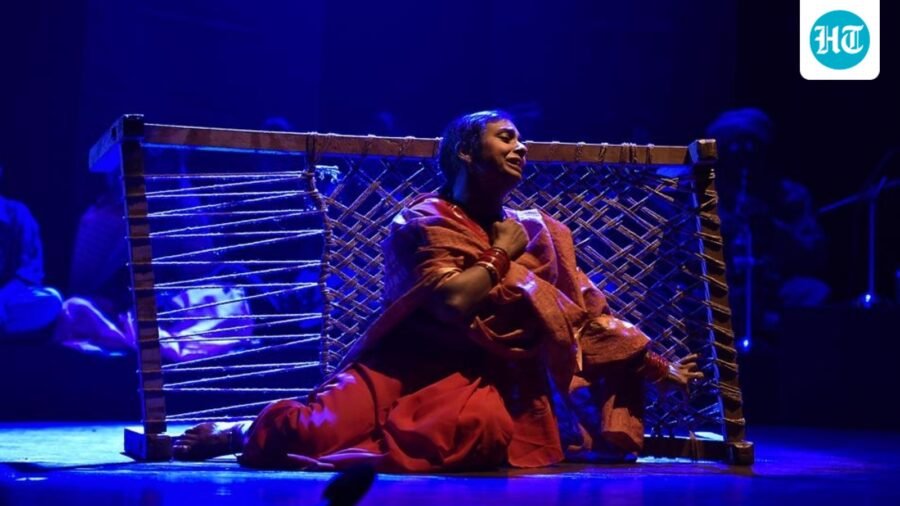
Streaming is training us out of tolerating, let alone appreciating, experiences that can't be paused or rewound but can only be watched live.
Published on: Sep 22, 2026, 06:36:49 IST
Prefer HTon Google
Share via
Copy link
I must have been nine or ten when my father dragged us along to watch a play whose title I could not yet pronounce: Aashadh Ka Ek Din, staged at the National School of Drama (NSD). I remember almost nothing of Mohan Rakesh’s actual plot: Kalidasa torn between the mountain girl who loved him and the throne that would later claim him. What I remember instead is smaller and stranger — the particular hush that fell over the room the moment the lights dimmed, a hush I had never once encountered inside a cinema hall, where people rustle chip packets and check their phones through the interval. I remember an actress crying real tears eight feet from where I sat, close enough that I could see her chest rise, and being seized by the confused, faintly embarrassing feeling that I was watching something not meant for me, a grief that belonged to a stranger and yet had somehow been let loose into the room. I did not have the vocabulary at nine to call this catharsis. I only knew I wanted to go back.
I have been going back, regularly, for two decades now, and the roundabout at Mandi House still fills every evening with the same kind of loitering. Rickshaw drivers wait outside the Shri Ram Centre (SRC) with the patience of men who have done this for 20 years. Students from the NSD smoke near the gate, still half in costume, kohl smudged. Inside Kamani Auditorium, an usher checks a paper ticket by torchlight while backstage a tabla is tuned, one beat at a time, until it suddenly stops being out of tune. None of this runs on a schedule any algorithm could predict. It happens because a few hundred people decided, independently, to leave their homes on an ordinary Tuesday and sit in the dark with strangers.
Compare this to the evening most of Delhi is actually having — alone on a sofa, remote in hand, scrolling past thumbnails a recommendation engine has already decided you will like, autoplay counting down the seconds until the choice is made for you anyway. I took my niece to Shriram Bharatiya Kala Kendra’s (SBKK) gorgeous dance-drama based on the Ramayana, a few years ago, expecting her to lose interest within 20 minutes. To my surprise, she sat through the whole thing without once reaching for my phone.
Ask any actor what he does on the afternoon before a show, and the answer is rarely glamorous: A tuition class, perhaps, or a call-centre shift that lets him leave by six. I once shared an auto back from Mandi House with a young actress who had just finished playing, with real ferocity, a woman betrayed by her husband in a Vijay Tendulkar play. She spent the ride telling me about a cartoon-dubbing assignment she needed to finish by morning to make rent.
There is no scaling this kind of art. A play cannot go viral the way a reel can. It can only be attended, one body at a time, in a room that will never assemble in quite that way again. This is precisely what streaming has trained us out of tolerating: An experience that cannot be paused or rewound, only sat through. Live theatre demands an entire evening and gives back, in exchange, something that exists nowhere else once the curtain falls. No recording will ever quite capture the way an actor’s voice cracked on a line she has delivered 40 times before, or the half-second in which an entire audience realised, together, that something had gone wrong with a lighting cue, and decided, together, to let it go.
None of this should be mistaken for a perfectly preserved paradise. Spend enough evenings at Mandi House, and the cracks become as familiar as the magic. The audience for most Hindi-language productions has visibly greyed; the same few hundred faces recur year after year, retired professors and civil servants. Grants from the Sangeet Natak Akademi and the ministry of culture exist, but the process is famously slow and bureaucratic. There is also a quieter shortage — of new writing. Walk through a season’s programme at any of these venues and it is heavy with revivals, the same Tendulkar and Karnad plays, and comparatively light on new Hindi-language scripts wrestling with the country as it exists now rather than as it existed in 1975. A play like Court Martial by Swadesh Deepak, once standard repertoire, now fights for slots amid flashy “experimental” pieces with little dramaturgical discipline.
None of these problems are unfixable, which is precisely what makes the current drift so frustrating. School and college partnerships, the kind that once produced small, dazzled versions of me at the age of nine, could be formalised and subsidised rather than left to individual teachers who happen to care. Funding could be tied more explicitly to new commissions, a fixed share of every grant reserved for a script that has never been staged before, so that Mandi House does not calcify into a museum of its own greatest hits.
I think often of that evening at NSD, Kalidasa torn between the mountain girl and the throne I didn’t yet understand, and of my niece leaning forward during the dance-drama, refusing to look away even once. Between those two nights sits everything Mandi House still is — precarious, underfunded, occasionally elitist, in real need of both money and imagination, and somehow still capable of making a nine-year-old, or a nine-year-old’s niece a generation later, sit in the dark and feel something no algorithm assigned to her. This fragility is the entire argument for live theatre, and also its most urgent vulnerability. What cannot be saved must instead be kept alive, deliberately, by people willing to pay for it and keep showing up for it. On most nights, for now, enough of them still do.
Pranav Jain is an IPS (P) officer. The views expressed are personal
Get Current Updates on India News, Elections 2024, Lok sabha election 2024 voting live , Karnataka election 2024 live in Bengaluru , Election 2024 Date along with Latest News and Top Headlines from India and around the world.
See Less

The science of Gaganyaan parachutes | Explained
By Sohail Khan · 22 Sep
40 years ago September 22, 1986: Barnala hits out at Badal group
By Sohail Khan · 22 Sep
Universities as labs of entrepreneurship
By Sohail Khan · 22 Sep
Leave a Reply