Jamie Dimon’s message for India’s tax policymakers
Synopsis
India’s economic momentum and financial-market reforms have not translated into foreign investment flows commensurate with its growth ambitions. Jamie Dimon’s concerns about tax surprises and policy uncertainty offer an opportunity for the government to improve investor confidence, attract capital into emerging sectors such as AI infrastructure and semiconductors, and deepen India’s integration with global capital markets.
 Reuters
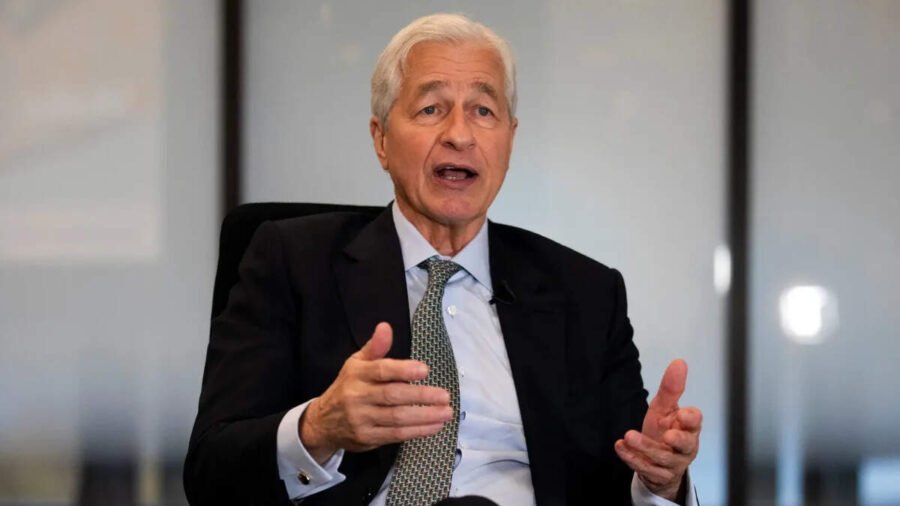
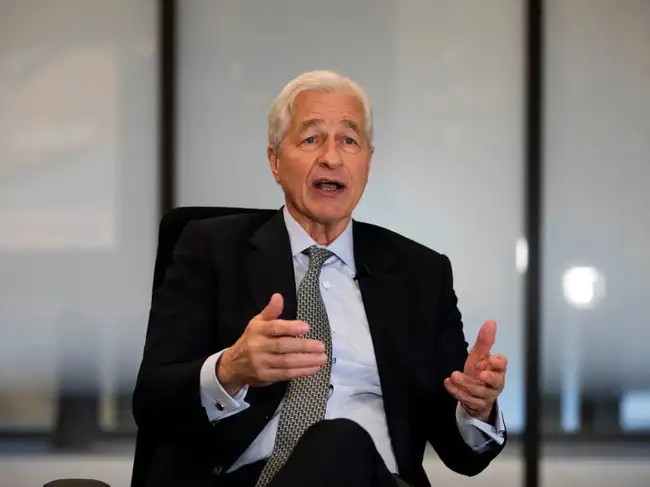
Jamie Dimon gets a lot of complaints from companies about paying more taxes on a deal in India than they expected. This advice is well-intentioned from the world's biggest investment bank's CEO. Dimon is bullish about India. JPMorgan Chase tops advice on equity offerings in the country, has 20% of its global workforce here, and is expected to move into Asia's largest GCC in Powai that can house 30,000 employees. Dimon's advice on tax and policy certainty should constitute vital feedback for GoI. Transparent taxes and rules can improve the perception foreign investors have about Indian bureaucracy, despite the economy's obvious momentum.
India drew less than a third of FDI into China last year. Between them, Singapore and Hong Kong received nearly 10x India's inflows. These cities act as entry points for global capital in Asia, to be routed to its most productive economies. Yet, India, famously the 'fastest growing major economy in the world' for a considerable length of time, didn't figure in the list of top 10 FDI recipients in 2025. Globally, foreign investment is surging in AI infrastructure like data centres and semiconductors – Dimon reckons hyperscaler investment could hit $1 tn next year – where India doesn't have a significant presence. Even as policies are being tweaked to make the country more inviting to chipmakers and AI hyperscalers.
Dimon also makes the point that Indians are underserved by foreign capital. This imposes extra avoidable costs on growth of the economy. If policy is responsive to emerging business trends, it should ideally not be unresponsive to long-standing investor perception. India has liberalised its financial markets to encourage banks like JPMorgan to scale up their local business. Bankers tend to go where their customers are headed. JPMorgan doesn't see India as a pure cost arbitrage play. A better-levelled playing field for foreign investment would make India a more interesting market for the bank. In the process, it would speed up India's capital market integration with the rest of the world.
Add 

(Catch all the Business News, Breaking News, and Latest News Updates on The .)
…more
Elevate your knowledge and leadership skills at a cost cheaper than your daily tea.
-
Gold prices: Caught in a three-way tug-of-war -
Nobody's money? The fortune Indian families forgot they had -
Forget the UPI fee fight. Do we know how India pays today? -
Has the US Fed and AI created a costlier world? And has the queue got longer for India? -
Gold rush on Dalal St as regional jewellers bid to be the next Tanishq -
A different kind of buyback. Is this the beginning of these kinds of buybacks? -
Come January 2027, will India’s online platforms get their own Tukaram? -
Hormuz is a state, not a strait. There are 10 other possible chokepoints for the global economy, including India -
Will the yuan become the new yen? -
Bigger or Better: One order from Power Grid Corp added $1 billion to the market cap of a company – Final part

Iran waiting to see how I do in midterms: Trump
By Sohail Khan · 23 Sep
Maharashtra drought deepens, crisis mounts
By Sohail Khan · 23 Sep
Green clearance validity for ports extended
By Sohail Khan · 23 Sep
Leave a Reply