Breakdown of civic infra in India
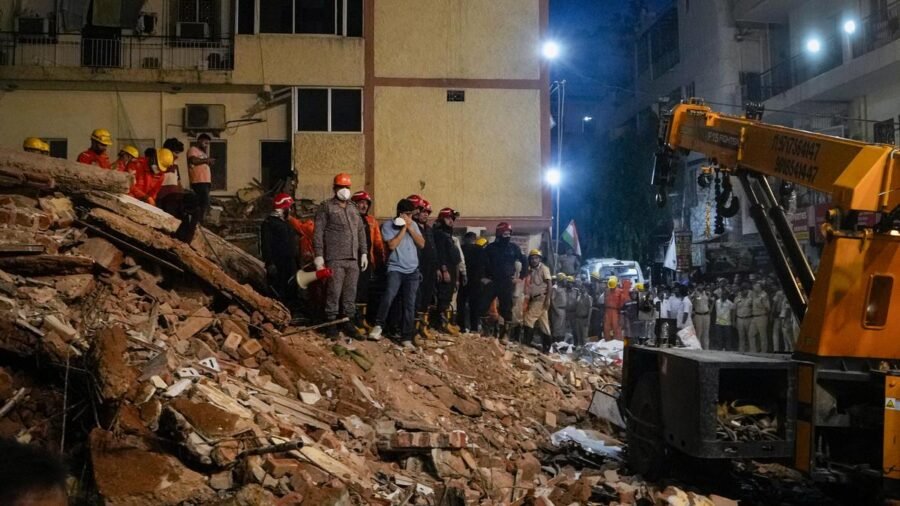
The breakdown of civic infrastructure is killing ordinary and unassuming citizens every day. Lives are now lost in India due to abject governance failure rather than to natural or traditional causes. Further, citizens’ growing apathy towards governance failure is also concerning.
The age-old practice of blaming the Central and State governments is getting tiresome as it is clear that these incidents are fundamentally caused due to systemic failure, bureaucratic greed, absence of strict enforcement, and brazen entitlement of the general public.
Editorial | Falling edifice: On the Delhi private hostel building collapse
Be it an illegal billboard in Mumbai that killed ordinary bystanders, or illegally constructed buildings that are constantly collapsing in Delhi, the same storyline follows — the police arrest the accused, suspend a few officials, a compensation is awarded (read: blood money) to the next of kin, and a vague promise to carry out a strict investigation is given. A few days later, it fades from public memory until the next tragedy occurs and conversations around civic responsibility and governance failure are reignited.
Systemic impunity
One thing that is absolutely clear from these series of events is that administrative officials are privy to illegal activities, and it is their connivance that fuels the public’s brazenness to break regulations.
Officials who fail in their responsibility of upholding civic order should be held liable. An official who clears or knowingly ignores an unauthorised structure should face the same consequences as the owners who built it. It is only when those responsible for upholding civic order are held personally liable for deviating from their duties, that one can work towards trying to enforce regulations.
Editorial | India’s buildings need widespread rehabilitation work
Another common feature is that the accused responsible for the mishap usually has prior criminal offences registered against them. Despite this, they continue engaging in illegal activities because the message from the system is loud and clear — that there is no accountability for individual actions and as long as corruption is fuelling the system, officials will turn a blind eye.
Poor urban planning
While India’s population size is an administrative hurdle that is unique to India, poor urban planning has exacerbated the problems caused by population pressure. A case in point are unauthorised colonies in Delhi that mushroom rapidly. The fact that these colonies are exempt from urban planning regulations gives building owners a free pass to build structures without any approval; a form of sanctioned impunity.
The entitlement of building owners is also significant. Be it in an upscale residential area or in an unauthorised colony in Delhi, building owners encroaching upon public land for their private use is a common occurrence in India. The reason for the brazenness is simple — no collective municipal drive has thoroughly addressed and deterred private encroachment.
One routinely reads about symbolic anti-encroachment drives; but most such drives are targeted at the marginalised groups of society who cannot retaliate. Selective enforcement is not enforcement, and in fact condones certain classes of encroachment. Civic action must target all private encroachment with equal scrutiny in order to ensure compliance with norms.
In 2025, a fire broke out in a bar in Goa when fireworks were used indoors during a performance. The limited escape routes and crowding led to several people dying in the fire. While this particular outlet is permanently closed and the owners were arrested, what is upsetting is that consumers continue to patronise other establishments owned by the same owners.
In the U.S., established food and coffee chains have reported a slowdown in sales because of consumer boycott movements due to the political stance of these chains. If consumer boycott movements can lead to a slowdown of global conglomerates, then Indian consumers should also boycott establishments that have brazenly violated rules that have led to loss of life.
However, for an ordinary citizen who may not remember the incident, lack of access to compliance information such as publicly displayed compliance certificates in establishments and a public registry of violation norms, makes it harder for them to make an informed choice. Lack of access to this information is a governance failure, and access to it may be a step towards strengthening compliance with regulatory norms.
During the COVID-19 pandemic, establishments across India were under strict operating guidelines. Any deviation resulted in their immediate closure. The same enforcement must continue to be applied; all buildings must be monitored to ensure compliance with guidelines and the fear of loosing their licence to operate must be real.
Prachi Dutta is a corporate lawyer licensed in New York and India, advises companies and funds, and serves as an Adjunct Professor at Shiv Nadar University
Reiterating the basics of criminalisation
By Sohail Khan · 23 Sep
Freezing democracy: on the Election Commission of India and West Bengal
By Sohail Khan · 22 Sep
Letters to The Editor — September 23, 2026
By Sohail Khan · 22 Sep
Leave a Reply